
6-1 手撕AVL树
AVL树是目前为止学习到的第一个高级数据结构。
AVL树是 二叉排序树 的升级。
前导—二叉排序树
二叉排序树(Binary Sort Tree),又称二叉查找树(Binary Search Tree),亦称二叉搜索树。
二叉排序树在二叉树的基础上做了一点调整。
性质:
- 左子树 < 根节点 左子树<根节点 左子树<根节点
- 右子树 > 根节点 右子树>根节点 右子树>根节点
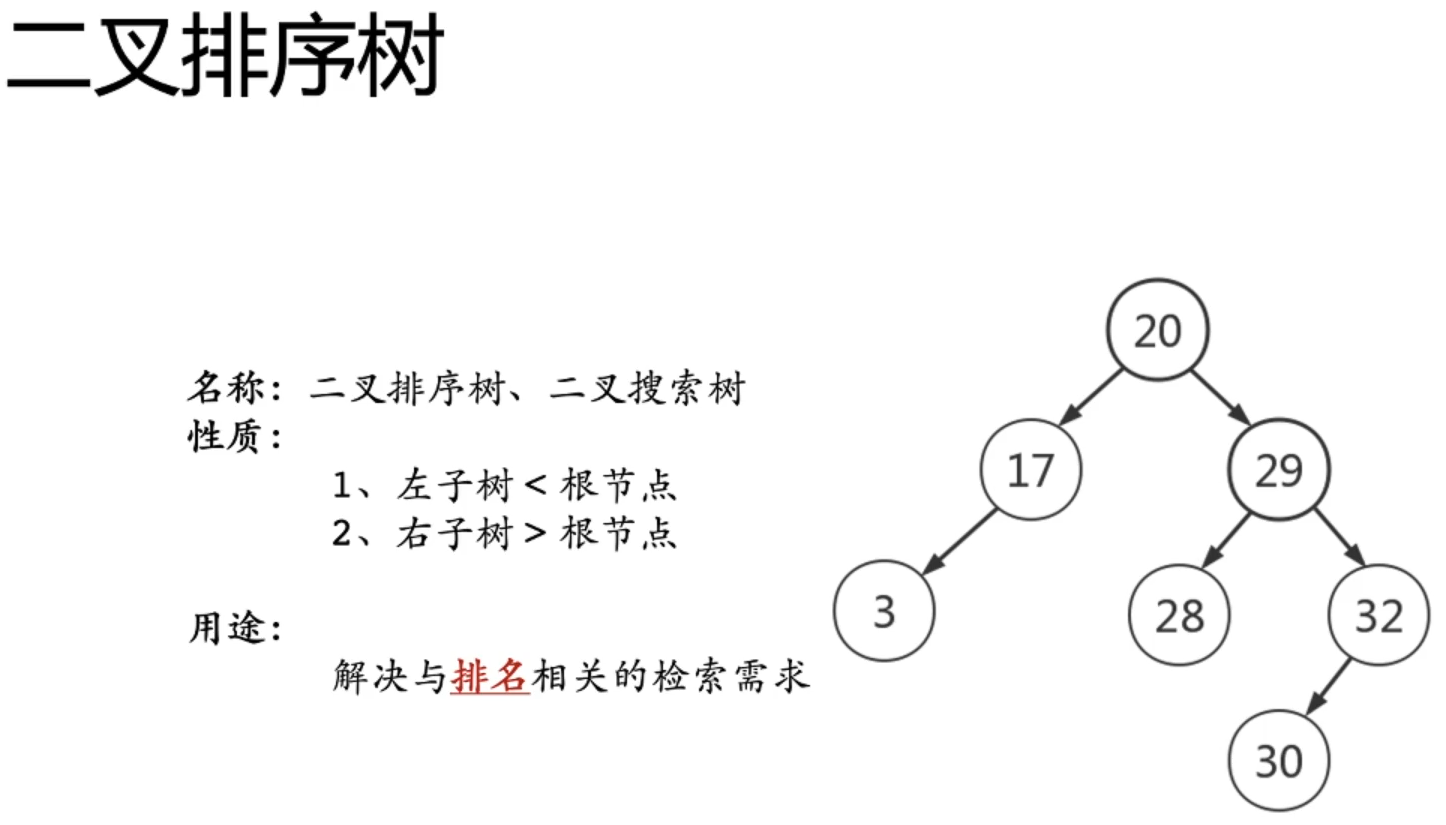
拿着一颗二叉排序树进行中序遍历,它就是一个升序的序列;用途:解决与排名相关的检索需求。
二叉排序树就是一个天然的二分查找,每次查找都可以将规模缩小 n 2 \frac{n}{2} 2n,查找元素的时间复杂度稳定在 O ( l o g n ) O(log\ n) O(log n)。
二叉排序树的插入
待插入的节点是 10 10 10:

先与根节点比较大小,小于则在左子树:

再依次跟后续节点进行比较:

此时 10 < 3 10<3 10<3,应放到 3 3 3 的右子树:

二叉排序树的删除

1. 删除叶子节点
因为没有子节点,所以直接删除无任何影响。
2. 删除出度为 1 1 1 的节点
删除 3 3 3,则把 3 3 3 的子节点 10 10 10 作为 3 3 3 的父节点 17 17 17 的子节点,也就是将 17 17 17 的孙子升辈为儿子:

3. 删除出度为 2 2 2 的节点
两个名词:前驱,后继,对一个树中序遍历:[..., 19, 20, 28, ...],对于根节点 20 20 20 来说,排在 20 20 20 前面的数字就是前驱,排在 20 20 20 后面的数字就是后继。
对于二叉排序树来说,根节点的前驱节点就是左子树中的最大值,后继节点就是右子树中的最小值;
而左子树最右侧的节点就是左子树的最大值,右子树最左侧的节点就是右子树的最小值。

那么怎么删呢?我们可以用待删除节点的前驱或者后继中的任何一个节点进行替换,此时问题转换成了删除出度为 1 1 1 的节点,因为前驱一定没有右子树,后继一定没有左子树,所以前驱和后继一定是没有子树或者只有一个子树。
此时我们直接根据下标把待删除节点 20 20 20 和前驱节点 19 19 19 进行替换,再把替换后的 20 20 20 按照删除出度为 1 1 1 的节点删除即可。
但这样替换不是违背了二叉排序树的性质吗?此时我们可以把待删除的节点先更新为前驱节点的值,再在左子树中找到前驱节点,将其删除。

二叉排序树代码实现
// 二叉搜索树 public class BinarySortTree {
    static Node NIL = new Node(); // 作用等同于链表中的哨兵节点 防止有些节点为null时 不好操作 // 对NIL进行初始化 private static void init_NIL() {
    // todo NIL.value = -1; // 把NIL的左子树和右子树都指向自己 这样即使操作NIL的左子树和右子树也不会出现异常 NIL.left = NIL.right = NIL; NIL.h = 0; } // 获取节点 private static Node getNewNode(int value) {
    Node p = new Node(); p.value = value; p.left = p.right = NIL; p.h = 1; return p; } // 插入节点 private static Node insert(Node root, int target) {
    if (root == NIL) return getNewNode(target); if (root.value == target) return root; if (root.value > target) {
    root.left = insert(root.left, target); } else {
    root.right = insert(root.right, target); } update_h(root); // 因为插入了节点 所以在回溯的时候需要更新一下所有节点的树高 return root; } // 删除节点 private static Node delete(Node root, int target) {
    if (root == NIL) return root; if (root.value > target) {
    root.left = delete(root.left, target); } else if (root.value < target) {
    root.right = delete(root.right, target); } else {
    // root.value == target 执行删除 // 分类讨论 3种情况 // 出度为0 if (root.left == NIL && root.right == NIL) {
    root = NIL; return root; } else if (root.left == NIL || root.right == NIL) {
    // 出度为1 return root.left != NIL ? root.left : root.right; // 直接把该节点的子节点返回给父节点 } else {
    // 出度为2 Node temp = get_pre(root.left); // 获取前驱节点 root.value = temp.value; // 将待删除节点值更新为前驱节点值 root.left = delete(root.left, temp.value); // 在左子树中找到前驱节点值并删除 } } update_h(root); // 同样需要在回溯时更新每个节点的高度 return root; } // 获取前驱节点 private static Node get_pre(Node root) {
    Node temp = root; // 找到左子树中最右侧的节点 while (temp.right != NIL) temp = temp.right; return temp; } // 更新树高 private static void update_h(Node root) {
    root.h = Math.max(root.left.h, root.right.h) + 1; } // 中序遍历 private static void in_order(Node root) {
    if (root == NIL) return; in_order(root.left); System.out.print(root.value + " "); in_order(root.right); } public static void main(String[] args) {
    init_NIL(); Node root = NIL; Scanner sc = new Scanner(System.in); int n = sc.nextInt(); Random rand = new Random(); for (int i = 0; i < n; i++) {
    int val = rand.nextInt(100); System.out.println("\ninsert " + val + " to BinarySortTree"); root = insert(root, val); in_order(root); } } } class Node {
    int value; int h; // 存一下每个节点的树高 为AVL树做铺垫 Node left, right; }
讯享网

下面我们对比这两个序列插入在二叉搜索树后的样子:

二叉搜索树的局限性就体现出来了,明显的看到第二个序列由二叉树退化为链表了,这样查找效率也从 O ( l o g n ) O(log\ n) O(log n) 退化为 O ( n ) O(n) O(n)了;
至此,为了解决二叉搜索树退化的问题,我们就引出了AVL树。
AVL树基础知识
平衡二叉搜索树(Self-balancing binary search tree)又被称为AVL树。
平衡树:为了避免二叉搜索树退化成链表的状态;AVL树是最基础的平衡树,学习起来相对比较简单。
前两个性质和二叉搜索树一模一样,而多了第三个性质: ∣ H ( l e f t ) − H ( r i g h t ) ∣ ⩽ 1 |H(left)-H(right)|\leqslant1 ∣H(left)−H(right)∣⩽1,左子树减去右子树的差值不能超过 1 1 1。

AVL树—左旋
圆圈代表单个节点,三角形代表某一颗子树。
由于现在 K 3 K3 K3 下有两颗子树,假设这两颗子树树高为 2 2 2,所以此时这棵树一定处于失衡状态,所以我们要选择一个节点进行旋转,此时我们抓着 K 3 K3 K3 进行旋转,但单纯的把 K 3 K3 K3 拎上去 变为根节点, K 3 K3 K3 的直系子节点就会变成 K 1 、 A 、 B K1、A、B K1、A、B,变成了三叉树, K 1 K1 K1 和 A A A 同为 K 3 K3 K3 的左节点,起冲突了,所以我们要把 K 3 K3 K3 的左子树也就是 A A A 这棵子树分给 K 1 K1 K1,因为最开始 A A A 就是 K 1 K1 K1 的右子树,所以肯定比 K 1 K1 K1 大,放在 K 1 K1 K1 的右节点位置;这样整棵树就平衡了。
重点:抓着哪一个节点进行旋转。

AVL树—右旋
就是左旋的对称操作,不过多赘述。

在插入全部元素后,从下往上
回溯时进行旋转。
AVL树—失衡类型
同色为对称的结构,树中带颜色的三角形子树就代表着这棵树过高了。

- L L LL LL 型

对于上方这棵AVL树是否平衡,我们可以先对未旋转的 L L LL LL 型树做一下公式推导:
K 2 = h A + 1 K2=h_A + 1 K2=hA+1
K 3 = m a x ( h C + h A ) + 1 K3 = max(h_C+h_A)+1 K3=max(hC+hA)+1
K 2 = K 3 + 2 K2=K3+2 K2=K3+2
h A + 1 = m a x ( h C + h A ) + 3 h_A+1=max(h_C+h_A)+3 hA+1=max(hC+hA)+3
h A = h B + 1 = m a x ( h C + h A ) + 2 h_A=h_B+1=max(h_C+h_A)+2 hA=hB+1=max(hC+hA)+2
再把上述答案代入到旋转后的树,一定是平衡的。
- L R LR LR 型
同样我们对未旋转的 L R LR LR 型树做一下公式推导:
K 3 = m a x ( h B + h C ) + 1 K3=max(h_B+h_C)+1 K3=max(hB+hC)+1
K 3 = h A + 1 K3=h_A+1 K3=hA+1
h A = m a x ( h B + h C ) h_A=max(h_B+h_C) hA=max(hB+hC)
K 2 = K 3 + 1 = h A + 2 K2=K3+1=h_A+2 K2=K3+1=hA+2
K 2 = h D + 2 K2=h_D+2 K2=hD+2
h A = h D h_A=h_D hA=hD
再将这些公式代入旋转后的树判断,肯定也是平衡的。



R R RR RR 型和 R L RL RL 型跟上面两个是对称的,就不过多推导了。
AVL树代码实现
讯享网// AVL树 => 在二叉搜索树的基础上判断是否平衡 进行左旋和右旋 public class BinarySortTree {
    static Node NIL = new Node(); // 作用等同于链表中的哨兵节点 防止有些节点为null 不好操作 // 对NIL进行初始化 private static void init_NIL() {
    // todo NIL.value = -1; // 把NIL的左子树和右子树都指向自己 这样即使操作NIL的左子树和右子树也不会出现异常 NIL.left = NIL.right = NIL; NIL.h = 0; } // 获取节点 private static Node getNewNode(int value) {
    Node p = new Node(); p.value = value; p.left = p.right = NIL; p.h = 1; return p; } // 插入节点 private static Node insert(Node root, int target) {
    if (root == NIL) return getNewNode(target); if (root.value == target) return root; if (root.value > target) {
    root.left = insert(root.left, target); } else {
    root.right = insert(root.right, target); } update_h(root); // 因为插入了节点 所以在回溯的时候需要更新一下所有节点的树高 return maintain(root); // 插入元素后 回溯时进行平衡判断、调整 } // 删除节点 private static Node delete(Node root, int target) {
    if (root == NIL) return root; if (root.value > target) {
    root.left = delete(root.left, target); } else if (root.value < target) {
    root.right = delete(root.right, target); } else {
    // root.value == target 执行删除 // 分类讨论 3种情况 // 出度为0 if (root.left == NIL && root.right == NIL) {
    root = NIL; return root; } else if (root.left == NIL || root.right == NIL) {
    // 出度为1 return root.left != NIL ? root.left : root.right; // 直接把该节点的子节点返回给父节点 } else {
    // 出度为2 Node temp = get_pre(root.left); // 获取前驱节点 root.value = temp.value; // 将待删除节点值更新为前驱节点值 root.left = delete(root.left, temp.value); // 在左子树中找到前驱节点值并删除 } } update_h(root); // 同样需要在回溯时更新每个节点的高度 return maintain(root); // 删除元素后 回溯时进行平衡判断、调整 } // 获取前驱节点 private static Node get_pre(Node root) {
    Node temp = root; // 找到左子树中最右侧的节点 while (temp.right != NIL) temp = temp.right; return temp; } // 更新树高 private static void update_h(Node root) {
    root.h = Math.max(root.left.h, root.right.h) + 1; } // 左旋 private static Node left_rotate(Node root) {
    Node temp = root.right; root.right = temp.left; temp.left = root; update_h(root); update_h(temp); // 更新节点高度 return temp; } // 右旋 private static Node right_rotate(Node root) {
    Node temp = root.left; root.left = temp.right; temp.right = root; update_h(root); update_h(temp); // 更新节点高度 return temp; } // 判断当前节点往下看是否失衡 private static Node maintain(Node root) {
    if (Math.abs(root.left.h - root.right.h) <= 1) return root; // 平衡 if (root.left.h > root.right.h) {
    // 左子树更高 失衡条件是L if (root.left.right.h > root.left.left.h) {
    // 失衡条件是LR型 // 先左旋 再右旋 root.left = left_rotate(root.left); } // 没走上面的if 则是LL型 直接右旋即可 root = right_rotate(root); } else {
    // 右子树更高 失衡条件是R if (root.right.left.h > root.right.right.h) {
    // 失衡条件是RL型 // 先右旋 再左旋 root.right = right_rotate(root.right); } // 没走上面的if 则是RR型 直接左旋即可 root = left_rotate(root); } return root; } // 中序遍历 private static void in_order(Node root) {
    if (root == NIL) return; in_order(root.left); System.out.print(root.value + " "); in_order(root.right); } // 前序遍历进行输出 方便观察树是否平衡 private static void output(Node root) {
    if (root == NIL) return; System.out.println(root.value + " " + "(" + root.h + ") " + "|" + root.left.value + ", " + root.right.value); output(root.left); output(root.right); } public static void main(String[] args) {
    init_NIL(); Node root = NIL; Scanner sc = new Scanner(System.in); int n = sc.nextInt(); Random rand = new Random(); for (int i = 0; i < n; i++) {
    int val = rand.nextInt(100); System.out.println("\ninsert " + val + " to BinarySortTree"); root = insert(root, val); output(root); } } } class Node {
    int value; int h; // 存一下每个节点的树高 为AVL树做铺垫 Node left, right; }
输出
7 insert 5 to BinarySortTree 5 (1) |-1, -1 insert 55 to BinarySortTree 5 (2) |-1, 55 55 (1) |-1, -1 insert 65 to BinarySortTree 55 (2) |5, 65 5 (1) |-1, -1 65 (1) |-1, -1 insert 38 to BinarySortTree 55 (3) |5, 65 5 (2) |-1, 38 38 (1) |-1, -1 65 (1) |-1, -1 insert 86 to BinarySortTree 55 (3) |5, 65 5 (2) |-1, 38 38 (1) |-1, -1 65 (2) |-1, 86 86 (1) |-1, -1 insert 71 to BinarySortTree 55 (3) |5, 71 5 (2) |-1, 38 38 (1) |-1, -1 71 (2) |65, 86 65 (1) |-1, -1 86 (1) |-1, -1 insert 22 to BinarySortTree 55 (3) |22, 71 22 (2) |5, 38 5 (1) |-1, -1 38 (1) |-1, -1 71 (2) |65, 86 65 (1) |-1, -1 86 (1) |-1, -1 这棵树长这个样子:

这棵树超级平衡!代码实现的超级完美!
LeetCode真题
经典面试题—二叉搜索树系列
LeetCode面试题 04.06. 后继者
难度:mid
方法一:中序遍历
我们需要对原树进行一次中序遍历,再找目标值后面的值。

思路很简单,就是对树进行中序遍历,然后在遍历的过程中找到 p p p,然后再看一下它的下一个节点是谁;
但这样会存在问题,在中序遍历中,我们不一定可以立即确定指定节点 p p p 的下一个节点是谁,有可能 p p p 的下一个节点是经过回溯很多次才会出现;所以为了解决这个问题,我们换一种思路,在每次递归过程中记录一下当前节点的前一个节点,在递归时判断这个节点的前一个节点是否为 p p p,那么该节点就是 p p p 的后继。
方法二:利用二叉搜索树的性质
- 如果 r o o t . v a l ⩽ p . v a l root.val\leqslant p.val root.val⩽p.val,则说明 p p p 的后继肯定在右子树,因为左子树的值都小于 r o o t root root,所以我们直接往右子树递归搜索后继。
- 如果 r o o t . v a l > p . v a l root.val> p.val root.val>p.val,则后继可能在左子树中,也可能就是 r o o t root root,所以直接往左子树递归,先在左子树中寻找比 p p p 大的节点,如果发现 r o o t . v a l ⩽ p . v a l root.val\leqslant p.val root.val⩽p.val,然后再去右子树中寻找。
LeetCode题解:两种方法代码实现
LeetCode450. 删除二叉搜索树中的节点
难度:mid
这道题就是我们上面代码写的删除操作,需要分类讨论三种情况:
- 出度为 0 0 0
- 出度为 1 1 1
- 出度为 2 2 2(需要前驱 / 后继节点)
根据不同的出度选择不一样的策略,直接看代码吧。
LeetCode题解:代码实现
LeetCode1382. 将二叉搜索树变平衡
难度:mid
给我们一颗已经失衡的二叉搜索树,让我们把它变平衡,我们可以把树遍历一遍存到数组中,然后重新建树,有两种实现方法:
- 手撕AVL树 (不建议),重新建立一颗AVL树,就是一颗平衡二叉搜索树(需要手写一个AVL树,比较麻烦)
- 递归建树 (最优解),我们
中序遍历一遍二叉搜索树,那么得到的值一定是有序的,所以我们以数组的中间值作为根节点进行递归建树,根节点的左右节点分别是中间值左半部分的中间值 和 中间值右半部分的中间值,这样递归建完就能保证这棵树平衡了。

LeetCode题解:代码实现
LeetCode108. 将有序数组转换为二叉搜索树
难度:easy
把有序数组转换为AVL树(平衡二叉搜索树)。
跟上一题一模一样,本题已经给了有序数组,所以直接根据数组的中间值递归建树即可。
LeetCode题解:代码实现
LeetCode98. 验证二叉搜索树
难度:mid
朴素思想:把这棵树中序遍历,将中序遍历的值记录到数组中,判断是否有序,但我们可以取巧的遍历:
在中序遍历时,判断当前节点是否大于前一个节点,如果大于,说明满足,继续遍历;否则直接返回 f a l s e false false。
跟LeetCode面试题 04.06. 后继者的方法一:中序遍历思想差不多。
LeetCode题解:代码实现
LeetCode501. 二叉搜索树中的众数
难度:easy
在一个含有重复值的二叉搜索树中找到众数(出现次数最多的值)。
朴素思想:中序遍历二叉搜索树,把有序的值存到数组中,在数组中找众数,但题中有一段话:
进阶:你可以不使用额外的空间吗?(假设由递归产生的隐式调用栈的开销不被计算在内)
所以我们可以在递归的过程中进行判断,判断该数出现的次数,小于目前最大出现次数的不管,等于目前最大出现次数 则加到答案中,大于目前最大出现次数 则清空元素 存入新答案。
利用这棵二叉搜索树的性质:相同元素在这棵二叉搜索树中一定挨着。
LeetCode题解:两种方法代码实现
LeetCode剑指 Offer 33. 二叉搜索树的后序遍历序列
难度:mid
我们可以依据现有的后续遍历结果,将这棵树进行中序遍历,判断是否有序即可。
LeetCode题解:代码实现
LeetCode1008. 前序遍历构造二叉搜索树
难度:mid
我们可以通过前序遍历的结果,确定根节点的左子树区间和右子树区间,从而找到左子树的根节点和右子树的根节点,重新确定区间,递归建树。
前序遍历的第一个值一定是根节点,找到第一个比根节点大的值 i i i, [ r o o t + 1 , i − 1 ] [root+1,\ i-1] [root+1, i−1] 就是左子树的区间, [ i , p r e o r d e r . l e n g t h − 1 ] [i,\ preorder.length-1] [i, preorder.length−1] 就是右子树的区间。

LeetCode题解:代码实现
LeetCode面试题 04.09. 二叉搜索树序列
难度:hard
只要父节点出现在子节点之前就可以,可以把这道题转换成递归搜索树。
对每一列进行排列组合,先生成左子树的排列组合,再生成右子树的排列组合,再与根节点拼接。
LeetCode题解:代码实现
总结
AVL树就是平衡的二叉搜索树,本节的选题都是跟二叉搜索树相关的,只要把二叉搜索树理解透彻了,那么学习AVL树就会轻松许多了。
二叉搜索树比较复杂的点在于删除,根据出度的不同对应不同的删除策略。
AVL树就是在二叉搜索树上增加了平衡的机制,具体对应
左旋和右旋,而失衡条件又分为四种: L L LL LL 型、 L R LR LR 型、 R R RR RR 型 和 R L RL RL 型,针对不同类型的失衡有不同类型的旋转策略。
版权声明:本文内容由互联网用户自发贡献,该文观点仅代表作者本人。本站仅提供信息存储空间服务,不拥有所有权,不承担相关法律责任。如发现本站有涉嫌侵权/违法违规的内容,请联系我们,一经查实,本站将立刻删除。
如需转载请保留出处:https://51itzy.com/kjqy/122118.html