
一、安装
- ruby使用
gem install rspec # 文件夹下执行 rspec --init # 生成 create .rspec create spec/spec_helper.rb 讯享网
- rails添加gem
讯享网group :development, :test do gem 'rspec-rails' end # 生成 rails generate rspec:install
二、 配置
基础配置文件spec_helper.rb
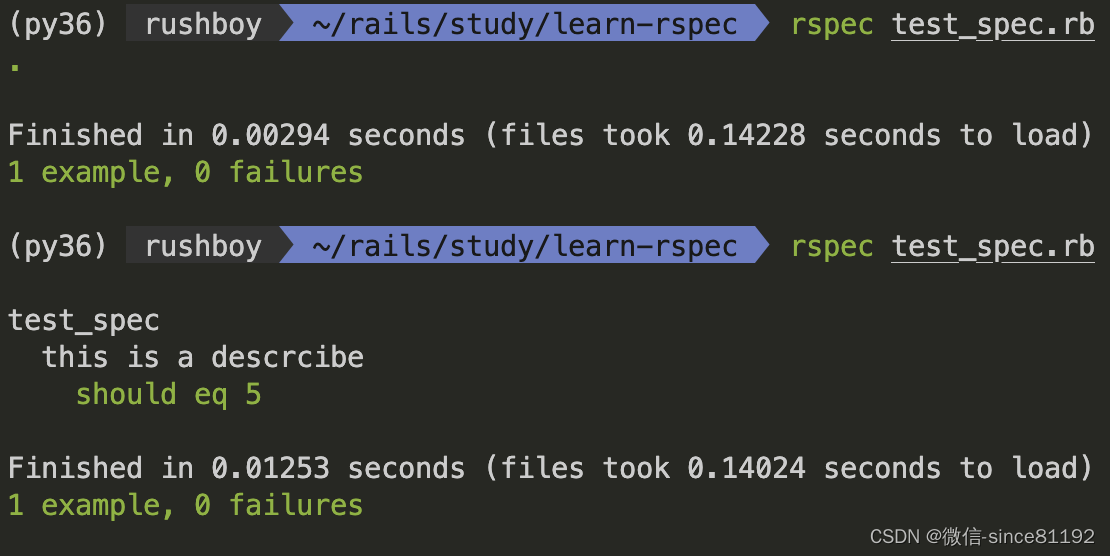
# spec_helper.rb config.default_formatter = "doc" 讯享网RSpec.describe :test_spec do describe 'batch_confirm_qs' do it 'should eq 5' do expect(5).to eq(5) end end end
- 配置formatter前,只显示绿点,配置formatter后,会显示测试的结构

讯享网
三、执行
# 运行所有测试 rspec . # 运行某个测试文件 rspec test_spec.rb # 运行test_spec.rb中某个it用例, 加上it前面的行号 rspec test_spec.rb:19 四、使用
1. describe/ context /it 角**别
describe “描述”一组测试
context 通常用来表示不同的状况,如“当”使用者是管理员,“使用者有某某某属性”,或者if…else等
it 用来写一条具体测试用例
2. describe起名字
讯享网class Ruby def initialize(programmer) end def self.goal "make programmer happy" end def happy? true end end # foo/programmer.rb class Programmer end # foo/ruby_spec.rb require_relative "./ruby" require_relative "./programmer" RSpec.describe Ruby do describe ".goal" do it {
    expect(Ruby.goal).to eq "make programmer happy" } end describe "#happy?" do it "yes, always happy" do programmer = Programmer.new rubyist = Ruby.new(programmer) expect(rubyist.happy?).to eq true end end end
- 类别方法的测试,使用一个点(.),加上方法名称:.method_name来引用。
- 实体方法的测试,使用一个井号(#),加上方法名称:#method_name来引用。
RSpec.describe "#even? method" do context "with even number" do it "should return true" do expect(6.even?).to eq(true) end end context "with odd number" do it "should return false" do expect(9.even?).to eq(false) end end end # 每个方法内有if-else,不同的情况,可以用context 来区分。 describe ".find_or_create_with" do context "with existing user" do ... end context "with new user" do ... end end - 有人用describe 来替代context,也是完全可以的,两者在实际做用上没有什么差别。
- 整个context 方法最重要的就是组织程式码,使其易读,且当你使用context 时,请用when with without 来做开头!
3. let before方法
讯享网RSpec.describe Store do it 'have name' do store = Store.new 'Happy' expect(store.name).to eq 'Happy' end it 'sale product' do store = Store.new 'Happy' expect(store.sale).to eq('Earn money') end end
- 两个测试用例中都有 store = Store.new ’Happy’,使用 let 重构
RSpec.describe Store do let(:store) {
Store.new 'Happy' } it 'have name' do expect(store.name).to eq 'Happy' end it 'sale product' do expect(store.sale).to eq('Earn money') end end - 使用before重构
讯享网RSpec.describe Store do before(:all) do @store = Store.new 'Happy' end it 'have name' do expect(@store.name).to eq 'Happy' end it 'sale product' do expect(@store.sale).to eq('Earn money') end end
- before(:each)会在每个测试用例前执行, 不管有没有调用,都会执行(每段it之前執行),可以只写before
- before(:all) 会所有测试用例执行前,只执行一次,(一個RSpec.describe只執行一次。)
- let == before(:each),寫法不同外,有 lazy load 的特性,只有呼叫時才執行,如果你寫了一堆 let 但 example 裡沒使用,那麼就不會被賦值。
- let! 和 before(:each)一样,会在每个let前都执行
4.Subject
- 基础使用
RSpec.describe Hash do it "should be empty" do expect(subject.length).to eq(0) # 注意里边的subject end end - 如果你的最上层RSpec.describe 后方接的是class 类名,那subject 就会依照这个类的预设值去做new 的动作。
- 相当于
let(:subject) { Hash.new } - 给subject初始化

讯享网RSpec.describe Hash do subject {
    {
   a: 3, b: 4} } # or  subject do {
   a: 3
版权声明:本文内容由互联网用户自发贡献,该文观点仅代表作者本人。本站仅提供信息存储空间服务,不拥有所有权,不承担相关法律责任。如发现本站有涉嫌侵权/违法违规的内容,请联系我们,一经查实,本站将立刻删除。
如需转载请保留出处:https://51itzy.com/kjqy/60276.html