
def hello(name): print('hello',name) greet = hello #hello是函数对象的引用,而hello()是一个可执行的函数 # 我们把这个引用赋值给greet,这样greet也就有了hello的功能, greet('james') #输出:hello james 讯享网
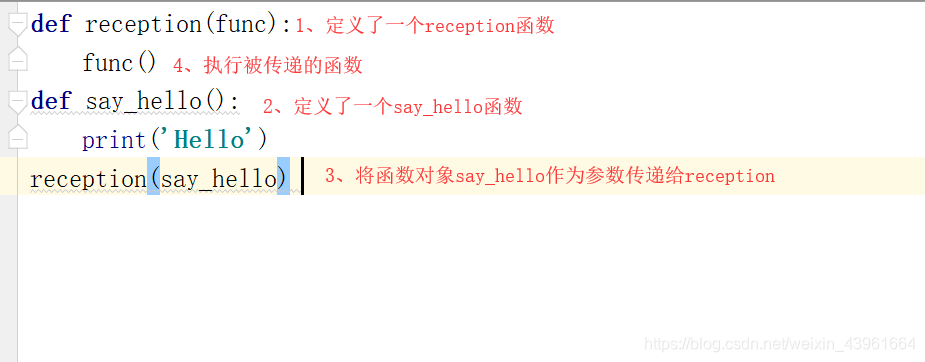
函数作为参数进行传递
讯享网
一个简单的装饰器函数
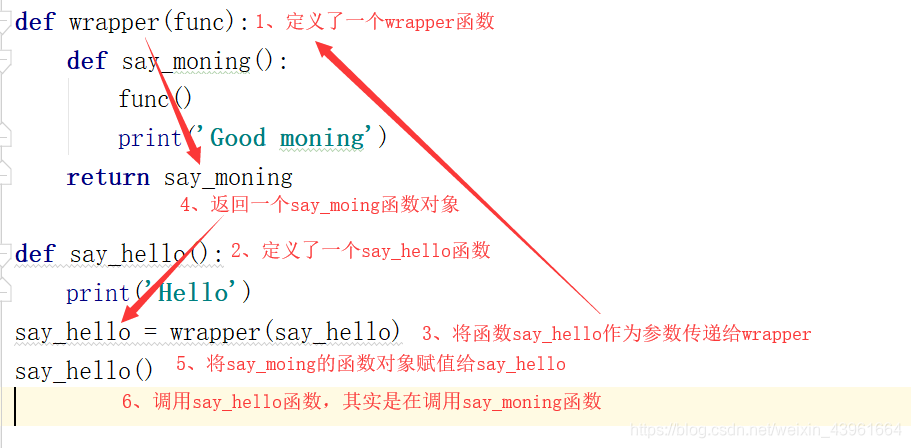
这里wrapper就是一个装饰器函数,say_hello就是一个被装饰函数
输出结果为:Hello
Good moning

讯享网def wrapper(func): def say_moning(): func() print('Good moning') return say_moning @wrapper # 相当于say_hello = wrapper(say_hello) def say_hello(): print('Hello') say_hello()
装饰器的一点小问题
def wrapper(func): def say_moning(): '''这是一个向你问好的函数''' func() print('Good moning') return say_moning @wrapper def say_hello(): '''say hello函数''' print('Hello') print(say_hello.__name__) #因为say_hello其实是say_moning函数,所以这里会显示say_name的名字与文档 print(say_hello.__doc__) 讯享网from functools import wraps def wrapper(func): ''' @wraps接受一个函数来进行装饰,并加入了复制函数名称、注释文档、参数列表等等的功能。 这可以让我们在装饰器里面访问在装饰之前的函数的属性 ''' @wraps(func) def say_moning(): '''这是一个向你问好的函数''' func() print('Good moning') return say_moning @wrapper def say_hello(): '''say hello函数''' print('Hello') print(say_hello.__name__) print(say_hello.__doc__)
带参数的装饰器
from functools import wraps def log_out(logfile='out_log'): def wrapper(func): @wraps(func) def record_execution(*args,kwargs): ret = func(*args,kwargs) record = func.__name__ + ' was executed' print(record) with open(logfile,'a',encoding='utf-8') as open_file: open_file.write(record) return ret return record_execution return wrapper @log_out() #@log_out = [@ + log_out()] = @wrapper = func1 = wrapper(func1) def func1(): pass func1() 多个装饰器装饰一个函数
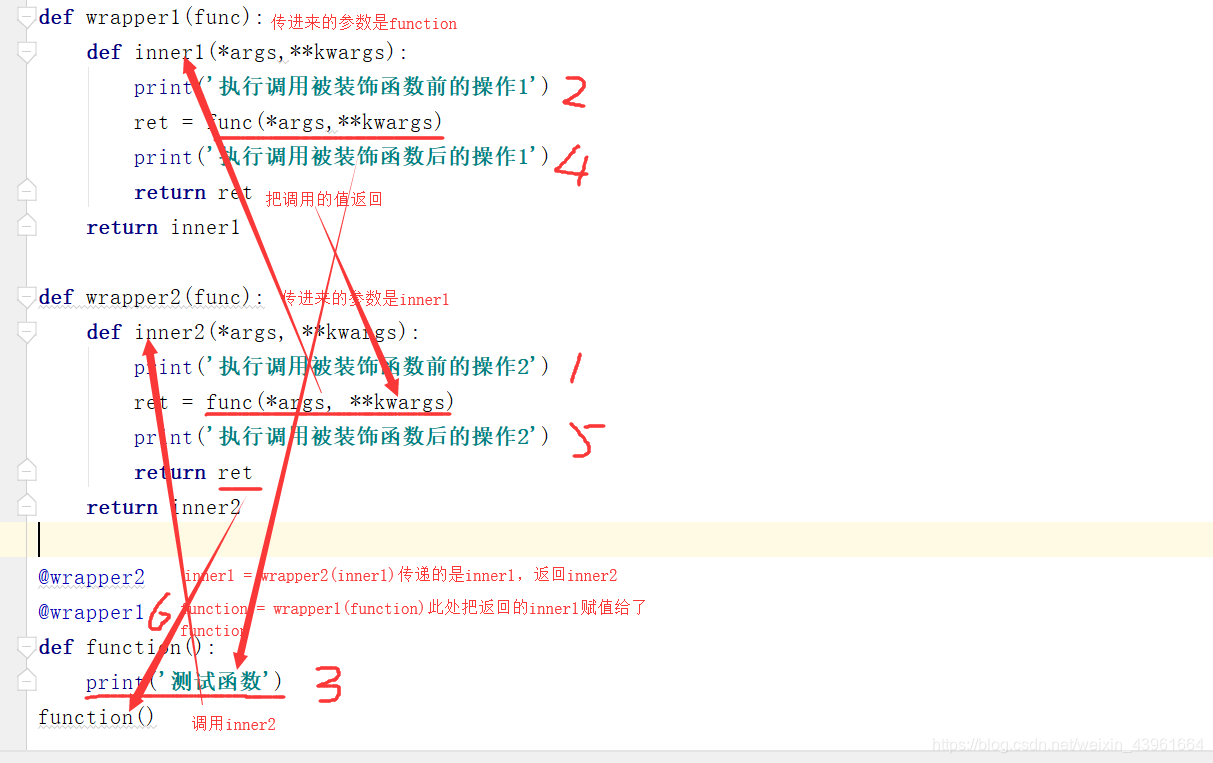
所以返回结果为
执行调用被装饰函数前的操作2
执行调用被装饰函数前的操作1
测试函数
执行调用被装饰函数后的操作1
执行调用被装饰函数后的操作2
版权声明:本文内容由互联网用户自发贡献,该文观点仅代表作者本人。本站仅提供信息存储空间服务,不拥有所有权,不承担相关法律责任。如发现本站有涉嫌侵权/违法违规的内容,请联系我们,一经查实,本站将立刻删除。
如需转载请保留出处:https://51itzy.com/kjqy/55899.html