
基于WIN10的64位系统演示
一、写在前面
本期开始,我们继续学习深度学习图像目标检测系列,SSD(Single Shot MultiBox Detector)模型。
二、SSD简介
SSD(Single Shot MultiBox Detector)是一种流行的目标检测算法,由 Wei Liu, Dragomir Anguelov, Dumitru Erhan 等人于 2016 年提出。它是一种单阶段的目标检测算法,与当时流行的两阶段检测器(如 Faster R-CNN)相比,SSD 提供了更快的检测速度,同时仍然具有较高的准确性。
以下是 SSD 的主要特点和组件:
(1)多尺度特征映射:
SSD 从不同的层级提取特征图,这使得它能够有效地检测不同大小的物体。这是通过在多个特征图上执行预测来实现的,其中每个特征图代表不同的尺度。
(2)默认框(或称为先验框、锚框):
在每个特征图位置,SSD 定义了多个具有不同形状和大小的默认框。这些默认框用于与真实边界框进行匹配,并提供回归目标以调整预测的边界框大小和位置。
(3)单阶段检测器:
与两阶段检测器不同,SSD 在单个前向传递中同时进行边界框回归和类别分类,从而实现了速度和准确性之间的平衡。
(4)损失函数:
SSD 使用了组合损失,包括边界框回归的平滑 L1 损失和类别预测的交叉熵损失。
(5)数据增强:

为了提高模型的性能,SSD 使用了多种数据增强技术,包括随机裁剪、缩放和颜色扭曲等。
(6)模型骨干:
原始的 SSD 使用 VGG-16 作为其骨干网络,但后续的变种如 SSDlite 使用了更轻量级的骨干网络,如 MobileNet。
三、数据源
来源于公共数据,文件设置如下:
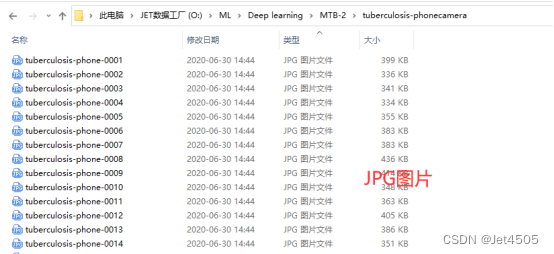
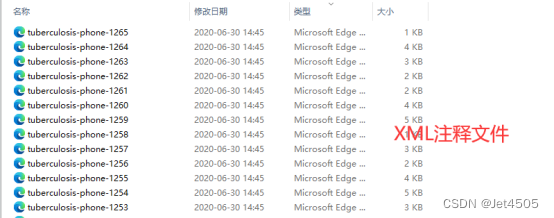
大概的任务就是:用一个框框标记出MTB的位置。
四、SSD实战
直接上代码:
import os import random import torch import torchvision from torchvision.models.detection import ssd300_vgg16 from torchvision.transforms import functional as F from PIL import Image from torch.utils.data import DataLoader import xml.etree.ElementTree as ET import matplotlib.pyplot as plt from torchvision import transforms import albumentations as A from albumentations.pytorch import ToTensorV2 import numpy as np # Function to parse XML annotations def parse_xml(xml_path): tree = ET.parse(xml_path) root = tree.getroot() boxes = [] for obj in root.findall("object"): bndbox = obj.find("bndbox") xmin = int(bndbox.find("xmin").text) ymin = int(bndbox.find("ymin").text) xmax = int(bndbox.find("xmax").text) ymax = int(bndbox.find("ymax").text) # Check if the bounding box is valid if xmin < xmax and ymin < ymax: boxes.append((xmin, ymin, xmax, ymax)) else: print(f"Warning: Ignored invalid box in {xml_path} - ({xmin}, {ymin}, {xmax}, {ymax})") return boxes # Function to split data into training and validation sets def split_data(image_dir, split_ratio=0.8): all_images = [f for f in os.listdir(image_dir) if f.endswith(".jpg")] random.shuffle(all_images) split_idx = int(len(all_images) * split_ratio) train_images = all_images[:split_idx] val_images = all_images[split_idx:] return train_images, val_images # Dataset class for the Tuberculosis dataset class TuberculosisDataset(torch.utils.data.Dataset): def __init__(self, image_dir, annotation_dir, image_list, transform=None): self.image_dir = image_dir self.annotation_dir = annotation_dir self.image_list = image_list self.transform = transform def __len__(self): return len(self.image_list) def __getitem__(self, idx): image_path = os.path.join(self.image_dir, self.image_list[idx]) image = Image.open(image_path).convert("RGB") xml_path = os.path.join(self.annotation_dir, self.image_list[idx].replace(".jpg", ".xml")) boxes = parse_xml(xml_path) # Check for empty bounding boxes and return None if len(boxes) == 0: return None boxes = torch.as_tensor(boxes, dtype=torch.float32) labels = torch.ones((len(boxes),), dtype=torch.int64) iscrowd = torch.zeros((len(boxes),), dtype=torch.int64) target = {} target["boxes"] = boxes target["labels"] = labels target["image_id"] = torch.tensor([idx]) target["iscrowd"] = iscrowd # Apply transformations if self.transform: image = self.transform(image) return image, target # Define the transformations using torchvision data_transform = torchvision.transforms.Compose([ torchvision.transforms.ToTensor(), # Convert PIL image to tensor torchvision.transforms.Normalize(mean=[0.485, 0.456, 0.406], std=[0.229, 0.224, 0.225]) # Normalize the images ]) # Adjusting the DataLoader collate function to handle None values def collate_fn(batch): batch = list(filter(lambda x: x is not None, batch)) return tuple(zip(*batch)) def get_ssd_model_for_finetuning(num_classes): # Load an SSD model with a VGG16 backbone without pre-trained weights model = ssd300_vgg16(pretrained=False, num_classes=num_classes) return model # Function to save the model def save_model(model, path="RetinaNet_mtb.pth", save_full_model=False): if save_full_model: torch.save(model, path) else: torch.save(model.state_dict(), path) print(f"Model saved to {path}") # Function to compute Intersection over Union def compute_iou(boxA, boxB): xA = max(boxA[0], boxB[0]) yA = max(boxA[1], boxB[1]) xB = min(boxA[2], boxB[2]) yB = min(boxA[3], boxB[3]) interArea = max(0, xB - xA + 1) * max(0, yB - yA + 1) boxAArea = (boxA[2] - boxA[0] + 1) * (boxA[3] - boxA[1] + 1) boxBArea = (boxB[2] - boxB[0] + 1) * (boxB[3] - boxB[1] + 1) iou = interArea / float(boxAArea + boxBArea - interArea) return iou # Adjusting the DataLoader collate function to handle None values and entirely empty batches def collate_fn(batch): batch = list(filter(lambda x: x is not None, batch)) if len(batch) == 0: # Return placeholder batch if entirely empty return [torch.zeros(1, 3, 224, 224)], [{}] return tuple(zip(*batch)) #Training function with modifications for collecting IoU and loss def train_model(model, train_loader, optimizer, device, num_epochs=10): model.train() model.to(device) loss_values = [] iou_values = [] for epoch in range(num_epochs): epoch_loss = 0.0 total_ious = 0 num_boxes = 0 for images, targets in train_loader: # Skip batches with placeholder data if len(targets) == 1 and not targets[0]: continue # Skip batches with empty targets if any(len(target["boxes"]) == 0 for target in targets): continue images = [image.to(device) for image in images] targets = [{k: v.to(device) for k, v in t.items()} for t in targets] loss_dict = model(images, targets) losses = sum(loss for loss in loss_dict.values()) optimizer.zero_grad() losses.backward() optimizer.step() epoch_loss += losses.item() # Compute IoU for evaluation with torch.no_grad(): model.eval() predictions = model(images) for i, prediction in enumerate(predictions): pred_boxes = prediction["boxes"].cpu().numpy() true_boxes = targets[i]["boxes"].cpu().numpy() for pred_box in pred_boxes: for true_box in true_boxes: iou = compute_iou(pred_box, true_box) total_ious += iou num_boxes += 1 model.train() avg_loss = epoch_loss / len(train_loader) avg_iou = total_ious / num_boxes if num_boxes != 0 else 0 loss_values.append(avg_loss) iou_values.append(avg_iou) print(f"Epoch {epoch+1}/{num_epochs} Loss: {avg_loss} Avg IoU: {avg_iou}") # Plotting loss and IoU values plt.figure(figsize=(12, 5)) plt.subplot(1, 2, 1) plt.plot(loss_values, label="Training Loss") plt.title("Training Loss across Epochs") plt.xlabel("Epochs") plt.ylabel("Loss") plt.subplot(1, 2, 2) plt.plot(iou_values, label="IoU") plt.title("IoU across Epochs") plt.xlabel("Epochs") plt.ylabel("IoU") plt.show() # Save model after training save_model(model) # Validation function def validate_model(model, val_loader, device): model.eval() model.to(device) with torch.no_grad(): for images, targets in val_loader: images = [image.to(device) for image in images] targets = [{k: v.to(device) for k, v in t.items()} for t in targets] model(images) # Paths to your data image_dir = "tuberculosis-phonecamera" annotation_dir = "tuberculosis-phonecamera" # Split data train_images, val_images = split_data(image_dir) # Create datasets and dataloaders train_dataset = TuberculosisDataset(image_dir, annotation_dir, train_images, transform=data_transform) val_dataset = TuberculosisDataset(image_dir, annotation_dir, val_images, transform=data_transform) # Updated DataLoader with new collate function train_loader = DataLoader(train_dataset, batch_size=4, shuffle=True, collate_fn=collate_fn) val_loader = DataLoader(val_dataset, batch_size=4, shuffle=False, collate_fn=collate_fn) # Model and optimizer model = get_ssd_model_for_finetuning(2) optimizer = torch.optim.Adam(model.parameters(), lr=0.001) # Train and validate train_model(model, train_loader, optimizer, device="cuda", num_epochs=10) validate_model(model, val_loader, device="cuda") Print Metrics def calculate_metrics(predictions, ground_truths, iou_threshold=0.5): TP = 0 # True Positives FP = 0 # False Positives FN = 0 # False Negatives total_iou = 0 # to calculate mean IoU for pred, gt in zip(predictions, ground_truths): pred_boxes = pred["boxes"].cpu().numpy() gt_boxes = gt["boxes"].cpu().numpy() # Match predicted boxes to ground truth boxes for pred_box in pred_boxes: max_iou = 0 matched = False for gt_box in gt_boxes: iou = compute_iou(pred_box, gt_box) if iou > max_iou: max_iou = iou if iou > iou_threshold: matched = True total_iou += max_iou if matched: TP += 1 else: FP += 1 FN += len(gt_boxes) - TP precision = TP / (TP + FP) if (TP + FP) != 0 else 0 recall = TP / (TP + FN) if (TP + FN) != 0 else 0 f1_score = (2 * precision * recall) / (precision + recall) if (precision + recall) != 0 else 0 mean_iou = total_iou / (TP + FP) if (TP + FP) != 0 else 0 return precision, recall, f1_score, mean_iou def evaluate_model(model, dataloader, device): model.eval() model.to(device) all_predictions = [] all_ground_truths = [] with torch.no_grad(): for images, targets in dataloader: images = [image.to(device) for image in images] predictions = model(images) all_predictions.extend(predictions) all_ground_truths.extend(targets) precision, recall, f1_score, mean_iou = calculate_metrics(all_predictions, all_ground_truths) return precision, recall, f1_score, mean_iou train_precision, train_recall, train_f1, train_iou = evaluate_model(model, train_loader, "cuda") val_precision, val_recall, val_f1, val_iou = evaluate_model(model, val_loader, "cuda") print("Training Set Metrics:") print(f"Precision: {train_precision:.4f}, Recall: {train_recall:.4f}, F1 Score: {train_f1:.4f}, Mean IoU: {train_iou:.4f}") print("\nValidation Set Metrics:") print(f"Precision: {val_precision:.4f}, Recall: {val_recall:.4f}, F1 Score: {val_f1:.4f}, Mean IoU: {val_iou:.4f}") #sheet header = "| Metric | Training Set | Validation Set |" divider = "+----------+--------------+----------------+" train_metrics = f"| Precision | {train_precision:.4f} | {val_precision:.4f} |" recall_metrics = f"| Recall | {train_recall:.4f} | {val_recall:.4f} |" f1_metrics = f"| F1 Score | {train_f1:.4f} | {val_f1:.4f} |" iou_metrics = f"| Mean IoU | {train_iou:.4f} | {val_iou:.4f} |" print(header) print(divider) print(train_metrics) print(recall_metrics) print(f1_metrics) print(iou_metrics) print(divider) Train Set import numpy as np import matplotlib.pyplot as plt def plot_predictions_on_image(model, dataset, device, title): # Select a random image from the dataset idx = np.random.randint(50, len(dataset)) image, target = dataset[idx] img_tensor = image.clone().detach().to(device).unsqueeze(0) # Use the model to make predictions model.eval() with torch.no_grad(): prediction = model(img_tensor) # Inverse normalization for visualization inv_normalize = transforms.Normalize( mean=[-0.485/0.229, -0.456/0.224, -0.406/0.225], std=[1/0.229, 1/0.224, 1/0.225] ) image = inv_normalize(image) image = torch.clamp(image, 0, 1) image = F.to_pil_image(image) # Plot the image with ground truth boxes plt.figure(figsize=(10, 6)) plt.title(title + " with Ground Truth Boxes") plt.imshow(image) ax = plt.gca() # Draw the ground truth boxes in blue for box in target["boxes"]: rect = plt.Rectangle( (box[0], box[1]), box[2]-box[0], box[3]-box[1], fill=False, color='blue', linewidth=2 ) ax.add_patch(rect) plt.show() # Plot the image with predicted boxes plt.figure(figsize=(10, 6)) plt.title(title + " with Predicted Boxes") plt.imshow(image) ax = plt.gca() # Draw the predicted boxes in red for box in prediction[0]["boxes"].cpu(): rect = plt.Rectangle( (box[0], box[1]), box[2]-box[0], box[3]-box[1], fill=False, color='red', linewidth=2 ) ax.add_patch(rect) plt.show() # Call the function for a random image from the train dataset plot_predictions_on_image(model, train_dataset, "cuda", "Selected from Training Set") Val Set # Call the function for a random image from the validation dataset plot_predictions_on_image(model, val_dataset, "cuda", "Selected from Validation Set")讯享网
需要从头训练的,就不跑了。
结尾我开始摆烂了。
版权声明:本文内容由互联网用户自发贡献,该文观点仅代表作者本人。本站仅提供信息存储空间服务,不拥有所有权,不承担相关法律责任。如发现本站有涉嫌侵权/违法违规的内容,请联系我们,一经查实,本站将立刻删除。
如需转载请保留出处:https://51itzy.com/kjqy/77094.html