
更多java源码分析请见:jdk11源码分析系列文章专栏:Java11源码分析
欢迎关注本人公众号

讯享网
首先看一下本人两篇源码解析:
- jdk11源码–LinkedBlockingQueue源码分析
- jdk11源码–ArrayBlockingQueue源码分析
细心的同学会发现,ArrayBlockingQueue的实现是“单锁+两个condition”,而LinkedBlockingQueue是采用的“双锁+各自的condition”来实现的。两个类的作者都是Doug Lea,这是为什么呢?
以下内容转载自 为什么ArrayBlockingQueue不使用LinkedBlockingQueue类似的双锁实现? :
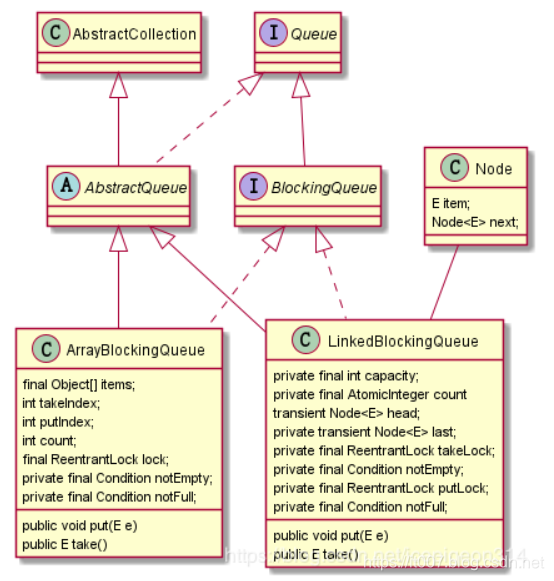
1.ArrayBlockingQueue,底层用数组存储数据,属于有界队列,初始化时必须指定队列大小,count记录当前队列元素个数,takeIndex和putIndex分别记录出队和入队的数组下标边界,都在[0,items.length-1]范围内循环使用,同时满足0<=count<=items.length。在提供的阻塞方法put/take中,共用一个Lock实例,分别在绑定的不同的Condition实例处阻塞,如put在队列满时调用notFull.await(),take在队列空时调用notEmpty.await(),源码比较容易看懂,下面贴出put和enqueue方法的源码。
 public void put(E e) throws InterruptedException {
    checkNotNull(e); final ReentrantLock lock = this.lock; lock.lockInterruptibly(); try {
    while (count == items.length) notFull.await(); enqueue(e); } finally {
    lock.unlock(); } } private void enqueue(E x) {
    final Object[] items = this.items; items[putIndex] = x; if (++putIndex == items.length) putIndex = 0; count++; notEmpty.signal(); }
讯享网
2.LinkedBlockingQueue,底层用单向链表存储数据,可以用作有界队列或者无界队列,默认无参构造函数的容量为Integer.MAX_VALUE。上面类图中的各个属性也比较好懂,不再叙述。从类图中可以看到,LinkedBlockingQueue使用了takeLock和putLock两把锁,分别用于阻塞队列的读写线程,也就是说,读线程和写线程可以同时运行,在多线程高并发场景,应该可以有更高的吞吐量,性能比单锁更高。
那么问题来了,既然LinkedBlockingQueue兄弟用双锁实现,而且性能更好,为什么ArrayBlockingQueue不使用双锁实现呢?心中产生了这个问题之后,我首先想到的是去网上搜搜别人的见解,最终我没有得到完全令人信服的答案,但至少我知道不仅仅我一个人心中有这样的疑问。相关讨论的链接:
a.The reason why they didn’t used it, is mainly because of the complexity in implementation especially iterators and trade off between complexity and performance gain was not that lucrative.
https://stackoverflow.com/questions//arrayblockingqueue-uses-a-single-lock-for-insertion-and-removal-but-linkedblocki
http://jsr166-concurrency.10961.n7.nabble.com/ArrayBlockingQueue-concurrent-put-and-take-tc1306.html
b.It may be that Doug Lea didn’t feel that Java needed to support 2 different BlockingQueues that differed only in their allocation scheme.

https://stackoverflow.com/questions//what-is-the-reason-to-implement-arrayblockingqueue-with-one-lock-on-tail-and-hea
我个人还是偏向于第二种答案的,从根源上说,写代码的作者决定了设计思路。
针对这个问题,我也做了自己的一些分析,主要分为两步:
1、ABQ是否可以用双锁实现?
为了简化模型,我把ABQ的继承父类和实现接口全部干掉,只保留核心方法put/take,然后将count修改为原子类的变量,将单锁改造成双锁
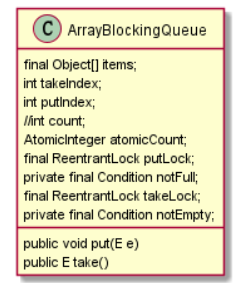
简化之后,改造还是非常简单的,事实证明双锁实现Array存储的BlockingQueue是没有问题的。
2、ABQ完全改造成双锁实现是否存在实现困难?改造后性能会有明显提升吗?
a.双锁改造,我的做法是将ArrayBlockingQueue完全复制过来,然后先按步骤1的做法设计双锁,然后将所有受影响的地方做相应的代码改动,同时在加锁的所有地方分析是否要上双锁还是只需上某一把锁。实际coding下来,应该是没有困难的,当然我是在已经实现的ArrayBlockingQueue代码基础上去做部分修改。
b.改造后分别用MyABQ、ArrayBlockingQueue、LinkedBlockingQueue做多线程读写测试,测试环境4核CPU、8G内存、64位window7系统,写线程80个,读线程10个,保证读写的总数据量差额在队列长度内,每种类型测试10次,测试结果如下:
类型\平均用时(ms)

事实证明,双锁改造后的ABQ性能有明显提升。下面贴出我的测试代码:
讯享网 public static long testBQ(String queueType) {
    final CountDownLatch latch = new CountDownLatch(1); int threadNum = 80; int size = threadNum/8 + 2; int totalThreadNum = threadNum + threadNum / 8; final BlockingQueue<String> myQueue; if ("MyABQ".equals(queueType)) {
    myQueue = new MyABQ<String>(size); } else if("ArrayBlockingQueue".equals(queueType)) {
    myQueue = new ArrayBlockingQueue<String>(size); } else {
    myQueue = new LinkedBlockingQueue<String>(); } final AtomicInteger i = new AtomicInteger(0); final int innerLoop = 10000; final CountDownLatch latch2 = new CountDownLatch(totalThreadNum); long timeBefore = System.currentTimeMillis(); for (int j = 0; j < threadNum; j++) {
    Thread t1 = new Thread(() -> {
    try {
    latch.await(); for (int k = 0; k < innerLoop; k++) {
    myQueue.put("" + (i.getAndIncrement())); } latch2.countDown(); } catch (InterruptedException e) {
    e.printStackTrace(); } }); t1.start(); } for (int j = 0; j < threadNum/8; j++) {
    Thread t2 = new Thread(() -> {
    try {
    latch.await(); for (int k = 0; k < 8*innerLoop-1; k++) {
    myQueue.take(); // System.out.print(myQueue.take() + " "); } latch2.countDown(); } catch (InterruptedException e) {
    e.printStackTrace(); } }); t2.start(); } latch.countDown(); try {
    latch2.await(); } catch (InterruptedException e) {
    e.printStackTrace(); } System.out.println(""); long ret = System.currentTimeMillis() - timeBefore; // System.out.println("\nusing time(ms): " + ret); return ret; }
版权声明:本文内容由互联网用户自发贡献,该文观点仅代表作者本人。本站仅提供信息存储空间服务,不拥有所有权,不承担相关法律责任。如发现本站有涉嫌侵权/违法违规的内容,请联系我们,一经查实,本站将立刻删除。
如需转载请保留出处:https://51itzy.com/kjqy/73864.html