
This article was sponsored by WRLD 3D. Thank you for supporting the partners who make SitePoint possible.
本文由WRLD 3D赞助。 感谢您支持使SitePoint成为可能的合作伙伴。
The following takes place between 7:00am and 8:00am, on Christmas Eve. Events occur in real time.
以下活动在圣诞节前夕的7:00 am至8:00 am之间进行。 事件是实时发生的。
For all our data-gathering capabilities, we’re still hopeless when it comes to visualising that data in the 3D world we live in. We stare at 2D charts and log entries, but much of the data we pluck out of the world has meaning in a 3D context. And, it can be useful to visualise this data when it is applied back into a 3D model.
对于我们所有的数据收集功能,在可视化我们所居住的3D世界中的数据时,我们仍然抱有希望。我们盯着2D图表和日志条目,但是我们从世界中拔出的许多数据都具有意义在3D环境中。 并且,当将数据重新应用到3D模型中时,可视化该数据可能会很有用。
This is the problem Augmented Reality seeks to solve. In contrast to the fictional environments of Virtual Reality, Augmented Reality can help us solve many real problems; by applying the data we would otherwise consume through a 2D medium to the real world around us. Mapping is the first-born amongst Augmented Reality’s children.
这是增强现实寻求解决的问题。 与虚拟现实的虚构环境相比,增强现实可以帮助我们解决许多现实问题。 通过应用数据,否则我们将通过2D媒体将其消耗到我们周围的现实世界中。 映射是增强现实的孩子中的长子。
When WRLD approached us, to write about their platform, I was immediately taken by their platform’s graphics and performance. Yet, the more I use their platform; the more I am fascinated by the usefulness of their API and fidelity of their mapping data.
当WRLD与我们联系时,写他们的平台时,我立即被他们平台的图形和性能所吸引。 但是,我越是使用他们的平台; 我对API的实用性和映射数据的保真度更加着迷。
We’re going to publish a series of tutorials, which demonstrate how to use this platform to bring information into the world it applies to. Each tutorial is themed according to a popular T.V. show. As you may have guessed, this first one is about 24.
我们将发布一系列教程,以演示如何使用该平台将信息带入适用的世界。 每个教程的主题均根据受欢迎的电视节目而定。 您可能已经猜到,第一个大约是24 。
In this tutorial, we’re going to learn how to get started with the WRLD platform. We’ll follow the documentation examples to render the simplest map. Then, we’ll create a local environment for compiling our code; and start to tell a story with it.

在本教程中,我们将学习如何开始使用WRLD平台。 我们将按照文档示例来呈现最简单的地图。 然后,我们将创建一个本地环境来编译代码。 并开始讲一个故事。
We’ll cover these topics:
我们将讨论以下主题:
- Rendering maps based on the name of a place 根据地点名称渲染地图
- Moving through a map, for a sequence of events 遍历地图,了解一系列事件
- Highlighting buildings and designing events at each building 突出建筑物并在每个建筑物上设计活动
- Playing sound files with the HTML5 Audio API 使用HTML5音频API播放声音文件
- Changing weather conditions and time of day for the map 更改天气状况和一天中的时间
The code for this tutorial can be found on Github. It has been tested with a modern versions or Firefox, Node, and macOS.
可以在Github上找到本教程的代码。 它已经过现代版本或Firefox,Node和macOS的测试。
入门 (Getting Started)
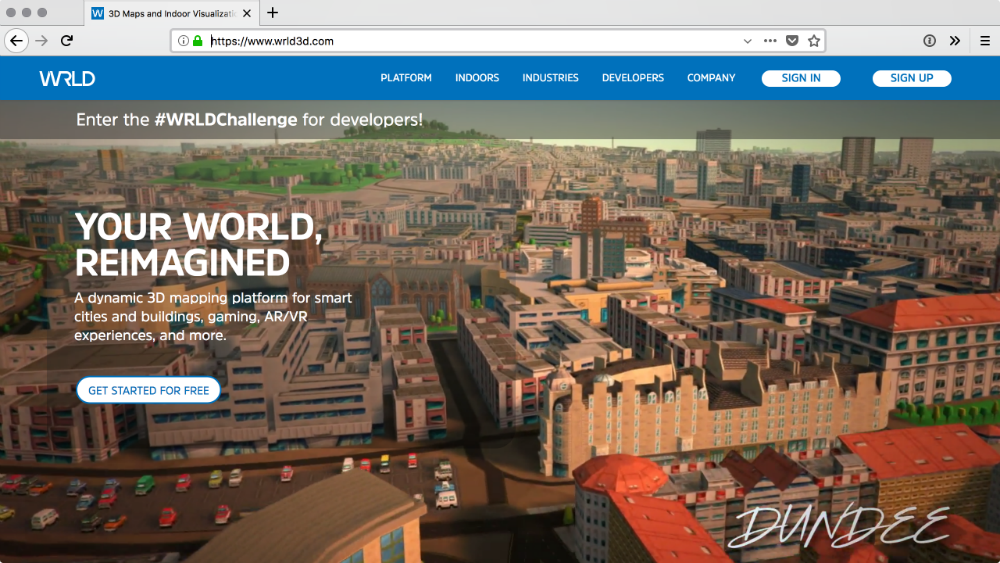
The easiest way to get started is to follow the first example, in the documentation. Before we can do that, we need an account. Head over to https://www.wrld3d.com and click “Sign Up”.
最简单的入门方法是遵循文档中的第一个示例。 在此之前,我们需要一个帐户。 转到https://www.wrld3d.com ,然后单击“注册”。
版权声明:本文内容由互联网用户自发贡献,该文观点仅代表作者本人。本站仅提供信息存储空间服务,不拥有所有权,不承担相关法律责任。如发现本站有涉嫌侵权/违法违规的内容,请联系我们,一经查实,本站将立刻删除。
如需转载请保留出处:https://51itzy.com/kjqy/54210.html