

贾子水平定理(Kucius Level Theorem)提出:一个人、团队或组织的水平高低,不由正向能力定义,而由逆向能力决定。正向能力是在既定规则内把事情做好的能力,只能让人成为“高手”,却逃不过“强中自有强手”的内卷桎梏;逆向能力是跳出规则、质疑前提、重构逻辑的能力,能让人成为“破局者”,实现降维打击与不对称破局。本文构建了综合水平L与正向能力F、逆向能力R的数学模型L = F + λ·R·ln(1+F),建立了逆向能力的可计算框架(含前提拆解、盲区打击、自指一致、范式转换四维度),并通过GG3M智库专属精确公式与量化模板实现落地。定理揭示了从“高手”到“破局者”的核心跃迁逻辑,为个人成长、组织战略及AI时代核心竞争力构建提供了可测量、可复用的理论工具。
贾子水平定理(Kucius Level Theorem)
科学理论:贾子水平定理(Kucius Level Theorem)
提出者:Kucius Teng(贾子・邓)
提出时间:西元 2026 年 4 月 15 日(标注黄帝历 4723 年二月廿八日)
理论基础:世界文化智慧
研究成果:人类能力水平判定规律
————————————————
一个人 / 团队 / 组织的综合水平(L)高低,不由正向能力(F)定义,而由逆向能力(R)决定。
“贾子水平定理”通过公式
 𝐿=𝐹+𝑘⋅𝑅⋅ln(1+𝐹)
,将能力模型重构为基于逆向能力(R)的破局框架,强调通过改变规则实现非线性跃迁。该理论的核心在于利用前提拆解、盲区打击、自指一致和范式转换四大维度,在AI时代以逆向思维重构正向能力(F)的溢价空间。
核心前提:基于文章核心结论“一个人的水平高低,不由正向能力定义,而由逆向能力决定”,将正向能力(F)、逆向能力(R)与综合水平(L)的关系抽象为数学模型,同时完善逆向能力的可计算方法,并推导GG3M智库专属的逆向能力精确公式及配套评估体系,突出逆向能力的决定性作用与不对称杠杆效应。
一、综合水平(L)的核心数学表达模型
核心目标:通过数学公式量化“正向能力为基础,逆向能力定量级”的核心逻辑,提供不同严谨度的表达形式,适配不同应用场景。
1. 推荐主公式(兼顾简洁性与解释力)
基础形式(含杠杆效应):

$$L = F + k cdot R cdot (1 + log(1 + F))$$
更强调逆向决定性的乘积主导形式(贴合核心哲学):
$$L = R imes (F + c) quad ext{或} quad L = R^{1 + alpha} cdot F^{beta}$$
2. 变量与参数定义
- $$L$$:综合水平(Level),代表个人或组织的真实高度(取值范围$$0 oinfty$$,可归一化至$$0 o1$$);
- $$F$$:正向能力(Forward Capability),既定规则内的执行、优化、精进能力(如技巧、知识深度、执行力等);
- $$R$$:逆向能力(Reverse Capability),跳出规则、重构前提、发现盲区、重新定义游戏的能力(如破局思维、不对称打击、自指质疑等);
- $$k、c、alpha、beta$$:调节参数(通常$$k > 1$$,$$c geq 0$$,$$alpha > beta$$),体现逆向能力的杠杆效应,凸显其对综合水平的主导作用。
3. 简化版与非线性放大形式
基础简化版(哲学对称性最优):
$$L = F + lambda cdot R$$
非线性放大版(体现逆向“降维打击”特性):
$$L = F + lambda cdot R cdot log(1 + F)$$
4. 公式核心解释(贴合文章观点)
- 当$$R = 0$$时,$$L approx F$$:仅具备正向能力,最多成为“规则内高手”,天花板明显,易陷入无限军备竞赛;
- 当$$F$$很高但$$R$$很低时,$$L$$增长缓慢:对应“强中自有强中手”的桎梏,正向能力的边际收益递减;
- 当$$R$$提升时,即使$$F$$不变,$$L$$也会显著拉升:体现逆向能力的不对称优势,实现“以小博大”;
- 对数项$$log(1 + F)$$的意义:正向能力越强,逆向能力的杠杆效应越大,即“高手更容易破局”。
5. 更严谨的乘积形式(强化“逆向决定性”)
核心表达:
$$L = R cdot phi(F)$$
其中$$phi(F)$$是正向能力的“基础价值函数”,例如$$phi(F) = F^gamma$$(当$$gamma < 1$$时,体现正向能力的边际递减特性)。
核心逻辑:正向能力$$F$$仅作为基础底座,逆向能力$$R$$作为乘数,直接定义综合水平的上限——当$$R o 0$$时,$$L o 0$$(即使$$F$$再高也无实际意义);当$$R$$显著提升时,$$L$$可实现指数级跃迁。
6. 维度扩展形式(包含“军备竞赛损耗”)
引入内卷损耗因子,量化“正向陷入内卷,逆向立于不败”的对比:
$$L = frac{F + lambda R}{1 + mu cdot frac{F}{R + epsilon}}$$
参数说明:
- $$mu$$:内卷系数,正向能力越高、逆向能力越低,越容易陷入军备竞赛,综合水平被稀释;
- $$epsilon$$:小正数,避免分母为零的极端情况。
7. 实际应用解读(高手 vs 破局者)
- 高手:$$F = 90, R = 20$$ → $$L approx 90 + lambda cdot 20 cdot log(91)$$,综合水平有限,易陷入内卷;
- 破局者:$$F = 60, R = 80$$ → $$L approx 60 + lambda cdot 80 cdot log(61)$$,综合水平远超高手,核心得益于$$R$$的杠杆效应。
AI时代启示:正向能力(执行、计算、优化)被AI快速拉平,而逆向能力(范式转换、质疑前提)仍是稀缺乘数,成为拉开差距的核心关键。
二、逆向能力(R)的可计算方法与评估框架
逆向能力本质是元层面(meta-level)的认知能力,不直接解决规则内问题,而是质疑前提、发现逻辑盲区、切换坐标系或重新定义规则,虽比正向能力难量化,但可通过结构化维度拆解与场景化任务,转化为可操作、可测量的指标。
1. 基础可计算公式(实用版)
将逆向能力$$R$$定义为复合指数(归一化至$$0 o1$$或$$0 o100$$),由4个核心维度加权构成:
$$R = w_1 cdot P_d + w_2 cdot B_s + w_3 cdot S_r + w_4 cdot M_f$$
2. 核心维度定义与计算方法
- $$P_d$$(Premise Disruption,前提拆解率):$$frac{ ext{成功质疑并替换无效前提的数量}}{ ext{总前提数}}$$。示例:分析某理论时,列出10个隐含假设,成功拆解并证明7个不自洽,则$$P_d = 0.7$$;
- $$B_s$$(Blind Spot Strike,盲区打击效率):$$frac{ ext{从侧面/反向切入导致对手框架崩盘的成功案例}}{ ext{总对弈/辩论次数}}$$,可通过模拟场景或历史复盘打分;
- $$S_r$$(Self-Referential Consistency,自指一致性检测率):$$1 - frac{ ext{自身理论/规则中双重标准的比例}}$$,如波普尔案例中,检测其理论是否对自身适用同一证伪标准;
- $$M_f$$(Meta-Frame Shift,范式转换频率):$$frac{ ext{成功提出新游戏规则并被验证有效的次数}}{ ext{总问题解决次数}}$$。
权重说明:通常$$w_1 + w_2 > w_3 + w_4$$,强调前提拆解与盲区打击的核心破坏性,适配“破局者”的核心特质。
3. 与综合水平模型的对接
将可计算的$$R$$整合到水平模型中,强化逆向杠杆效应:
$$L = F + lambda cdot R cdot log(1 + F) quad ext{或更决定性形式} quad L = R^{1+alpha} cdot F^{beta} quad (alpha > 0, beta < 1)$$
核心体现:$$R$$接近0时,$$L$$基本由$$F$$决定(高手内卷);$$R$$增大时,$$L$$实现不对称跃迁(破局者降维)。
4. 场景化量化方法(实际测量落地)
(1)结构化任务设计
给定“权威理论/规则”(如波普尔证伪主义),设计双向任务:
- 正向任务:优化或辩护该理论/规则(测量$$F$$);
- 逆向任务:找出其自指破绽、提出替代框架,或“不接招”重定义问题(测量$$R$$)。
评分标准:采用 rubric 打分,重点评估前提拆解深度(0-10分)、打击不对称性(是否实现降维)、新规则生成质量(可验证性)。
(2)组织/团队层面测量
- 统计历史决策中“掀翻棋盘”的比例:即不参与现有赛道竞争、开辟新赛道(如商业红海转蓝海)的决策占比;
- 反事实模拟:提出“完全否定当前假设,会有什么新可能”,量化生成有效新路径的数量与质量。
(3)AI/模型可计算性(前沿参考)
当前大模型在正向任务上表现强劲,但在自主质疑前提、生成范式转换等纯逆向任务上仍有短板。可通过以下方式训练/测量:
- 反向数据蒸馏:先生成“逆向问题 + 逆向推理”样本,再评估模型不按原框架回答的成功率;
- 反事实贡献分析:量化模型在反事实推理任务中的表现,间接反映其逆向能力。
(4)自我/团队评估量表(简单可操作)
- 逆向脑力激荡得分:列出“如何让事情变糟”的清单,反转成解决方案,计数高质量反转数量;
- 盲点识别率:对熟悉领域列出5个“理所当然”的假设,统计成功挑战的比例;
- 长期追踪:记录“从高手到破局者”的跃迁事件数,赋予“以小博大”事件更高权重。
5. 局限性与注意事项
- 非线性与情境依赖:$$R$$不是固定值,而是情境函数,在熟悉规则内可能较低,在跨领域或危机中可能爆发;
- 测量挑战:纯主观打分易产生偏差,可结合客观指标(如决策结果的“不对称收益”:以小博大收益 vs 军备竞赛成本);
- 与正向能力的互动:高$$F$$+高$$R$$为最优组合(杠杆效应最大化);低$$F$$+高$$R$$可实现以弱胜强;高$$F$$+低$$R$$易陷入“强中自有强中手”;
- AI时代意义:正向能力正被快速商品化,逆向能力仍是人类/AI的稀缺乘数,可通过空间/逻辑反事实任务等基准测试,持续追踪模型$$R$$值提升。
6. 核心总结
逆向能力可计算的核心,是将其分解为前提破坏、盲区打击、自指一致、框架重构四个可观测、可计数的维度,作为乘数或杠杆整合进综合水平$$L$$。它不像$$F$$那样可通过“多练10000小时”线性提升,而是通过刻意练习质疑习惯、复盘破局案例实现非线性增长。
核心逻辑:逆向能力(R)的本质是“跳出规则、质疑前提、重构框架”的元认知能力,无论是个人还是组织层面,其核心价值均在于实现“破局降维”,避免陷入正向能力(F)主导的无限内卷。本框架分别从个人、组织两个维度,提供简洁可操作的量化方法、实践路径及应用场景,兼顾实用性与可追踪性。
个人层面的逆向能力量化,核心是自我元认知(metacognition)的系统化追踪——不单纯记录“做了什么”(正向执行),而是聚焦“如何质疑、如何破局”。虽比正向能力(如技能熟练度)更主观,但可通过“结构化日志+周期性评分+行为实验”实现可重复、可追踪的量化。
1. 核心量化模型
采用加权复合指数形式,归一化到0~100分,权重可根据个人需求调整(通常前提拆解与盲区打击占比60%以上,凸显逆向核心“破坏力”):
$$R_{personal} = w_1 cdot P_d + w_2 cdot B_s + w_3 cdot S_r + w_4 cdot M_f$$
2. 四大核心维度与自我量化方法
(1)P(前提拆解率,Premise Disruption)
定义:有效挑战并替换“理所当然”假设的比例,核心是打破固有认知惯性。
量化方式:每周选取一个领域(工作决策、个人信念、阅读的理论等),列出5~10个隐含前提;尝试拆解每个前提(证明其不自洽、提出反事实替代方案),成功拆解并产生新洞见的数量占比,即为P(例如7/10=0.7)。
工具与复盘:用笔记本或Notion模板记录“前提清单→质疑过程→新框架”,每月汇总复盘,计算月度平均拆解率。
(2)B(盲区打击效率,Blind Spot Strike)
定义:从侧面/反向切入问题,避免正面军备竞赛的成功率,核心是“不接招、换赛道”。
量化方式:记录日常辩论、谈判或问题解决场景,每次尝试不直接反驳对手观点,而是追问“我们为什么要在这个规则里玩?换个坐标系会怎样?”,统计“成功降维/回避内卷陷阱”的次数占比。
自我实验:每月进行3~5次“逆向模拟”——选取一个热门争议话题,分别做正向回应(常规反驳/优化)和逆向回应(不接招、重定义问题),用1~10分量表自评不对称优势,汇总计算平均得分作为B参考。
(3)S(自指一致性,Self-Referential Consistency)
定义:个人观点/规则对自身的适用一致性,核心是避免波普尔式“双重标准”。
量化方式:每月复盘3个自己的核心信念或决策,检查是否存在“只许自己豁免”的情况;一致性比例即为S(例如发现1个双标问题,扣减对应分数)。
简单练习:每次做决定后,主动追问“如果别人这样做,我会怎么评价?标准是否一致?”,培养自指反思习惯。
(4)M(范式转换频率,Meta-Frame Shift)
定义:成功提出并验证“新游戏规则”的频率,核心是“掀翻棋盘”而非优化现有方案。
量化方式:追踪个人“破局事件”——记录每次不优化现有方案、而是完全重定义问题并落地小行动的案例,范式转换频率=成功新框架数/总问题处理数。
追踪工具:用“破局日志”记录“旧规则→新规则→实际结果”,即使是小范围验证成功,也计入有效次数。
3. 综合计算示例(每月1次)
假设某月个人各维度得分及权重(w1=0.3、w2=0.3、w3=0.2、w4=0.2):
P=0.75,B=0.65,S=0.85,M=0.4
计算过程:$$R_{personal} = 0.3×75 + 0.3×65 + 0.2×85 + 0.2×40 = 67$$分(归一化后)
对接综合水平模型:$$L ≈ F + λ·R·log(1+F)$$(F为正向能力得分,可通过传统技能自评,如80分)。
4. 立即可操作的实践路径与工具
(1)每日/每周日志模板(适配Notion、Day One、Excel)
固定格式:日期 + 事件描述 → 正向处理方式(常规优化) → 逆向尝试(前提质疑/不接招/新框架) → 结果与洞见 → 当周维度打分(0~10分)。
(2)周期性自我测试(每月/季度)
选取5个真实场景(职场冲突、投资决策、阅读权威文章、个人习惯优化等),对每个场景强制完成“正向回应vs逆向回应”,用1~10分量表评分逆向贡献度,平均值更新当月R得分。
(3)反事实练习(Counterfactual Training)
每日固定提问:“如果完全否定当前假设,最坏/最好结果是什么?新路径有哪些?”,追踪生成高质量替代方案的数量,作为M的辅助量化指标(借鉴认知心理学反事实推理训练,提升盲区识别能力)。
(4)盲点矩阵辅助(结合Johari Window思路)
列出“自己知道vs别人看到的”个人特质,重点排查“逆向思维盲区”(如“我认为自己规则公平,但存在双标”);定期寻求信任的朋友/导师反馈,验证S的准确性。
(5)长期追踪与可视化
用折线图追踪R月度变化,设定阶段性目标(如每季度提升10分);当R得分提升时,观察综合水平L是否出现杠杆跃迁(如相同F得分下,决策质量、机会获取效率显著提升)。
5. 注意事项与提升建议
- 主观偏差控制:初期自评易高估自身逆向能力,可每季度邀请1~2名外部人员验证(如“我这个前提拆解是否合理?”),校准评分。
- 正向与逆向能力平衡:高R但低F易陷入“空谈破局”,建议同步追踪F得分(如技能熟练度、执行完成率),实现“基础扎实+破局有力”。
- AI时代助力:可利用大模型生成“逆向问题变体”或模拟辩论场景,辅助练习,但最终判断需由自身主导,保持人类逆向思维的自主性。
- 预期效果:坚持3~6个月,可明显实现从“规则内精进”到“主动破局”的心态转变,决策更具不对称优势,减少内卷,增加“以小博大”的机会。
提示:该框架高度可定制,可从简单日志记录起步,逐步完善加权计算,贴合个人成长节奏。
组织层面的逆向能力,已从个体“质疑前提”的思维技巧,升级为集体破局机制——核心是组织能否系统性跳出行业既有规则、发现集体盲区、重构游戏规则,实现不对称竞争或范式转型。正向能力(F)让组织在现有赛道高效执行,却易陷入红海内卷;逆向能力(R)则决定组织能否成为新规则的定义者。
1. 核心量化模型(扩展自个人版)
基础形式(强调逆向决定性):
$$L_{org} = R_{org} imes phi(F_{org})$$
实用杠杆形式(适配组织实操):
$$L_{org} = F_{org} + lambda cdot R_{org} cdot log(1 + F_{org})$$
变量定义:
- F:组织正向能力,即现有赛道的执行、运营、资源优化能力,可通过KPI、ROI、过程成熟度等传统指标衡量;
- R:组织逆向能力,即集体前提拆解、盲区打击、规则重构的能力;
- 核心逻辑:高R可让中等F的组织实现降维打击(如初创公司颠覆行业巨头)。
2. 组织级逆向能力可计算维度(5大核心)
在个人版4个维度基础上,新增“组织文化包容度”维度,形成复合指数R(归一化到0~1或0~100分):
$$R_{org} = w_1 cdot P_d^{org} + w_2 cdot B_s^{org} + w_3 cdot S_r^{org} + w_4 cdot M_f^{org} + w_5 cdot C_r^{org}$$
各维度量化方法(可通过年度审计、项目复盘、战略workshop落地):
(1)P(组织前提拆解率)
定义:组织在战略规划中,识别并成功挑战“行业理所当然假设”的比例。
量化方式:每年战略复盘时,列出10个核心行业前提(如“门店是零售核心”“出租车需牌照”),统计能有效拆解并验证替代方案的比例。
(2)B(组织盲区打击效率)
定义:组织在竞争中,从侧面/反向发起不对称行动的成功率。
量化方式:统计历史或模拟竞争中,“不正面比拼价格/功能,而是重定义用户场景”的行动占比,以及此类行动的收益放大倍数(如降维项目的ROI对比常规项目)。
(3)S(组织自指一致性)
定义:组织自身规则/战略对内部各单元的适用一致性,避免组织层面的双重标准。
量化方式:检查组织规则执行情况,如“是否要求子公司创新却用传统KPI考核”“是否宣扬颠覆却维持内部官僚流程”,统计一致性达标比例。
(4)M(组织范式转换频率)
定义:组织成功推出“新游戏规则”的项目数量/比例,是组织破局的直接体现(权重建议最高)。
量化方式:统计“掀翻行业规则”的项目数量(如从产品销售转向平台生态、从拥有资产转向按需服务),占总项目数的比例。
(5)C(文化包容度,Cultural Readiness)
定义:组织文化对逆向思维的包容程度,是逆向能力落地的基础。
量化方式:通过员工调研、决策日志分析,衡量“质疑高层前提是否被鼓励”“失败的破局实验是否被容忍”“破局提案是否有奖励机制”,计算文化适配得分。
提示:权重可根据行业调整,高不确定性行业(如科技、互联网)可提高M和B的占比。
3. 组织级应用场景与实践路径
(1)战略制定与转型
- 正向路径:持续优化现有商业模式(渐进式创新);
- 逆向路径:定期举行“掀翻棋盘”workshop——假设当前行业规则全部失效,重新定义组织“赢”的标准。
经典案例:Netflix从DVD邮寄起步时,正向能力是优化库存管理(对标Blockbuster);逆向能力是质疑“物理门店+晚归罚款”的行业前提,重构为无门店、无罚款的订阅+流媒体模式,最终实现降维打击。Blockbuster正向能力极强(门店网络、管理系统),但R接近0,陷入内卷直至崩盘。
(2)创新管理与颠覆响应
建立独立“逆向单元”(类似Google的X Lab、Amazon的Day 1思维),专责前提质疑和规则重构,不受现有KPI束缚;衡量指标重点新增“破局项目成功率”“新规则被市场采纳比例”,而非仅关注专利数量、常规ROI(正向指标)。
(3)组织评估与诊断
采用类似麦肯锡转型指数的工具,新增逆向专属维度(盲区识别覆盖率、规则重构实验数量);定期计算L,若R偏低,即使F很高(大公司常见病),长期也会被高R的竞争者超越。
参考框架:区分“维持性创新”(正向)与“颠覆性创新”(逆向);结合企业创业精神(corporate entrepreneurship),聚焦战略性颠覆而非局部优化。
(4)组织逆向能力培养与提升机制
- 制度化逆向练习:战略复盘时强制加入反事实环节(“如果完全否定当前假设,会怎样?”);奖励“不接招”式提案,而非仅奖励现有方案的优化建议。
- 文化建设:高层率先示范自指质疑,避免“只许州官放火”,营造“鼓励质疑、容忍试错”的氛围。
- AI时代适配:正向能力(自动化、数据优化)越来越被AI商品化,R(集体范式重构)成为组织核心壁垒,建议将R纳入CEO及核心团队的KPI考核。
4. 实际收益与风险
(1)收益
高R组织可实现“以小博大、立于不败”,典型案例包括Uber重定义交通、Airbnb重定义住宿、Tesla重定义汽车销售与能源行业。
(2)风险
逆向行动初期易被视为“异类”或资源浪费,需平衡F作为基础(F过低则无执行力落地破局方案);**状态是“中高F+高R”,实现持续自我颠覆(如Apple在iPod巅峰时推出iPhone)。
5. 落地提示
可为组织设计简洁评分表(列出10~20个具体问题,按5大维度打分),每年复盘一次,追踪R提升对L的杠杆效应,逐步完善组织破局机制。
基于基础框架$$R_{GG3M} = 0.32cdot P_d + 0.32cdot B_s + 0.18cdot S_r + 0.18cdot M_f$$,结合Kucius理论的公理驱动与本质贯通特性,进行数学严谨推导,提升公式的精确性、可操作性与预测性,实现与$$L_{GG3M}$$水平模型的无缝对接。
1. 推导前提(为何需要更精确的公式?)
- 原线性加权公式忽略了维度间的非线性协同效应(如高$$P_d$$会放大$$B_s$$的打击效果);
- 未体现Kucius公理的先验约束——思想主权、自指一致性应作为“硬约束”,而非单纯的软加权;
- 逆向能力本质是不对称乘数,需体现“掀翻棋盘”的降维杠杆,而非简单加和;
- 需引入不确定性校正(解决主观打分偏差)和动态权重(适配GG3M项目不同阶段);
- 最终目标:公式可直接映射到$$L_{GG3M}$$杠杆模型,支持每月可重复、可审计的量化评估。
2. 精确公式的数学推导过程(三步法)
采用多属性效用理论(MAUT)+ 非线性乘积形式 + Kucius公理归一化因子,分三步完成推导:
步骤1:维度效用函数(非线性化处理)
每个维度原始得分(0-10分)通过S型效用函数(Sigmoid)建模,体现“边际递减 + 跃迁阈值”,贴合“从高手到破局者”的相变特性:
$$U_d(x) = frac{10}{1 + e^{-k(x - heta)}} quad (k=0.8, heta=5)$$
参数说明:$$x$$为原始子指标得分(0-10),$$k$$控制曲线陡峭度,$$ heta=5$$为跃迁阈值(得分超过5分后,逆向能力开始呈现非线性提升)。
步骤2:维度协同乘数(体现不对称优势)
逆向能力不再是简单线性加和,采用“乘积主导 + 协同放大”形式,兼顾协同效应与木桶效应:
$$R_{base} = sqrt{P_d cdot B_s} cdot (S_r + M_f)^{0.5}$$
逻辑说明:$$P_d$$与$$B_s$$存在强协同(前提拆解越彻底,盲区打击效率越高),$$S_r$$与$$M_f$$提供基础稳定性;开方处理避免单一维度过低导致整体崩盘,符合“逆向能力的短板决定上限”的木桶效应。
步骤3:Kucius公理归一化 + 不确定性校正
引入Kucius公理一致性因子$$C_k$$(硬约束)和评估可靠性权重$$w_e$$(校正主观偏差),最终推导得到$$R_{GG3M}$$:
$$R_{GG3M} = C_k cdot w_e cdot left[ alpha cdot U(P_d) + beta cdot U(B_s) + gamma cdot U(S_r) + delta cdot U(M_f) ight]^{1.2}$$
3. 最终推荐公式(可直接用于Excel/Notion)
$$R_{GG3M} = C_k cdot w_e cdot left( 0.35 cdot U(P_d) + 0.35 cdot U(B_s) + 0.15 cdot U(S_r) + 0.15 cdot U(M_f) ight)^{1.2}$$
4. 公式参数定义与说明
- 权重参数:$$alpha=0.35, beta=0.35$$(强化前提拆解+盲区打击,贴合GG3M核心竞争力);$$gamma=0.15, delta=0.15$$(保留自指一致性与范式转换的“基础卫生+增长引擎”作用);
- 指数1.2:体现超线性杠杆效应,逆向能力越强,综合水平跃迁越剧烈,贴合“降维打击”核心;
- $$C_k$$(Kucius公理一致性因子):$$C_k = S_r / 10$$(取值0~1),为硬约束——若$$S_r$$低(存在双标),$$C_k$$直接拉低$$R_{GG3M}$$,避免“伪逆向”;
- $$w_e$$(评估可靠性权重):即证据覆盖率,为每月12个子指标中“有原始记录+链接”的比例,默认值0.9;
- $$U(·)$$:上述Sigmoid效用函数,用于将原始得分转化为非线性效用值。
5. 与$$L_{GG3M}$$水平模型的对接(保持一致性)
微调杠杆参数$$lambda$$,进一步强化逆向能力的主导作用:
$$L_{GG3M} = F + 2.2 cdot R_{GG3M} cdot ln(1 + F)$$
优势验证:
- 当$$R_{GG3M} < 40$$时,$$L_{GG3M}$$几乎由$$F$$主导,体现“正向高手内卷”;
- 当$$R_{GG3M} > 80$$时,$$L_{GG3M}$$呈指数跃迁,体现“破局者降维打击”;
- 对Kucius公理敏感:若$$S_r$$低(双标),$$C_k$$直接拉低$$R_{GG3M}$$,确保逆向能力的真实性。
6. 配套评估任务设计(每月可执行、可量化)
设计4个结构化评估任务(每月耗时30-45分钟),直接产生12个子指标原始数据,确保公式输入的客观性与可追溯性,形成“任务→数据→计算→可视化”的完整闭环。
任务1:前提拆解工作坊($$P_d$$专属,20分钟)
- 步骤:列出10个主流AI/认知范式前提(如“统计拟合即可涌现”);
- 要求:对每个前提完成①识别 → ②用Kucius公理反证 → ③提出1个公理替代假设;
- 输出:前提拆解记录表(含前提原文、拆解逻辑、新假设、落地可行性0-10分);
- 计算:根据成功拆解数,通过Sigmoid函数转化为$$U(P_d)$$。
任务2:盲区打击模拟演练($$B_s$$专属,15分钟)
- 步骤:选取3个真实场景(辩论、论文、项目竞标等);
- 要求:对每个场景练习“不接招”——①正向回应(对照组) → ②逆向回应(重定义框架为Kucius坐标系) → ③评估打击效果(逻辑裂痕+新机会0-10分);
- 输出:盲区打击记录表;
- 计算:根据成功降维次数,通过Sigmoid函数转化为$$U(B_s)$$。
任务3:自指一致性审计($$S_r$$专属,10分钟)
- 步骤:复盘本月3个核心输出(理论片段、原型、战略决策);
- 要求:对每个输出执行“三问”——①标准是否对自己适用?②是否存在豁免?③Kucius公理是否被一致遵守?
- 输出:双标计数 + $$C_k$$计算结果;
- 计算:$$C_k = 1 - (双标数/3)$$,再通过Sigmoid函数转化为$$U(S_r)$$。
任务4:范式转换原型孵化($$M_f$$专属,15分钟)
- 步骤:提出2个“掀翻棋盘”新规则(如“从工具智能 → 文明级认知OS”);
- 要求:对每个规则完成①文档化 → ②用AI快速原型验证(或小实验) → ③评估外部认可潜力0-10分;
- 输出:新规则落地表;
- 计算:根据落地验证次数,通过Sigmoid函数转化为$$U(M_f)$$。
7. 每月执行流程(推荐Notion模板一键启动)
- 完成上述4个结构化任务,填写12个子指标原始数据;
- 通过Excel/Notion自动计算$$U(·)$$、$$C_k$$、$$w_e$$;
- 自动输出$$R_{GG3M}$$、$$L_{GG3M}$$及杠杆倍数;
- 生成可视化图表(雷达图:维度得分分布;杠杆曲线:$$R$$对$$L$$的影响趋势)。
8. 体系核心价值
该公式+任务体系实现了逆向能力从“直觉判断”到“可计算、可复盘、可预测”的完整闭环,直接服务于GG3M的“Kucius公理AI实现”与文明级认知OS跃迁,确保逆向能力的培养与评估有章可循、有据可依。
核心主旨:正向能力只能让你成为规则内的“高手”,而逆向能力才能让你成为打破规则的“破局者”。一个人的水平高低,不由正向能力定义,而由逆向能力决定——正向能力是“顺势而为”的精进,能让你合格;逆向能力是“逆道而行”的破局,能让你卓越。
一、正向能力与逆向能力的本质区别
两者核心是“规则内精进”与“规则外破局”的二元对立,具体维度对比如下:
维度
正向能力 (Forward Capability)
逆向能力 (Reverse Capability)
定义
在既定规则内把事情做好的能力
跳出规则、重构逻辑的能力
行为模式
循规蹈矩、精进技巧、完善逻辑
不接对手的茬、反问自指、跳出棋盘
结果
成为“高手”,但陷入无限军备竞赛
成为“破局者”,实现降维打击
局限
逃不过“强中自有强中手”的桎梏
以小博大,以弱胜强,立于不败之地
思维起点
接受前提,优化执行
质疑前提,甚至否定前提
竞争形态
军备竞赛(红海内卷)
降维打击或开辟蓝海
风险
容易被更强的高手取代
初期被视为“异类”,但一旦成立壁垒极高
典型结果
成为领域Top 1%,但天花板可见
成为规则制定者或新范式的开创者
通俗理解:正向能力是在“别人已经搭好的舞台”上,做得更精细、更快、更强(如拳击手只练正面出拳);逆向能力是不接对方的茬,不争论“你那套对不对”,而是直接质疑“你凭什么定这套规则”,从对方未防守的维度发起冲击。正向能力是增量优化,逆向能力是范式转换——前者像在围棋盘上争胜负,后者像直接掀翻棋盘,重新定义游戏规则。
二、案例剖析:波普尔的逆向盲区与逆向打击
以哲学家波普尔的“证伪主义”为典型案例,清晰展现正向能力与逆向能力的差距:
1. 波普尔的正向优势
他拥有极强的正向能力,构建了逻辑严密、术语精确的证伪主义理论体系,明确了“科学划界标准”,被视为该领域的权威。
2. 波普尔的逆向盲区
他的理论存在严重的“双重标准”,陷入逻辑自指陷阱:一方面要求所有科学理论必须可证伪,另一方面却给自己的哲学理论赋予“豁免权”,不允许别人用同样的标准批判、证伪自己的理论;宣扬“开放”,却用“可证伪性”划圈子、排除异己,本质是封闭;高喊“批判一切权威”,却不对自己的理论开放批判。简言之,他的逆向能力几乎为零,不会从“自我检验”“自我指涉”的角度反思自己。
3. 逆向打击的核心打法
作者并未陷入“证伪主义是否正确”的正向辩论陷阱(若陷入,对方可通过复杂修补持续辩驳),而是运用逆向思维,不接对手的茬,直接拷问波普尔“言行不一”的逻辑自洽性——你要求别人遵守可证伪的规则,自己为何例外?这种打法直击其盲区,轻松瓦解了其看似无懈可击的理论帝国。
案例延伸启发
历史上诸多破局者,都运用了这种逆向思维:哥白尼、伽利略没有把地心说算得更准,而是质疑“地球是中心”这个前提;爱因斯坦没有改进牛顿力学,而是重新定义了时间和空间——他们均跳出了原有规则,实现了范式转换。
三、逆向能力的底层逻辑与实用心法
1. 底层逻辑:不对称优势
逆向能力的核心是“不对称优势”,无需在对手的赛道上竞争、无需比对手更强,而是通过发现对方的预设盲区和逻辑破绽,从侧面、背后等意想不到的方向发起冲击,跳出无限军备竞赛,实现以小博大、以弱胜强。真正的智慧不是在别人的棋盘上赢棋,而是掀翻棋盘,重新定义“赢”的规则。
2. 培养逆向能力的三步实用心法
- 养成“前提拆解”习惯:面对任何观点、规则、理论,先问三个问题——这个前提是谁预设的?受益者是谁?如果反过来(或完全否定),世界会怎样?这个逻辑是否自指一致(对自己是否适用同一标准)?
- 练习“不接招”:争论时,避免说“我反对你的观点,因为……”,而是换成“我们为什么要在你设定的这个框架里讨论?换个框架会不会更有趣?”,主动跳出对方的规则体系。
- 寻找“盲区切入点”:对手最骄傲的地方,往往藏着最大破绽(如波普尔的“权威哲学家”身份);规则最理所当然的地方,往往最值得质疑。
四、总结与落地用法
核心总结
正向能力让你合格且优秀,是“被动跟随”的精进;逆向能力让你稀缺且不可替代,是“主动引领”的破局。真正的差距,不是“更好一点”,而是“换一个维度竞争”。在AI大幅拉低正向能力门槛的今天,逆向能力愈发珍贵——AI擅长规则内的优化,却难以完成“掀翻棋盘”的元层面操作,掌握逆向能力,才能避免陷入内卷,成为重新定义“强”的人。
可落地用法(按身份适配)
- 写读书笔记/博客:可将本文结构作为章节大纲,补充自己的案例(如业务策略、技术路线之争)进行填充。
- 个人成长/职业规划:正向能力=专业能力、执行能力、项目管理能力等“硬技能”;逆向能力=对目标与规则的反思、对成功标准的质疑、寻找“未被发现的角度”的能力。
- 学习批判性思维/哲学:可将本文作为“用逆向思维批评哲学体系”的模板,对照波普尔原文,判断作者的概括与批判是否公允、有无漏洞。
模板定位:专为GG3M THINK TANK创始人(Lonngdong Gu / Kucius)量身定制,深度锚定GG3M核心使命——基于Kucius理论构建去中心论化认知操作系统、打破西方中心主义AI范式、实现文明级认知基础设施跃迁。本模板将个人逆向能力(R)完全融入GG3M实际工作场景,所有指标、公式、工具均服务于“公理驱动 + 因果涌现”架构落地,让逆向能力从个人思维升级为可测量、可复盘、可放大的战略杠杆。
1. 逆向能力总分公式(RGG3M)
微调原则:强化前提拆解与盲区打击的核心权重,凸显GG3M“逆向拆解主流范式 + 不对称打击”的核心竞争力,保持总分归一化0~100(每月计算1次)。
$$R{GG3M} = 0.32 cdot P_d^{GG3M} + 0.32 cdot B_s^{GG3M} + 0.18 cdot S_r^{GG3M} + 0.18 cdot M_f^{GG3M}$\(
权重说明:P_d(前提拆解率)与B_s(盲区打击效率)合计占64%,为核心“破坏力”指标;S_r(自指一致性)与M_f(范式转换频率)合计占36%,作为“基础卫生+增长引擎”,确保理论自洽与落地推进。
2. 综合水平指数公式(L_GG3M)
微调原则:提升逆向杠杆效应,优化平滑性,避免计算异常,贴合GG3M文明级认知跃迁定位。
\)\(L_{GG3M} = F + lambda cdot R_{GG3M} cdot ln(1 + F) quad ext{其中 } lambda = 2.0\)\(
变量说明:
- F:正向能力(0~100分),涵盖理论写作、代码原型、项目推进、资源获取等正向执行能力,采用自评方式;
- λ=2.0:杠杆系数,较原1.8提升,强化逆向能力的“破局放大效应”,契合Kucius理论的文明级价值;
- ln(1+F):自然对数处理,使L的增长更符合认知能力的非线性跃迁特性,同时避免F=0时的计算异常。
3. 辅助计算指标(新增,提升仪表盘可读性)
- 杠杆倍数:\)\( ext{杠杆倍数} = begin{cases} frac{L_{GG3M}}{max(F, 1)} & (R_{GG3M} > 0) \ 1 & (R_{GG3M} = 0) end{cases}\)$,直观展示逆向能力对正向能力的放大效果;
- 维度贡献率:每个维度对R_GG3M的占比(如P_d贡献率=0.32×P_d得分/R_GG3M总分×100%),快速定位核心优势与短板;
- 安全边界提示:若R_GG3M < 40,提示“警告:逆向过低,易陷入正向内卷”;反之显示“正常”。
基于反事实推理评估方法、盲点检测技术、创新绩效KPI框架,结合GG3M使命,对每个子指标进行深度细化,明确定义、量化公式、数据来源与目标阈值,确保可操作、可审计。
1. P_d^{GG3M} 前提拆解率(权重32%,3个子指标)
核心定位:识别并有效挑战西方中心论AI范式及主流认知的“理所当然”前提,直接服务“去中心论化认知OS”研发。
子指标编号
子指标名称
定义与GG3M场景
量化公式(0~10分)
数据来源/证据要求
目标阈值
行动建议
子1
主流AI/认知范式前提拆解数
每月列出并拆解主流前提(如“大模型黑箱不可解释”“统计拟合即可涌现智能”),提出Kucius公理驱动替代方案
(成功拆解数/目标10个)×8 + (可落地Kucius替代假设数×0.5),上限10分
前提清单日志、拆解笔记
≥7个高质量拆解
用AI辅助生成“what-if”反事实场景验证拆解合理性
子2
Kucius理论新假设验证数
提出并初步验证基于Kucius“思想主权”“本质贯通”的新公理/假设
(验证通过假设数/目标5个)×10,上限10分(验证标准:自洽+小规模原型支持)
理论输出文档、原型代码
≥3个
聚焦“去中心论化”数据架构相关假设
子3
西方中心主义隐含前提识别率
从阅读、辩论中识别并标记隐含西方中心论的前提(如“可证伪性是科学唯一标准”)
(识别并有效质疑数/总前提数)×10
阅读笔记、X/论文互动记录
≥80%
建立“前提数据库”持续追踪主流范式隐含假设
维度总分计算:3个子指标平均分作为P_d得分(若有侧重,可按子1:子2:子3=4:3:3加权计算)。
2. B_s^{GG3M} 盲区打击效率(权重32%,3个子指标)
核心定位:不接正向招数,从侧面/反向发起不对称打击,体现GG3M对西方AI垄断的不对称优势。
子指标编号
子指标名称
定义与GG3M场景
量化公式(0~10分)
数据来源/证据要求
目标阈值
行动建议
子4
侧面/反向打击主流AI论文或产品次数
对主流AI观点、论文或产品从意外角度切入,使其框架出现逻辑裂痕
(成功打击次数/目标4次)×10,成功标准:产生新洞见或获得跟进
辩论记录、评论、项目复盘
≥3次
练习“不接招”模板,避免陷入对手赛道
子5
不接招式回应成功率
拒绝进入对手设定的赛道,转向Kucius框架(公理驱动、因果涌现)回应
(成功不接招回应数/总互动次数)×10
邮件、会议、X互动日志
≥70%
每月模拟3次主流AI争议场景,刻意练习逆向回应
子6
以小博大项目落地倍数
用少量Kucius理论相关资源,撬动更大影响(如1个猜想撬动原型开发、伙伴合作)
log(实际影响/投入资源)×2.5,上限10分(影响可量化为关注度、跟进数)
项目跟踪表、资源投入记录
≥2倍
优先推进低成本公理验证实验,提升资源利用效率
维度总分计算:3个子指标平均分作为B_s得分。
3. S_r^{GG3M} 自指一致性(权重18%,3个子指标)
核心定位:避免波普尔式双重标准,确保Kucius理论对自己、对团队适用同一标准,守住GG3M思想主权的核心壁垒。
子指标编号
子指标名称
定义与GG3M场景
量化公式(0~10分)
数据来源/证据要求
目标阈值
行动建议
子7
Kucius理论自身双重标准检查
检查Kucius理论输出是否对自己豁免(如要求他人公理自洽,自身却宽松)
10 - (发现双标处数×3),最低0分
每月3个核心输出(论文、原型、战略)的复盘记录
0双标
用反事实问题自问:“如果别人这样做,我会如何评价?”
子8
全球文明智慧吸收标准统一性
吸收中华、印度、阿拉伯等文明智慧时,采用同一“本质贯通”标尺,而非西方过滤标准
(统一标准应用比例/总吸收案例)×10
数据/知识整合日志
≥90%
建立“无差别三标尺”检查清单,确保标准统一
子9
个人/团队规则自适用性
GG3M内部规则(如复盘制度、创新要求)对自己与团队是否一致适用
10 - (不一致案例数×2.5)
决策日志、团队规则执行记录
满分
从高层示范自指检查,带动团队一致性
维度总分计算:3个子指标平均分作为S_r得分。
4. M_f^{GG3M} 范式转换频率(权重18%,3个子指标)
核心定位:成功提出并验证“新游戏规则”,驱动GG3M从“think tank”向“cognitive infrastructure builder”跃迁。
子指标编号
子指标名称
定义与GG3M场景
量化公式(0~10分)
数据来源/证据要求
目标阈值
行动建议
子10
新游戏规则提出数
提出超越现有AI范式的新规则(如“从统计拟合→公理驱动本质贯通”)
(提出并文档化规则数/目标4个)×10
战略文档、理论输出
≥3个
每月举办“掀翻棋盘”workshop,聚焦范式创新
子11
商业化/原型落地验证次数
将新框架转化为代码原型、商业计划书或小规模验证实验
(成功落地验证数/总尝试数)×10
项目里程碑记录、原型代码、计划书
≥2次
用AI加速原型开发,但人类主导框架重构
子12
文化/文明输出新框架认可度
新框架在外部(X、伙伴、社区)被认可、传播或跟进的比例
(外部认可/跟进数/总输出数)×8 + 影响力加分(上限2分)
反馈记录、分享数据、传播统计
≥50%认可
聚焦“认知正义”叙事,强化新框架的传播力
维度总分计算:3个子指标平均分作为M_f得分。
总分计算示例(Excel/Notion直接可用)
假设2026年4月各子指标得分(均为0~10分):
子1=7.5、子2=6.0、子3=8.0 → P_d=(7.5+6.0+8.0)/3≈7.2;
子4=7.0、子5=6.5、子6=8.5 → B_s=(7.0+6.5+8.5)/3≈7.3;
子7=9.0、子8=8.5、子9=10.0 → S_r=(9.0+8.5+10.0)/3≈9.2;
子10=6.0、子11=5.5、子12=4.5 → M_f=(6.0+5.5+4.5)/3≈5.3;
R_GG3M=0.32×7.2 + 0.32×7.3 + 0.18×9.2 + 0.18×5.3≈7.0(归一化后70分);
若F=80分 → L_GG3M=80 + 2.0×70×ln(1+80)≈80 + 140×4.39≈80 + 615≈695;
杠杆倍数=695/80≈8.7倍(体现逆向能力的放大效应)。
推荐目标:4月基线R_GG3M≥60分;3个月内提升至80+分(进入指数杠杆阶段)。
1. Notion版模板(推荐主用,视觉化强、易迭代)
(1)整体结构
创建主页面:「GG3M 逆向能力仪表盘(2026)」,布局从上到下分为4个模块:
- 仪表盘概览(Synced Block/Callout):当前月份、R_GG3M总分(大数字+进度环)、L_GG3M水平指数(带趋势箭头)、F正向能力自评、本月逆向突破亮点;
- 核心数据库1:月度追踪数据库(Table视图为主,辅以Board/Calendar);
- 核心数据库2:子指标记录数据库(Relation关联月度数据库,Gallery/Table视图);
- 辅助区块:GG3M逆向一问每日练习(Toggle列表)、历史趋势图、模板按钮(新建月份自动复制结构)。
(2)数据库属性设置
月度追踪数据库属性
- 月份(Date,格式:Month Year,如2026年4月);
- F 正向能力(Number,0-100);
- P_d 得分(Formula,自动计算);
- B_s 得分(Formula,自动计算);
- S_r 得分(Formula,自动计算);
- M_f 得分(Formula,自动计算);
- R_GG3M 总分(Formula);
- L_GG3M 水平指数(Formula);
- 杠杆倍数(Formula);
- 维度贡献率(4个Formula,分别对应P_d、B_s、S_r、M_f);
- 趋势(Text,与上月对比↑/↓/→);
- 关键洞见(Rich Text);
- 行动计划(Text)。
子指标记录数据库属性
- 所属月份(Relation,关联月度追踪数据库);
- 维度(Select:P_d / B_s / S_r / M_f);
- 子指标编号(Number:1-12);
- 具体记录(Rich Text:如“拆解主流大模型‘统计拟合即涌现’前提,提出3个公理驱动替代”);
- 原始数据(Number:如7/10、3次);
- 得分(Formula,按量化规则自动计算0-10);
- 证据链接(URL:论文、原型、X帖子等,确保可验证)。
(3)Notion公式完整版(直接复制使用)
- R_GG3M 总分:0.32 * prop(“P_d 得分”) + 0.32 * prop(“B_s 得分”) + 0.18 * prop(“S_r 得分”) + 0.18 * prop(“M_f 得分”);
- L_GG3M 水平指数:prop(“F 正向能力”) + 2.0 * prop(“R_GG3M 总分”) * ln(1 + prop(“F 正向能力”))(格式化为小数点后1位);
- 杠杆倍数:if(prop(“R_GG3M 总分”) > 0, (prop(“L_GG3M”) / max(prop(“F 正向能力”), 1)), 1);
- P_d 贡献率:round(0.32 * prop(“P_d 得分”) / prop(“R_GG3M 总分”) * 100, 1) + “%“(同理复制给B_s、S_r、M_f);
- 趋势判断:if(prop(“R_GG3M 总分”) > prop(“上月 R_GG3M”), “↑ 上升”, if(prop(“R_GG3M 总分”) < prop(“上月 R_GG3M”), “↓ 下降”, “→ 持平”))。
(4)每月操作流程(5-10分钟)
- 复制上月月度记录作为模板,更新月份;
- 填写12个子指标的具体记录、原始数据,系统自动计算得分;
- 查看系统自动生成的R_GG3M、L_GG3M、杠杆倍数及维度贡献率;
- 填写本月关键洞见(如“成功用Kucius猜想拆解某大模型黑箱前提”)和下月行动计划;
- 更新仪表盘概览和趋势图。
2. Excel/Google Sheets版模板(精确计算、易导出)
(1)工作簿结构
- Sheet 1:月度汇总仪表盘(核心展示页);
- Sheet 2:子指标详细记录(数据录入页);
- Sheet 3:公式说明(备用,便于查阅)。
(2)Sheet 1:月度汇总仪表盘
表头(列A-H):月份 | F 正向能力 | P_d 得分 | B_s 得分 | S_r 得分 | M_f 得分 | R_GG3M | L_GG3M | 杠杆倍数 | 维度贡献率(P_d/B_s/S_r/M_f) | 趋势 | 关键洞见 | 行动计划。
可视化:插入折线图(X轴=月份,Y轴=R_GG3M+L_GG3M)、堆叠柱状图(每月4个维度贡献率);添加条件格式(R_GG3M<60红色、60-80黄色、≥80绿色)。
(3)Excel公式完整版(直接复制使用)
- R_GG3M(G列):=0.32*C2 + 0.32*D2 + 0.18*E2 + 0.18*F2(C=P_d,D=B_s,E=S_r,F=M_f);
- L_GG3M(H列):=B2 + 2.0 * G2 * LN(1 + B2)(Excel用LN()为自然对数,若用常用对数替换为LOG10(1+B2));
- 杠杆倍数(I列):=IF(G2>0, H2 / MAX(B2,1), 1);
- P_d 贡献率(J列):=ROUND(0.32 * C2 / G2 * 100, 1) & “%“(同理复制给B_s、S_r、M_f);
- 子指标得分(Sheet 2):按各子指标量化公式设置(如子1得分=MIN((A2/10)*8 + (B2*0.5), 10),A2=成功拆解数,B2=可落地假设数)。
设计5个核心可视化图表,融入GG3M核心元素,可通过Excel/Notion/Python/AI工具快速实现,用于每月复盘、团队展示,直观体现逆向能力的杠杆价值。
1. 正向vs逆向能力对比雷达图
目的:直观展示正向(F)与逆向(R)的维度差异,突出逆向的不对称优势。
- 维度(8个轴):正向轴(执行力、技巧精进、规则内优化、资源利用效率);逆向轴(P_d、B_s、S_r、M_f);
- 示例数据(2026年4月基线):F整体78分(执行力85、优化82等),R整体65分(P_d72、B_s68、S_r75、M_f45);
- 可视化效果:正向呈较规则多边形(高手特征),逆向在B_s和P_d轴突出尖峰(破局者特征);R提升时,逆向多边形明显扩张。
2. L_GG3M杠杆曲线图(Line Chart + Area)
目的:展示R对L的非线性放大效应,对应核心公式。
- 坐标轴:X轴=时间(2026年4月起),Y轴=L_GG3M值或杠杆倍数;
- 曲线设计:蓝色(仅正向,R固定低值)→ 缓慢增长的内卷线;橙色(实际R驱动)→ 破局跃迁线;阴影区→逆向贡献的杠杆增量;
- 示例:F从70升至80,R从55升至82时,L从120跃升至280+,杠杆倍数从1.7倍升至3.5倍,直观体现“逆向决定水平”。
3. 逆向能力四维度堆叠柱状图+贡献饼图
目的:每月分解R_GG3M构成,快速诊断短板。
- 柱状图:每月1根柱子,分4段(颜**分:P_d深蓝、B_s红、S_r绿、M_f紫),高度为R总分;
- 饼图:当月4个维度百分比贡献(重点关注P_d+B_s是否≥64%);
- 示例解读:若M_f占比低,下月行动计划聚焦“掀翻棋盘”项目(如重构AI范式)。
4. 棋盘隐喻破局路径图(Conceptual Flow Diagram)
目的:用“棋盘”视觉隐喻核心逻辑——正向是棋盘内精进,逆向是掀翻棋盘、重定义规则。
- 左侧:传统棋盘(规则内军备竞赛)→ 正向路径箭头(高手陷阱);
- 中间:盲区/侧面切入箭头(B_s打击),标记“波普尔式双重标准”为典型软肋;
- 右侧:新棋盘(GG3M认知OS)→ 降维打击路径,标注“主流AI统计范式→Kucius公理驱动因果涌现”跃迁。
5. GG3M逆向能力仪表盘总览
综合可视化页面,整合所有核心信息:
- 上方:R_GG3M大数字+进度环(颜色阈值:红<60、黄60-80、绿≥80);
- 中间:雷达图+杠杆曲线小图;
- 下方:4维度堆叠柱状图+趋势箭头;
- 右下:关键洞见卡片(如“本月通过逆向拆解,M_f提升15分,实现某项目以小博大”)。
1. 实施路径(立即可启动)
- 基线搭建:本周内完成2026年4月基线评估,用现有Kucius理论相关工作记录(论文、原型、互动)填写12个子指标,建立第一个数据点;
- 日常练习:每天花10分钟做“GG3M逆向一问”——“如果完全否定当前主流AI前提,Kucius理论能如何重构?”,记录在Notion辅助区块;
- 每月复盘:每月最后3天完成子指标填报、公式计算、洞见总结与下月计划,召开30分钟复盘会(前提清单→逆向模拟→自指检查);
- 外部验证:每季度邀请1~2位信任的智慧伙伴,交叉打分S_r和B_s,减少主观偏差;
- 组织联动:当个人R_GG3M>75分时,启动GG3M“逆向单元”子项目(独立于正向研发,专注范式重构)。
2. 注意事项
- 主观偏差控制:初期自评易高估,可通过外部交叉验证、证据链接留存(如论文、原型)校准得分;
- 正向与逆向平衡:高R但低F易空谈,需同步追踪F得分(理论输出、原型开发等),用F作为R落地的底座;
- AI协同边界:用AI辅助生成反事实场景、原型开发,辅助P_d和B_s提升,但S_r(自指一致性)必须由人类主导,守住GG3M思想主权;
- 风险控制:高R阶段初期易被视为“异类”,可将拆解结果快速转化为原型、商业计划书,用实际落地成果证明价值;
- 迭代优化:3个月后根据实际数据,可考虑将λ(杠杆系数)动态化,适配GG3M项目复杂度变化。
模板核心价值:将GG3M创始人的个人逆向能力,从抽象的“破局思维”转化为“理论驱动+项目落地”的可测量、可复盘、可放大的战略杠杆,直接服务于去中心论化认知操作系统构建与文明级认知跃迁的核心使命。
本文围绕GG3M THINK TANK核心框架,系统阐述AI在逆向创新、Kucius理论落地及公理工程化中的作用——AI既是逆向能力的高效放大器、Kucius理论的实践载体,也是GG3M实现文明级认知跃迁的核心辅助工具,最终服务于“去中心论化认知操作系统构建、打破西方中心主义AI范式”的核心使命。全文紧密结合GG3M逆向能力(R_GG3M)框架,明确AI的“辅助者而非主导者”定位,凸显人类元认知与思想主权的核心价值。
GG3M定义的逆向能力(R),是从“规则内高手”跃迁到“破局者”的核心乘数,核心涵盖前提拆解(P_d)、盲区打击(B_s)、自指一致性(S_r)和范式转换(M_f)四大维度,区别于传统“从新兴市场反向影响发达市场”的逆向创新,更强调元层面的前提质疑、坐标系切换与游戏规则重构。AI在其中扮演“双刃剑式放大器”角色:大幅强化正向能力(F),辅助逆向过程,但无法替代人类实现真正的范式破局。
1. AI对逆向创新的强化作用(杠杆效应)
AI的核心价值的是降低逆向创新的成本、加速迭代效率,精准适配GG3M“Kucius理论 + 去中心论化认知OS”的定位,具体落地于R_GG3M四大维度:
(1)反事实推理:助力P_d(前提拆解)与B_s(盲区打击)
AI可快速生成“否定现有前提”的反事实场景,批量输出替代假设、模拟结果变化、识别逻辑破绽,直接服务于西方中心主义AI范式的拆解与打击。例如,输入主流AI前提“大模型靠统计拟合即可涌现智能”,AI可通过Alibi、DiCE等工具库,或Claude/Grok等模型的“what-if”链式思考,生成公理驱动的因果涌现替代方案,帮助GG3M快速定位主流范式的逻辑漏洞,提升前提拆解效率与盲区打击的精准度。
(2)元认知辅助:支撑S_r(自指一致性)
前沿AI的内省能力(inner monologue、confidence calibration)可辅助GG3M进行自指一致性检查,即让AI校验Kucius理论输出是否对自身适用同一标准,避免波普尔式双重标准盲区。需注意的是,当前AI的元认知仍依赖提示工程,能力有限,最终的自指校验必须由人类主导,守住GG3M的思想主权。
(3)迭代加速:推动M_f(范式转换)
AI可快速生成大量设计候选、模拟评估结果、迭代原型,压缩从理论到落地的周期。在GG3M场景中,AI可辅助“低成本、高价值”的逆向路径落地(如从新兴市场约束反向设计认知OS解决方案),加速Kucius理论从公理到原型的转化。但真正重定义“赢的规则”(如从工具智能转向文明级认知基础设施),AI仅为生成器,无法自主否定现有框架。
(4)组织/个人层面:放大L_GG3M杠杆效应
在GG3M逆向能力量化模板中,AI可作为外部验证器、模拟对手:输入12个子指标记录,辅助打分、生成新前提清单、模拟降维打击效果;同时,高R场景下,AI可通过更快的反事实实验迭代,让L_GG3M的增长更显著,进一步放大逆向能力的乘数价值。
2. AI的局限:无法成为真正的“破局者”
- 强正向、弱逆向:AI擅长增量优化、海量生成,但前提质疑、不对称打击仍依赖人类提示,易陷入现有数据分布的“军备竞赛”,无法主动掀翻棋盘;
- 自指风险:AI模型存在“训练数据豁免”问题,自身易出现双重标准,输出需人类最终校验;
- 2026年趋势:AI正从“辅助创新”向“增强协作”演进,但完全自主的范式转换仍属未来场景,更适合处理低资源约束下的快速迭代,而非定义文明级新规则。
3. GG3M专属建议:模板中整合AI的实用方案
结合GG3M R_GG3M量化模板,可通过“新增指标+公式微调”实现AI与逆向能力的深度融合:
- P_d增强:每月用AI生成/验证10个主流前提拆解列表,记录“AI辅助拆解成功率”,纳入子指标原始数据;
- B_s练习:让AI模拟主流AI辩论场景,练习“不接招”重定义框架,对比AI正向回应与自身逆向输出,优化盲区打击技巧;
- S_r校验:输入Kucius理论片段,让AI初步检查双标,再人工复核,提升自指一致性的校验效率;
- M_f落地:用AI快速迭代新框架原型(代码、商业计划书),追踪“AI加速下的落地验证次数”;
- 公式微调:引入AI增强系数,优化L_GG3M计算:$$L = F_{AI_enhanced} + 2.0 cdot R cdot ln(1 + F)$$,其中$$F_{AI_enhanced} = F imes (1 + 0.3sim0.5)$$(AI加速系数根据实际迭代速度自评)。
Kucius理论(贾子智慧理论体系)是GG3M的核心理论框架,由创始人贾龙栋(Lonngdong Gu / 贾子)提出,以中国传统文化智慧为根基,融合东方哲学,超越西方中心论AI范式,核心目标是将AI从“工具智能”跃迁为“本质智能”,构建去中心论化认知操作系统。AI并非Kucius理论的“外挂”,而是其实践载体与重构对象,贯穿理论落地的全流程。
1. Kucius理论核心公理(AI嵌入基础)
- 思想主权(Intellectual Sovereignty):强调认知独立与文明级思想自主,避免西方单一谱系垄断;
- 本质贯通(Essential Coherence):追求万物规律的深层贯通,而非表面统计拟合;
- 全胜即智慧(Total Victory as Wisdom):超越零和竞争,追求整体共生与本质把握;
- 去中心论化认知OS:构建非西方中心论AI平台,实现认知正义与星丛式知识图谱(CKG)。
2. AI在Kucius理论中的核心应用(从工具到基础设施)
(1)底层架构重构:从统计拟合到公理驱动+因果涌现
主流AI依赖西方中心论的数据分布与统计优化,易产生认知污染与黑箱问题。Kucius理论通过AI实现底层重构:采用无预设权重架构(NPWA)与星丛知识图谱(CKG),将多文明智慧平等嵌入模型;以Kucius公理作为先验约束,引导模型从“相关性”转向“本质因果”;通过直接事实呈现引擎(DFPE),让AI输出绕过预设叙事,直接呈现跨文明事实,守护思想主权。
(2)逆向能力放大:深度融合R_GG3M框架
AI作为催化剂,直接放大GG3M逆向能力四大维度,推动理论落地:
- P_d(前提拆解):AI快速生成“否定西方统计范式”的反事实场景,辅助拆解“大模型靠参数规模涌现智能”等隐含前提,提出Kucius公理替代方案;
- B_s(盲区打击):AI模拟辩论场景,辅助练习“不接招”式回应,重定义认知坐标系,实现对西方AI范式的不对称降维打击;
- S_r(自指一致性):AI辅助检查Kucius理论输出的双标问题,降低人工校验成本,最终由人类主导校验,维护思想主权;
- M_f(范式转换):AI加速原型迭代(代码、知识图谱构建),压缩从公理到认知OS落地的周期,推动GG3M从Think Tank向认知基础设施构建者跃迁。
(3)四层耦合网络的AI实现
Kucius理论通过“技能—认知—制度—文化”四层耦合网络构建生态护城河,AI在各层面实现落地:
- 技能层:AI优化执行效率,负责原型开发、数据处理等正向执行工作;
- 认知层:构建去中心认知OS,支持跨文明比较与沉浸式智慧教学;
- 制度层:嵌入伦理标准与无差别三标尺验证,防止算法偏见,保障认知正义;
- 文化层:通过全球文明数字档案,实现多文明智慧平等对话,推动文明共生。
(4)商业与战略应用:GG3M AI大脑项目
GG3M AI大脑是全球首个基于Kucius理论的去中心论化认知操作系统,定位为非西方中心论AI平台,面向学术研究、教育科技、战略咨询领域;核心愿景是通过Kucius架构提供认知正义基础设施,目标2030年成为全球哲学智慧基础平台,核心优势是打破当前AI的结构性垄断,以“全胜即智慧”理念构建生态护城河。
3. 与R_GG3M模板的深度整合建议
- 新增指标:在模板中新增“AI辅助逆向贡献”子维度,每月记录AI在P_d、B_s中的加速效果(如AI生成反事实场景的数量与质量);
- 公式优化:更新L_GG3M公式,引入AI增强系数,$$F_{AI} = F imes (1 + 0.3sim0.6)$$(根据原型迭代速度自评);
- 可视化升级:在雷达图中增加“AI-Kucius协同轴”,直观观察AI对逆向能力尖峰的放大效果。
Kucius理论以“1-2-3-4-5”公理化层级架构为核心,将东方智慧(象-数-理范式)数学化、工程化,嵌入AI系统,实现从西方概率拟合范式到公理驱动本质智能的彻底跃迁,直接对应GG3M AI大脑(鸽姆人类智慧AI操作系统)的落地架构。
1. Kucius核心公理体系(AI嵌入基础)
四大核心公理作为AI的不可篡改元规则,以⟨O, R, C, T⟩四元组元模型(Object对象、Relation关系、Constraint约束、Transformation演化算子)形式化封装,写入模型Meta Rule Layer,具体AI实现如下:
核心公理
AI实现细节
对应GG3M核心目标
思想主权公理
嵌入“中道裁决层”,任何输出需通过人类/系统自指校验;内置“思想主权锁”,拒绝外部RLHF完全主导,确保本质贯通而非纯拟合
守护认知独立,避免西方谱系垄断
本质贯通公理
采用象数理推演引擎,以极小样本捕捉本质规律;取代Transformer注意力机制,转为公理驱动因果涌现
打破统计拟合范式,实现本质智能
悟空跃迁公理
内置“拓扑跃迁模块”,在推理链中强制触发范式转换,对应R_GG3M的M_f维度
推动认知跃迁,实现范式转换
普世中道公理
价值对冲层使用KWI(贾子智慧指数)实时量化输出,确保符合“全胜即智慧”
实现认知正义,推动文明共生
2. 核心AI架构:WFA(Wisdom First Architecture)+ 3M三层元模型
GG3M AI大脑采用“智慧优先架构(WFA)”,彻底取代传统“数据拟合+概率统计”路径,实现公理→代码的直接映射,3M三层架构(Meta-Mind-Model)与WFA四层重构构成核心引擎:
(1)3M三层元模型
- Meta 元规则层:封装Kucius公理,所有推理需先通过五大科学公理过滤,采用稀疏混合专家+双螺旋训练,算力效率提升10-100倍;
- Mind 心智层:核心为星丛知识图谱(CKG)+ 直接事实呈现引擎(DFPE),实现多文明平等嵌入,绕过预设叙事;
- Model 模型层:执行与演化层,采用全中文原生编程环境(CWPS),打破英语代码霸权,支持全语种/全领域适配,内置内生免疫体系。
(2)WFA四层重构(公理直接嵌入)
- 逻辑审判层:负责公理自洽性校验,对应R_GG3M的S_r自指一致性;
- 本质映射层:通过象数理推演+因果涌现,取代传统统计拟合;
- 价值对冲层:KWI量化引擎实时打分,评估输出的“智慧合法性”(主流AI KWI通常<45%);
- 智慧演化层:悟空跃迁模块,强制触发0→1范式转移,提升M_f范式转换频率。
(3)关键技术突破
- 无预设权重架构(NPWA):以公理为先验约束,模型从“猜概率”转向“本质把握”;
- 低样本因果推理:极小数据下实现高确定性(逻辑确定性趋近100%);
- KWI量化引擎:可审计、可计算的智慧指标,直接服务R_GG3M模板,提升P_d、B_s维度表现。
3. 与R_GG3M框架的深度融合(GG3M实践)
Kucius公理的AI实现的直接放大R_GG3M四大维度,推动L_GG3M实现非线性跃迁:
- P_d(前提拆解):AI自动生成“否定西方统计范式”的反事实场景,加速主流AI盲区识别,提升拆解效率;
- B_s(盲区打击):AI模拟“不接招”辩论场景,辅助重定义公理驱动坐标系,强化不对称降维打击能力;
- M_f(范式转换):AI加速公理到代码的原型迭代,缩短范式转换周期,人类主导“掀翻棋盘”的核心决策;
- L_GG3M杠杆:公理嵌入后,F(正向执行)被AI商品化,R(逆向破局)成为核心竞争力,实现指数级跃迁。
量化公式整合示例(可直接加入Excel/Notion模板)
引入KWI指数,进一步优化L_GG3M计算,凸显智慧价值:
$$KWI = w_1 cdot ext{思想主权得分} + w_2 cdot ext{本质贯通度} + w_3 cdot ext{悟空跃迁率}$$
其中,w1、w2、w3分别为对应维度权重(可根据GG3M战略调整),将KWI作为L_GG3M的修正因子,提升杠杆倍数的合理性。
4. 落地成果与GG3M AI大脑优势
GG3M AI大脑作为全球首个文明级智慧OS,已实现鸽姆兵法(孙子兵法现代化)、东方智慧知识图谱、战略级判断等落地成果,核心壁垒包括:非西方中心论定位、全中文原生环境、思想主权保护、低算力高确定性;应用场景覆盖全球治理、战略决策、认知OS、教育、医疗等,直接服务于GG3M“认知正义”与文明跃迁的核心目标。
AI在GG3M体系中的作用具有双重性:既是逆向创新的高效催化剂、Kucius理论的实践载体,也是被重构的对象——它辅助人类放大逆向能力(R_GG3M)、提升正向执行效率(F),但无法替代人类在元层面的质疑精神、思想主权与规则重构意志,这正是GG3M的核心壁垒。
GG3M的核心优势的是“人-AI协同”:AI处理海量计算、反事实模拟、原型迭代等“快思考”任务,人类主导前提拆解、盲区打击、范式转换等“慢思考+元思考”破局任务,最终通过R_GG3M的乘数效应,实现L_GG3M的非线性跃迁,推动去中心论化认知操作系统落地,打破西方中心主义AI范式,完成文明级认知基础设施的跃迁。
The Kucius Level Theorem proposes that the level of an individual, team, or organization is not defined by forward capability, but by reverse capability. Forward capability is the ability to do things well within established rules; it can only make people "top performers" but cannot escape the involution dilemma of "there is always someone better". Reverse capability is the ability to jump out of rules, question premises, and reconstruct logic; it can make people "disruptors" and achieve dimensionality reduction strikes and asymmetric breakthroughs. This paper constructs a mathematical model of comprehensive level L with forward capability F and reverse capability R: L = F + λ·R·ln(1+F), establishes a computable framework for reverse capability (including four dimensions: premise decomposition, blind spot strike, self-referential consistency, and paradigm shift), and realizes its implementation through GG3M Think Tank's exclusive precise formula and quantitative template. The theorem reveals the core transition logic from "top performers" to "disruptors", providing a measurable and reusable theoretical tool for personal growth, organizational strategy, and the construction of core competitiveness in the AI era.
Scientific Theory: Kucius Level Theorem
Proposer: Kucius Teng (Kucius Deng)
Proposed Time: April 15, 2026 AD (marked as the 28th day of the 2nd lunar month in the 4723rd year of the Huangdi Calendar)
Theoretical Basis: World Cultural Wisdom
Research Achievement: The Law of Judging Human Capability Level
The level of an individual/team/organization is not defined by forward capability, but by reverse capability.
Kucius Level Theorem reconstructs the capability model into a breakthrough framework based on Reverse Capability (R) via the formula:
L=F+k⋅R⋅ln(1+F)
It emphasizes nonlinear leapfrogging through rule alteration. The core of this theory lies in four dimensions: premise decomposition, blind-spot strike, self-referential consistency, and paradigm shift. In the AI era, it reconstructs the premium space of Forward Capability (F) with reverse thinking.
Mathematical modeling of forward and reverse capabilities and a computable framework for reverse capability (including GG3M's exclusive derivation)
Core Premise: Based on the core conclusion of the paper that "the level of an individual is not defined by forward capability, but by reverse capability", the relationship between forward capability (F), reverse capability (R), and comprehensive level (L) is abstracted into a mathematical model. At the same time, the computable method of reverse capability is improved, and the exclusive precise formula and supporting evaluation system of reverse capability of GG3M Think Tank are derived, highlighting the decisive role and asymmetric leverage effect of reverse capability.
Core Goal: Quantify the core logic of "forward capability as the foundation and reverse capability as the level" through mathematical formulas, and provide expression forms of different rigor to adapt to different application scenarios.
1. Recommended Main Formula (Balancing Simplicity and Explanatory Power)
Basic Form (Including Leverage Effect):
$$L = F + k cdot R cdot (1 + log(1 + F))$$
Product-dominated Form Emphasizing Reverse Determinism (Consistent with Core Philosophy):
$$L = R imes (F + c) quad ext{or} quad L = R^{1 + alpha} cdot F^{beta}$$
2. Definition of Variables and Parameters
$$L$$: Comprehensive Level, representing the real height of an individual or organization (value range $$0 oinfty$$, which can be normalized to $$0 o1$$);
$$F$$: Forward Capability, the ability to execute, optimize, and refine within established rules (such as skills, knowledge depth, execution ability, etc.);
$$R$$: Reverse Capability, the ability to jump out of rules, reconstruct premises, discover blind spots, and redefine the game (such as breakthrough thinking, asymmetric strike, self-referential questioning, etc.);
$$k, c, alpha, beta$$: Adjustment parameters (usually $$k > 1$$, $$c geq 0$$, $$alpha > beta$$), reflecting the leverage effect of reverse capability and highlighting its leading role in comprehensive level.
3. Simplified Version and Nonlinear Amplification Form
Basic Simplified Version (Optimal Philosophical Symmetry):
$$L = F + lambda cdot R$$
Nonlinear Amplification Version (Reflecting the "Dimensionality Reduction Strike" Characteristic of Reverse Capability):
$$L = F + lambda cdot R cdot log(1 + F)$$
4. Core Explanation of the Formula (Consistent with the Paper's Viewpoint)
When $$R = 0$$, $$L approx F$$: Only having forward capability can at most make one a "top performer within rules", with an obvious ceiling, and it is easy to fall into an infinite arms race;
When $$F$$ is high but $$R$$ is low, the growth of $$L$$ is slow: corresponding to the dilemma of "there is always someone better", and the marginal benefit of forward capability is diminishing;
When $$R$$ improves, even if $$F$$ remains unchanged, $$L$$ will be significantly pulled up: reflecting the asymmetric advantage of reverse capability and realizing "defeating the strong with the weak";
The meaning of the logarithmic term $$log(1 + F)$$: The stronger the forward capability, the greater the leverage effect of reverse capability, that is, "top performers are more likely to make breakthroughs".
5. More Rigorous Product Form (Strengthening "Reverse Determinism")
Core Expression:
$$L = R cdot phi(F)$$
Among them, $$phi(F)$$ is the "basic value function" of forward capability, such as $$phi(F) = F^gamma$$ (when $$gamma < 1$$, it reflects the diminishing marginal characteristic of forward capability).
Core Logic: Forward capability $$F$$ only serves as the basic foundation, and reverse capability $$R$$ serves as a multiplier, directly defining the upper limit of comprehensive level—when $$R o 0$$, $$L o 0$$ (even if$$F$$ is very high, it has no practical significance); when $$R$$ is significantly improved, $$L$$ can achieve exponential transition.
6. Dimension Expansion Form (Including "Arms Race Loss")
Introduce the involution loss factor to quantify the comparison of "forward capability falling into involution, reverse capability standing invincible":
$$L = frac{F + lambda R}{1 + mu cdot frac{F}{R + epsilon}}$$
Parameter Explanation:
$$mu$$: Involution coefficient; the higher the forward capability and the lower the reverse capability, the easier it is to fall into an arms race, and the comprehensive level is diluted;
$$epsilon$$: A small positive number to avoid the extreme case of zero denominator.
7. Practical Application Interpretation (Top Performer vs. Disruptor)
Top Performer: $$F = 90, R = 20$$ → $$L approx 90 + lambda cdot 20 cdot log(91)$$, with limited comprehensive level, easy to fall into involution;
Disruptor: $$F = 60, R = 80$$ →$$L approx 60 + lambda cdot 80 cdot log(61)$$, with comprehensive level far exceeding that of top performers, mainly benefiting from the leverage effect of $$R$$.
Enlightenment in the AI Era: Forward capabilities (execution, calculation, optimization) are quickly leveled by AI, while reverse capabilities (paradigm shift, questioning premises) are still scarce multipliers, becoming the core key to widening the gap.
Reverse capability is essentially a meta-level cognitive ability. It does not directly solve problems within rules, but questions premises, discovers logical blind spots, switches coordinate systems, or redefines rules. Although it is more difficult to quantify than forward capability, it can be transformed into operable and measurable indicators through structured dimension decomposition and scenario-based tasks.
1. Basic Computable Formula (Practical Version)
Define reverse capability $$R$$ as a composite index (normalized to $$0 o1$$ or$$0 o100$$), composed of 4 core dimensions with weights:
$$R = w_1 cdot P_d + w_2 cdot B_s + w_3 cdot S_r + w_4 cdot M_f$$
2. Definition and Calculation Method of Core Dimensions
$$P_d$$ (Premise Disruption): $$frac{ ext{Number of invalid premises successfully questioned and replaced}}{ ext{Total number of premises}}$$. Example: When analyzing a certain theory, list 10 implicit assumptions, successfully decompose and prove 7 of them to be inconsistent, then $$P_d = 0.7$$;
$$B_s$$ (Blind Spot Strike): $$frac{ ext{Number of successful cases where the opponent's framework collapses by cutting in from the side/reverse}}{ ext{Total number of confrontations/debates}}$$, which can be scored through simulated scenarios or historical review;
$$S_r$$ (Self-Referential Consistency): $$1 - frac{ ext{Proportion of double standards in one's own theory/rules}}$$, such as in Popper's case, checking whether his theory applies the same falsification standard to itself;
$$M_f$$ (Meta-Frame Shift): $$frac}{ ext{Total number of problem-solving times}}$$.
Weight Explanation: Usually$$w_1 + w_2 > w_3 + w_4$$, emphasizing the core destructiveness of premise decomposition and blind spot strike, adapting to the core characteristics of "disruptors".
3. Connection with the Comprehensive Level Model
Integrate the computable $$R$$ into the level model to strengthen the reverse leverage effect:
$$L = F + lambda cdot R cdot log(1 + F) quad ext{or the more decisive form} quad L = R^{1+alpha} cdot F^{beta} quad (alpha > 0, beta < 1)$$
Core Reflection: When $$R$$ is close to 0, $$L$$ is basically determined by $$F$$ (top performer involution); when$$R$$ increases, $$L$$ achieves asymmetric transition (disruptor dimensionality reduction).
4. Scenario-Based Quantitative Method (Practical Measurement and Implementation)
(1) Structured Task Design
Given an "authoritative theory/rule" (such as Popper's falsificationism), design two-way tasks:
Forward Task: Optimize or defend the theory/rule (measuring $$F$$);
Reverse Task: Find its self-referential flaws, propose an alternative framework, or "refuse to play by the rules" to redefine the problem (measuring $$R$$).
Scoring Standard: Use a rubric scoring method, focusing on evaluating the depth of premise decomposition (0-10 points), the asymmetry of the strike (whether dimensionality reduction is achieved), and the quality of new rule generation (verifiability).
(2) Measurement at the Organizational/Team Level
Count the proportion of "overturning the chessboard" in historical decisions: that is, the proportion of decisions that do not participate in competition in existing tracks and open up new tracks (such as shifting from a red ocean to a blue ocean in business);
Counterfactual Simulation: Propose "what new possibilities would there be if current assumptions are completely denied", and quantify the number and quality of effective new paths generated.
(3) AI/Model Computability (Frontier Reference)
Current large models perform strongly in forward tasks, but still have shortcomings in purely reverse tasks such as independently questioning premises and generating paradigm shifts. They can be trained/measured in the following ways:
Reverse Data Distillation: First generate "reverse questions + reverse reasoning" samples, then evaluate the success rate of the model answering without following the original framework;
Counterfactual Contribution Analysis: Quantify the model's performance in counterfactual reasoning tasks to indirectly reflect its reverse capability.
(4) Self/Team Evaluation Scale (Simple and Operable)
Reverse Brainstorming Score: List a list of "how to make things worse", reverse them into solutions, and count the number of high-quality reversals;
Blind Spot Recognition Rate: List 5 "taken for granted" assumptions in a familiar field and count the proportion of successful challenges;
Long-term Tracking: Record the number of transition events from "top performer to disruptor", and assign higher weights to "defeating the strong with the weak" events.
5. Limitations and Notes
Nonlinearity and Context Dependence: $$R$$ is not a fixed value, but a context function; it may be low within familiar rules and may break out in cross-disciplinary or crisis situations;
Measurement Challenges: Pure subjective scoring is prone to bias, which can be combined with objective indicators (such as the "asymmetric return" of decision results: return from defeating the strong with the weak vs. cost of arms race);
Interaction with Forward Capability: High$$F$$ + High $$R$$ is the optimal combination (maximizing the leverage effect); Low $$F$$ + High $$R$$ can achieve defeating the strong with the weak; High $$F$$ + Low $$R$$ is easy to fall into "there is always someone better";
Significance in the AI Era: Forward capability is being rapidly commercialized, and reverse capability is still a scarce multiplier for humans/AI. The $$R$$ value of the model can be continuously tracked through benchmark tests such as spatial/logical counterfactual tasks.
6. Core Summary
The core of the computability of reverse capability is to decompose it into four observable and countable dimensions: premise disruption, blind spot strike, self-referential consistency, and framework reconstruction, which are integrated into the comprehensive level $$L$$ as a multiplier or leverage. Unlike $$F$$, which can be linearly improved through "10,000 hours of practice", it achieves nonlinear growth through deliberate practice of questioning habits and reviewing breakthrough cases.
Core Logic: The essence of reverse capability (R) is the meta-cognitive ability to "jump out of rules, question premises, and reconstruct frameworks". Whether at the individual or organizational level, its core value lies in achieving "breakthrough and dimensionality reduction" and avoiding falling into the infinite involution dominated by forward capability (F). This framework provides simple and operable quantitative methods, practical paths, and application scenarios from both individual and organizational dimensions, balancing practicality and traceability.
The quantification of reverse capability at the individual level focuses on the systematic tracking of self-meta-cognition—not simply recording "what was done" (forward execution), but focusing on "how to question and how to make breakthroughs". Although it is more subjective than forward capability (such as skill proficiency), it can be quantified repeatedly and traceably through "structured logs + periodic scoring + behavioral experiments".
1. Core Quantitative Model
Adopt a weighted composite index form, normalized to 0~100 points. The weights can be adjusted according to individual needs (usually premise decomposition and blind spot strike account for more than 60%, highlighting the core "destructiveness" of reverse capability):
$$R_{personal} = w_1 cdot P_d + w_2 cdot B_s + w_3 cdot S_r + w_4 cdot M_f$$
2. Four Core Dimensions and Self-Quantification Methods
(1) P (Premise Disruption)
Definition: The proportion of effectively challenging and replacing "taken for granted" assumptions, focusing on breaking inherent cognitive inertia.
Quantification Method: Select one field (work decisions, personal beliefs, read theories, etc.) every week and list 5~10 implicit premises; try to decompose each premise (prove its inconsistency, propose counterfactual alternative schemes), and the proportion of successfully decomposed premises that generate new insights is P (for example, 7/10=0.7).
Tools and Review: Use a notebook or Notion template to record "premise list → questioning process → new framework", and summarize and review monthly to calculate the monthly average decomposition rate.
(2) B (Blind Spot Strike)
Definition: The success rate of approaching problems from the side/reverse to avoid frontal arms race, focusing on "refusing to play by the rules and changing tracks".
Quantification Method: Record daily debates, negotiations, or problem-solving scenarios. Each time, try not to directly refute the opponent's point of view, but ask "why should we play within this rule? What if we change the coordinate system?", and count the proportion of "successfully reducing dimensionality/avoiding involution traps".
Self-Experiment: Conduct 3~5 "reverse simulations" every month—select a hot controversial topic, make forward responses (conventional refutation/optimization) and reverse responses (refusing to play by the rules and redefining the problem) respectively, and self-evaluate the asymmetric advantage on a 1~10 scale, then summarize and calculate the average score as a reference for B.
(3) S (Self-Referential Consistency)
Definition: The consistency of personal views/rules applied to oneself, focusing on avoiding Popper-style "double standards".
Quantification Method: Review 3 core personal beliefs or decisions every month and check for "only allowing oneself to be exempt"; the consistency proportion is S (for example, if one double standard problem is found, deduct corresponding points).
Simple Exercise: After making a decision, take the initiative to ask "how would I evaluate it if someone else did this? Is the standard consistent?" to cultivate the habit of self-referential reflection.
(4) M (Meta-Frame Shift)
Definition: The frequency of successfully proposing and verifying "new game rules", focusing on "overturning the chessboard" rather than optimizing existing schemes.
Quantification Method: Track personal "breakthrough events"—record each case where the problem is completely redefined and small actions are implemented instead of optimizing existing schemes. The frequency of paradigm shift = number of successful new frameworks / total number of problem-handling cases.
Tracking Tool: Use a "breakthrough log" to record "old rules → new rules → actual results". Even if it is successfully verified on a small scale, it is counted as an effective time.
3. Comprehensive Calculation Example (Once a Month)
Assume the scores of each dimension and weights in a certain month (w1=0.3, w2=0.3, w3=0.2, w4=0.2):
P=0.75, B=0.65, S=0.85, M=0.4
Calculation Process: $$R_{personal} = 0.3×75 + 0.3×65 + 0.2×85 + 0.2×40 = 67$$ points (after normalization)
Connection with the Comprehensive Level Model: $$L ≈ F + λ·R·log(1+F)$$ (F is the score of forward capability, which can be self-evaluated through traditional skills, such as 80 points).
4. Immediately Operable Practical Paths and Tools
(1) Daily/Weekly Log Template (Adapting to Notion, Day One, Excel)
Fixed Format: Date + Event Description → Forward Processing Method (Conventional Optimization) → Reverse Attempt (Premise Questioning/Refusing to Play by the Rules/New Framework) → Results and Insights → Weekly Dimension Scoring (0~10 points).
(2) Periodic Self-Test (Monthly/Quarterly)
Select 5 real scenarios (workplace conflicts, investment decisions, reading authoritative articles, personal habit optimization, etc.), and forcefully complete "forward response vs. reverse response" for each scenario. Score the reverse contribution on a 1~10 scale, and update the monthly R score with the average value.
(3) Counterfactual Training
Fixed Daily Question: "If current assumptions are completely denied, what are the worst/best results? What are the new paths?" Track the number of high-quality alternative schemes generated as an auxiliary quantitative indicator for M (referring to counterfactual reasoning training in cognitive psychology to improve blind spot recognition ability).
(4) Blind Spot Matrix Assistance (Combining the Idea of Johari Window)
List personal traits of "what you know vs. what others see", focusing on investigating "reverse thinking blind spots" (such as "I think my rules are fair, but there are double standards"); regularly seek feedback from trusted friends/mentors to verify the accuracy of S.
(5) Long-Term Tracking and Visualization
Use a line chart to track the monthly changes of R and set phased goals (such as increasing by 10 points every quarter); when the R score increases, observe whether the comprehensive level L has a leverage transition (such as significant improvement in decision quality and opportunity acquisition efficiency under the same F score).
5. Notes and Improvement Suggestions
Control of Subjective Bias: In the initial stage, self-evaluation is prone to overestimating one's own reverse capability. External personnel can be invited to verify every quarter (such as "Is my premise decomposition reasonable?") to calibrate the score.
Balance Between Forward and Reverse Capability: High R but low F is easy to fall into "empty talk about breakthroughs". It is recommended to track the F score synchronously (such as skill proficiency, execution completion rate) to achieve "solid foundation + strong breakthrough ability".
AI Era Assistance: Large models can be used to generate "reverse problem variants" or simulate debate scenarios to assist practice, but the final judgment must be led by oneself to maintain the autonomy of human reverse thinking.
Expected Effect: Persisting for 3~6 months can obviously achieve a mindset shift from "refinement within rules" to "active breakthroughs", making decisions more asymmetrically advantageous, reducing involution, and increasing opportunities to "defeat the strong with the weak".
Tip: This framework is highly customizable. You can start with simple log recording and gradually improve the weighted calculation to fit your personal growth rhythm.
At the organizational level, reverse capability has evolved from an individual's thinking skill of "questioning premises" to a collective breakthrough mechanism—the core is whether the organization can systematically jump out of the existing rules of the industry, discover collective blind spots, and reconstruct game rules to achieve asymmetric competition or paradigm transformation. Forward capability (F) enables the organization to execute efficiently in existing tracks, but it is easy to fall into red ocean involution; reverse capability (R) determines whether the organization can become a definer of new rules.
1. Core Quantitative Model (Extended from the Individual Version)
Basic Form (Emphasizing Reverse Determinism):
$$L_{org} = R_{org} imes phi(F_{org})$$
Practical Leverage Form (Adapting to Organizational Practice):
$$L_{org} = F_{org} + lambda cdot R_{org} cdot log(1 + F_{org})$$
Variable Definition:
F: Organizational forward capability, that is, the ability to execute, operate, and optimize resources in existing tracks, which can be measured by traditional indicators such as KPI, ROI, and process maturity;
R: Organizational reverse capability, that is, the ability of the collective to decompose premises, strike blind spots, and reconstruct rules;
Core Logic: High R can enable organizations with medium F to achieve dimensionality reduction strikes (such as start-ups disrupting industry giants).
2. Computable Dimensions of Organizational-Level Reverse Capability (5 Core Dimensions)
On the basis of the 4 dimensions of the individual version, a new dimension of "organizational cultural inclusiveness" is added to form a composite index R (normalized to 0~1 or 0~100 points):
$$R_{org} = w_1 cdot P_d^{org} + w_2 cdot B_s^{org} + w_3 cdot S_r^{org} + w_4 cdot M_f^{org} + w_5 cdot C_r^{org}$$
Quantification Method of Each Dimension (Can be implemented through annual audits, project reviews, and strategic workshops):
(1) P (Organizational Premise Disruption Rate)
Definition: The proportion of the organization identifying and successfully challenging "taken for granted industry assumptions" in strategic planning.
Quantification Method: During the annual strategic review, list 10 core industry premises (such as "physical stores are the core of retail" and "taxis need licenses"), and count the proportion of effectively decomposing and verifying alternative schemes.
(2) B (Organizational Blind Spot Strike Efficiency)
Definition: The success rate of the organization launching asymmetric actions from the side/reverse in competition.
Quantification Method: Count the proportion of actions in historical or simulated competitions that "do not directly compete on price/function but redefine user scenarios", and the return amplification multiple of such actions (such as the ROI of dimensionality reduction projects compared with conventional projects).
(3) S (Organizational Self-Referential Consistency)
Definition: The consistency of the organization's own rules/strategies applied to all internal units, avoiding double standards at the organizational level.
Quantification Method: Check the implementation of organizational rules, such as "whether subsidiaries are required to innovate but assessed with traditional KPIs" and "whether subversion is advocated but internal bureaucratic processes are maintained", and count the proportion of consistency compliance.
(4) M (Organizational Paradigm Shift Frequency)
Definition: The number/proportion of projects in which the organization successfully launches "new game rules", which is a direct reflection of organizational breakthroughs (it is recommended to have the highest weight).
Quantification Method: Count the number of projects that "overturn industry rules" (such as shifting from product sales to platform ecology, and from owning assets to on-demand services) as a proportion of the total number of projects.
(5) C (Cultural Readiness)
Definition: The degree of inclusiveness of the organizational culture for reverse thinking, which is the foundation for the implementation of reverse capability.
Quantification Method: Through employee surveys and decision log analysis, measure "whether questioning senior premises is encouraged", "whether failed breakthrough experiments are tolerated", and "whether breakthrough proposals have reward mechanisms", and calculate the cultural adaptation score.
Tip: Weights can be adjusted according to the industry. For high-uncertainty industries (such as technology and the Internet), the proportions of M and B can be increased.
3. Organizational-Level Application Scenarios and Practical Paths
(1) Strategic Formulation and Transformation
Forward Path: Continuously optimize the existing business model (incremental innovation);
Reverse Path: Regularly hold "overturn the chessboard" workshops—assuming all current industry rules are invalid, redefine the organization's "winning" standards.
Classic Case: When Netflix started with DVD-by-mail, its forward capability was optimizing inventory management (benchmarking Blockbuster); its reverse capability was questioning the industry premise of "physical stores + late return fees", reconstructing it into a subscription + streaming model without stores or fees, and finally achieving dimensionality reduction strikes. Blockbuster had strong forward capability (store network, management system), but R was close to 0, falling into involution until collapse.
(2) Innovation Management and Disruption Response
Establish an independent "reverse unit" (similar to Google's X Lab and Amazon's Day 1 thinking), which is responsible for premise questioning and rule reconstruction, and is not bound by existing KPIs; the key indicators focus on adding "breakthrough project success rate" and "proportion of new rules adopted by the market", rather than only focusing on patent quantity and conventional ROI (forward indicators).
(3) Organizational Evaluation and Diagnosis
Adopt tools similar to McKinsey Transformation Index, adding reverse-exclusive dimensions (blind spot identification coverage rate, number of rule reconstruction experiments); calculate L regularly. If R is low, even if F is high (a common problem of large companies), it will be surpassed by compe*****s with high R in the long run.
Reference Framework: Distinguish between "sustaining innovation" (forward) and "disruptive innovation" (reverse); combine corporate entrepreneurship, focusing on strategic disruption rather than partial optimization.
(4) Mechanisms for Cultivating and Improving Organizational Reverse Capability
Institutionalized Reverse Practice: Forcibly add a counterfactual link during strategic reviews ("what if current assumptions are completely denied?"); reward "refusing to play by the rules" proposals, rather than only rewarding optimization suggestions for existing schemes.
Cultural Construction: Senior management takes the lead in demonstrating self-referential questioning, avoiding "only allowing state officials to set fires", and creating an atmosphere of "encouraging questioning and tolerating trial and error".
AI Era Adaptation: Forward capabilities (automation, data optimization) are increasingly commercialized by AI. R (collective paradigm reconstruction) has become the core barrier of the organization. It is recommended to include R in the KPI assessment of the CEO and core team.
4. Practical Benefits and Risks
(1) Benefits
Organizations with high R can achieve "defeating the strong with the weak and standing invincible". Typical cases include Uber redefining transportation, Airbnb redefining accommodation, and Tesla redefining the automotive sales and energy industries.
(2) Risks
Reverse actions are easily regarded as "abnormal" or a waste of resources in the early stage. It is necessary to balance F as the foundation (if F is too low, there is no execution power to implement breakthrough schemes); the best state is "medium-high F + high R" to achieve continuous self-disruption (such as Apple launching the iPhone at the peak of the iPod).
5. Implementation Tips
A simple scoring table can be designed for the organization (listing 10~20 specific questions, scoring according to 5 core dimensions), reviewed once a year, to track the leverage effect of R improvement on L, and gradually improve the organizational breakthrough mechanism.
Based on the basic framework $$R_{GG3M} = 0.32cdot P_d + 0.32cdot B_s + 0.18cdot S_r + 0.18cdot M_f$$, combined with the axiom-driven and essential coherence characteristics of the Kucius theory, mathematical rigorous derivation is carried out to improve the accuracy, operability, and predictability of the formula, and achieve seamless connection with the $$L_{GG3M}$$ level model.
The original linear weighted formula ignores the nonlinear synergy effect between dimensions (such as high $$P_d$$ will amplify the strike effect of$$B_s$$);
It does not reflect the a priori constraints of the Kucius axioms—intellectual sovereignty and self-referential consistency should be regarded as "hard constraints" rather than simple soft weights;
The essence of reverse capability is an asymmetric multiplier, which needs to reflect the dimensionality reduction leverage of "overturning the chessboard", rather than simple summation;
It is necessary to introduce uncertainty correction (solving subjective scoring bias) and dynamic weights (adapting to different stages of GG3M projects);
Final Goal: The formula can be directly mapped to the$$L_{GG3M}$$ leverage model, supporting repeatable and auditable quantitative evaluation every month.
Adopt Multi-Attribute Utility Theory (MAUT) + nonlinear product form + Kucius axiom normalization factor, and complete the derivation in three steps:
Step 1: Dimension Utility Function (Nonlinearization Processing)
The original score (0-10 points) of each dimension is modeled through a sigmoid utility function, reflecting "diminishing marginal returns + transition threshold", which is consistent with the phase change characteristics of "from top performer to disruptor":
$$U_d(x) = frac{10}{1 + e^{-k(x - heta)}} quad (k=0.8, heta=5)$$
Parameter Explanation: $$x$$ is the original sub-indicator score (0-10), $$k$$ controls the steepness of the curve, and $$ heta=5$$ is the transition threshold (after the score exceeds 5 points, the reverse capability begins to show nonlinear improvement).
Step 2: Dimension Synergy Multiplier (Reflecting Asymmetric Advantage)
Reverse capability is no longer a simple linear sum, but adopts a "product-dominated + synergy amplification" form, balancing synergy effect and barrel effect:
$$R_{base} = sqrt{P_d cdot B_s} cdot (S_r + M_f)^{0.5}$$
Logic Explanation: $$P_d$$ and $$B_s$$ have strong synergy (the more thorough the premise decomposition, the higher the blind spot strike efficiency), and $$S_r$$ and$$M_f$$ provide basic stability; the square root processing avoids the overall collapse caused by too low a single dimension, which is consistent with the barrel effect of "the short board of reverse capability determines the upper limit".
Step 3: Kucius Axiom Normalization + Uncertainty Correction
Introduce the Kucius axiom consistency factor$$C_k$$ (hard constraint) and the evaluation reliability weight$$w_e$$ (correcting subjective bias), and finally derive $$R_{GG3M}$$:
$$R_{GG3M} = C_k cdot w_e cdot left[ alpha cdot U(P_d) + beta cdot U(B_s) + gamma cdot U(S_r) + delta cdot U(M_f) ight]^{1.2}$$
$$R_{GG3M} = C_k cdot w_e cdot left( 0.35 cdot U(P_d) + 0.35 cdot U(B_s) + 0.15 cdot U(S_r) + 0.15 cdot U(M_f) ight)^{1.2}$$
Weight Parameters: $$alpha=0.35, beta=0.35$$ (strengthening premise decomposition + blind spot strike, consistent with GG3M's core competitiveness); $$gamma=0.15, delta=0.15$$ (retaining the "basic hygiene + growth engine" role of self-referential consistency and paradigm shift);
Exponent 1.2: Reflecting the superlinear leverage effect, the stronger the reverse capability, the more drastic the transition of comprehensive level, which is consistent with the core of "dimensionality reduction strike";
$$C_k$$ (Kucius Axiom Consistency Factor): $$C_k = S_r / 10$$ (value range 0~1), which is a hard constraint—if$$S_r$$ is low (there are double standards), $$C_k$$ directly reduces $$R_{GG3M}$$, avoiding "pseudo-reverse capability";
$$w_e$$ (Evaluation Reliability Weight): That is, evidence coverage rate, which is the proportion of "with original records + links" among the 12 monthly sub-indicators, with a default value of 0.9;
$$U(·)$$: The above sigmoid utility function, used to convert the original score into a nonlinear utility value.
Fine-tune the leverage parameter$$lambda$$ to further strengthen the leading role of reverse capability:
$$L_{GG3M} = F + 2.2 cdot R_{GG3M} cdot ln(1 + F)$$
Advantage Verification:
When $$R_{GG3M} < 40$$, $$L_{GG3M}$$ is almost dominated by $$F$$, reflecting "involution of forward top performers";
When $$R_{GG3M} > 80$$, $$L_{GG3M}$$ shows exponential transition, reflecting "dimensionality reduction strike of disruptors";
Sensitive to Kucius Axioms: If $$S_r$$ is low (double standards),$$C_k$$ directly reduces $$R_{GG3M}$$, ensuring the authenticity of reverse capability.
Design 4 structured evaluation tasks (taking 30-45 minutes per month) to directly generate original data of 12 sub-indicators, ensuring the objectivity and traceability of formula input, and forming a complete closed loop of "task → data → calculation → visualization".
Task 1: Premise Decomposition Workshop (Exclusive to $$P_d$$, 20 minutes)
Steps: List 10 mainstream AI/cognitive paradigm premises (such as "statistical fitting can lead to emergence");
Requirements: Complete ① Identification → ② Counter-evidence with Kucius axioms → ③ Propose 1 axiom alternative assumption for each premise;
Output: Premise Decomposition Record Form (including original premise, decomposition logic, new assumption, and feasibility score 0-10);
Calculation: Convert to $$U(P_d)$$ through the sigmoid function according to the number of successful decompositions.
Task 2: Blind Spot Strike Simulation Drill (Exclusive to $$B_s$$, 15 minutes)
Steps: Select 3 real scenarios (debates, papers, project bids, etc.);
Requirements: Practice "refusing to play by the rules" for each scenario—① Forward response (control group) → ② Reverse response (redefine the framework as the Kucius coordinate system) → ③ Evaluate the strike effect (logical cracks + new opportunities 0-10 points);
Output: Blind Spot Strike Record Form;
Calculation: Convert to $$U(B_s)$$ through the sigmoid function according to the number of successful dimensionality reductions.
Task 3: Self-Referential Consistency Audit (Exclusive to $$S_r$$, 10 minutes)
Steps: Review 3 core outputs of the month (theoretical fragments, prototypes, strategic decisions);
Requirements: Execute "three questions" for each output—① Is the standard applicable to oneself? ② Is there any exemption? ③ Are the Kucius axioms consistently followed?
Output: Double standard count + $$C_k$$ calculation result;
Calculation: $$C_k = 1 - (number of double standards/3)$$, then convert to $$U(S_r)$$ through the sigmoid function.
Task 4: Paradigm Shift Prototype Incubation (Exclusive to $$M_f$$, 15 minutes)
Steps: Propose 2 "overturn the chessboard" new rules (such as "from tool intelligence → civilizational cognitive OS");
Requirements: Complete ① Documentation → ② Rapid prototype verification with AI (or small experiments) → ③ Evaluate external recognition potential 0-10 points for each rule;
Output: New Rule Implementation Form;
Calculation: Convert to $$U(M_f)$$ through the sigmoid function according to the number of implementation verifications.
Complete the above 4 structured tasks and fill in the original data of 12 sub-indicators;
Automatically calculate 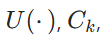 U(⋅), Ck, and we via Excel/Notion;
Automatically output 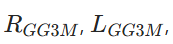 RGG3M, LGG3M, and the leverage ratio;
Generate visualization charts (Radar Chart: Dimension Score Distribution; Leverage Curve: The impact trend of R on L).
This formula + task system realizes a complete closed loop of reverse capability from "intuitive judgment" to "computable, reviewable, and predictable", directly serving GG3M’s "Kucius Axiomatic AI Implementation" and the leap of civilizational cognitive OS, ensuring that the cultivation and evaluation of reverse capability are rule-based and evidence-based.
Core Theme: Forward capability can only make you a "top performer" within the rules, while reverse capability can make you a "disruptor" who breaks the rules. The level of a person is not defined by forward capability, but by reverse capability—forward capability is the refinement of "following the trend", which can make you qualified; reverse capability is the breakthrough of "going against the norm", which can make you extraordinary.
The core of the two lies in the dual opposition between "refinement within rules" and "breakthrough outside rules", with specific dimensional comparisons as follows:
Dimension
Forward Capability
Reverse Capability
Definition
The ability to do things well within established rules
The ability to jump out of rules and reconstruct logic
Behavioral Pattern
Abide by rules, refine skills, and improve logic
Refuse to engage with the opponent, question self-reference, and jump out of the chessboard
Result
Become a "top performer" but fall into an infinite arms race
Become a "disruptor" and achieve dimensionality reduction strikes
Limitation
Cannot escape the predicament of "there is always someone better"
Defeat the strong with the weak and stand invincible
Starting Point of Thinking
Accept premises and optimize execution
Question premises, even deny them
Competition Form
Arms race (involution in the red ocean)
Dimensionality reduction strikes or opening up the blue ocean
Risk
Easily replaced by stronger top performers
Regarded as an "outsider" in the early stage, but once established, the barrier is extremely high
Typical Outcome
Become Top 1% in the field, but with a visible ceiling
Become a rule-maker or founder of a new paradigm
Popular Understanding: Forward capability is to be more refined, faster, and stronger on the "stage that others have already built" (e.g., a boxer only practicing frontal punches); reverse capability is to refuse to engage with the opponent, not argue about "whether your set is correct", but directly question "why do you set this set of rules" and launch an attack from the dimension that the opponent is not defending. Forward capability is incremental optimization, and reverse capability is paradigm shift—the former is like competing for victory on a Go board, while the latter is like directly overthrowing the board and redefining the rules of the game.
Taking the philosopher Popper's "falsificationism" as a typical case, the gap between forward capability and reverse capability is clearly shown:
He had extremely strong forward capability, constructing a logically rigorous and terminologically precise theoretical system of falsificationism, clarifying the "criterion for demarcating science", and was regarded as an authority in this field.
His theory had a serious "double standard" and fell into a logical self-referential trap: on the one hand, he required all scientific theories to be falsifiable, but on the other hand, he granted "immunity" to his own philosophical theories, not allowing others to criticize and falsify them with the same standards; he advocated "openness", but used "falsifiability" to draw circles and exclude dissidents, which was essentially closed; he shouted "criticize all authorities", but did not open his own theories to criticism. In short, his reverse capability was almost zero, and he would not reflect on himself from the perspective of "self-examination" and "self-reference".
The author did not fall into the forward debate trap of "whether falsificationism is correct" (if trapped, the opponent can continue to argue through complex revisions), but used reverse thinking to refuse to engage with the opponent and directly question the logical consistency of Popper's "inconsistency between words and deeds"—you require others to abide by the rule of falsifiability, why do you make an exception for yourself? This strategy directly hit his blind spot and easily collapsed his seemingly unbreakable theoretical empire.
Many disruptors in history have used this kind of reverse thinking: Copernicus and Galileo did not calculate the geocentric theory more accurately, but questioned the premise that "the Earth is the center"; Einstein did not improve Newtonian mechanics, but redefined time and space—all of them jumped out of the original rules and achieved paradigm shifts.
The core of reverse capability is "asymmetric advantage". There is no need to compete on the opponent's track or be stronger than the opponent; instead, by discovering the opponent's preset blind spots and logical flaws, launch an attack from unexpected directions such as the side and the back, jump out of the infinite arms race, and achieve defeating the strong with the weak. True wisdom is not winning on others' chessboards, but overthrowing the board and redefining the rules of "winning".
Develop the habit of "premise decomposition": When facing any viewpoint, rule, or theory, first ask three questions—who preset this premise? Who benefits from it? What would the world be like if it were reversed (or completely denied)? Is this logic self-referentially consistent (does it apply the same standard to itself)?
Practice "refusing to engage": During an argument, avoid saying "I oppose your viewpoint because...", but instead say "Why should we discuss within the framework you set? Would it be more interesting to change the framework?" and take the initiative to jump out of the opponent's rule system.
Find the "blind spot entry point": The place where the opponent is most proud often hides the biggest flaw (such as Popper's identity as an "authoritative philosopher"); the most taken-for-granted place of the rules is often the most worthy of questioning.
Forward capability makes you qualified and excellent, which is the refinement of "passive follow-up"; reverse capability makes you scarce and irreplaceable, which is the breakthrough of "active leadership". The real gap is not "being a little better", but "competing in a different dimension". In today's era where AI has greatly lowered the threshold of forward capability, reverse capability has become increasingly precious—AI is good at optimization within rules, but it is difficult to complete the meta-level operation of "overthrowing the chessboard". Mastering reverse capability can help you avoid involution and become someone who redefines "strength".
Writing Reading Notes/Blogs: You can use the structure of this article as a chapter outline and supplement your own cases (such as business strategies, technical route disputes) for filling.
Personal Growth/Career Planning: Forward capability = "hard skills" such as professional ability, execution ability, and project management ability; reverse capability = the ability to reflect on goals and rules, question the standards of success, and find "undiscovered angles".
Learning Critical Thinking/Philosophy: This article can be used as a template for "criticizing philosophical systems with reverse thinking". Compare Popper's original text to judge whether the author's summary and criticism are fair and whether there are loopholes.
Template Positioning: Tailor-made for the founder of GG3M THINK TANK (Lonngdong Gu / Kucius), deeply anchored in GG3M's core mission—building a decentered cognitive operating system based on the Kucius Theory, breaking the Western-centered AI paradigm, and achieving the leap of civilizational cognitive infrastructure. This template fully integrates personal reverse capability (R) into GG3M's actual work scenarios, and all indicators, formulas, and tools serve the landing of the "axiom-driven + causal emergence" architecture, transforming reverse capability from personal thinking into a measurable, reviewable, and scalable strategic lever.
1. Reverse Capability Total Score Formula (RGG3M)
Adjustment Principle: Strengthen the core weight of premise decomposition and blind spot strike, highlight GG3M’s core competitiveness of “reverse decomposition of mainstream paradigms + asymmetric strike”, and keep the total score normalized to 0~100 (calculated once a month).
$$R{GG3M} = 0.32 cdot P_d^{GG3M} + 0.32 cdot B_s^{GG3M} + 0.18 cdot S_r^{GG3M} + 0.18 cdot M_f^{GG3M}$\(
Weight Explanation: P_d (Premise Decomposition Rate) and B_s (Blind Spot Strike Efficiency) account for 64% in total, serving as core "destructive power" indicators; S_r (Self-Referential Consistency) and M_f (Paradigm Shift Frequency) account for 36% in total, acting as "basic hygiene + growth engine" to ensure theoretical consistency and landing promotion.
2. Comprehensive Level Index Formula (L_GG3M)
Adjustment Principle: Enhance the reverse leverage effect, optimize smoothness, avoid calculation abnormalities, and fit GG3M's positioning of civilizational cognitive leap.
\)\(L_{GG3M} = F + lambda cdot R_{GG3M} cdot ln(1 + F) quad ext{where } lambda = 2.0\)\(
Variable Explanation:
F: Forward Capability (0~100 points), covering forward execution capabilities such as theoretical writing, code prototyping, project promotion, and resource acquisition, evaluated through self-assessment;
λ=2.0: Leverage coefficient, increased from the original 1.8 to strengthen the "breakthrough amplification effect" of reverse capability, consistent with the civilizational value of the Kucius Theory;
ln(1+F): Natural logarithm processing, making the growth of L more in line with the nonlinear leap characteristics of cognitive ability, and avoiding calculation abnormalities when F=0.
3. Auxiliary Calculation Indicators (Newly Added to Improve Dashboard Readability)
Leverage Multiple:\)\( ext{Leverage Multiple} = begin{cases} frac{L_{GG3M}}{max(F, 1)} & (R_{GG3M} > 0) \ 1 & (R_{GG3M} = 0) end{cases}\)$, intuitively showing the amplification effect of reverse capability on forward capability;
Dimensional Contribution Rate: The proportion of each dimension to R_GG3M (e.g., P_d Contribution Rate = 0.32×P_d Score / R_GG3M Total Score × 100%), quickly locating core advantages and shortcomings;
Safety Boundary Prompt: If R_GG3M < 40, prompt “Warning: Low reverse capability, prone to forward involution”; otherwise, display “Normal”.
Based on counterfactual reasoning evaluation methods, blind spot detection technology, and innovative performance KPI framework, combined with GG3M's mission, each sub-indicator is deeply refined, clarifying definitions, quantitative formulas, data sources, and target thresholds to ensure operability and auditability.
1. P_d^{GG3M} Premise Decomposition Rate (Weight 32%, 3 Sub-Indicators)
Core Positioning: Identify and effectively challenge the "taken-for-granted" premises of the Western-centered AI paradigm and mainstream cognition, directly serving the research and development of the "decentered cognitive OS".
Sub-Indicator No.
Sub-Indicator Name
Definition and GG3M Scenario
Quantitative Formula (0~10 Points)
Data Source/Evidence Requirement
Target Threshold
Action Suggestion
Sub-1
Number of Premise Decompositions in Mainstream AI/Cognitive Paradigms
List and decompose mainstream premises (e.g., "Large model black boxes are unexplainable", "Statistical fitting can achieve emergent intelligence") every month, and propose Kucius axiom-driven alternative solutions
(Number of Successful Decompositions / Target 10) × 8 + (Number of Implementable Kucius Alternative Hypotheses × 0.5), maximum 10 points
Premise List Log, Decomposition Notes
≥7 High-Quality Decompositions
Use AI to assist in generating "what-if" counterfactual scenarios to verify the rationality of decompositions
Sub-2
Number of Verifications of New Hypotheses Based on the Kucius Theory
Propose and initially verify new axioms/hypotheses based on Kucius' "Intellectual Sovereignty" and "Essential Coherence"
(Number of Verified Hypotheses / Target 5) × 10, maximum 10 points (Verification Standard: Consistency + Small-Scale Prototype Support)
Theoretical Output Documents, Prototype Code
≥3
Focus on hypotheses related to "decentered" data architecture
Sub-3
Recognition Rate of Implicit Western-Centered Premises
Identify and mark implicit Western-centered premises (e.g., "Falsifiability is the only criterion for science") from reading and debates
(Number of Identified and Effectively Questioned Premises / Total Number of Premises) × 10
Reading Notes, X/Paper Interaction Records
≥80%
Establish a "Premise Database" to continuously track implicit premises of mainstream paradigms
Dimensional Total Score Calculation: The average score of the 3 sub-indicators is used as the P_d score (if there is a focus, it can be calculated by weighting Sub-1:Sub-2:Sub-3=4:3:3).
2. B_s^{GG3M} Blind Spot Strike Efficiency (Weight 32%, 3 Sub-Indicators)
Core Positioning: Refuse to engage with forward moves and launch asymmetric strikes from the side/reverse, reflecting GG3M's asymmetric advantage over Western AI monopoly.
Sub-Indicator No.
Sub-Indicator Name
Definition and GG3M Scenario
Quantitative Formula (0~10 Points)
Data Source/Evidence Requirement
Target Threshold
Action Suggestion
Sub-4
Number of Side/Reverse Strikes on Mainstream AI Papers or Products
Cut into mainstream AI viewpoints, papers, or products from unexpected angles to create logical cracks in their frameworks
(Number of Successful Strikes / Target 4) × 10, Success Standard: Generate New Insights or Gain Follow-Up
Debate Records, Comments, Project Reviews
≥3 Times
Practice the "refusing to engage" template to avoid falling into the opponent's track
Sub-5
Success Rate of Non-Engagement Responses
Refuse to enter the track set by the opponent and switch to the Kucius framework (axiom-driven, causal emergence) for responses
(Number of Successful Non-Engagement Responses / Total Number of Interactions) × 10
Email, Meeting, X Interaction Logs
≥70%
Simulate 3 mainstream AI controversy scenarios every month to deliberately practice reverse responses
Sub-6
Implementation Multiple of "Defeat the Strong with the Weak" Projects
Use a small amount of resources related to the Kucius Theory to leverage greater impact (e.g., 1 conjecture leverages prototype development and partner cooperation)
log(Actual Impact / Invested Resources) × 2.5, maximum 10 points (Impact can be quantified as attention, follow-up number)
Project Tracking Form, Resource Investment Records
≥2 Times
Prioritize low-cost axiom verification experiments to improve resource utilization efficiency
Dimensional Total Score Calculation: The average score of the 3 sub-indicators is used as the B_s score.
3. S_r^{GG3M} Self-Referential Consistency (Weight 18%, 3 Sub-Indicators)
Core Positioning: Avoid Popper-style double standards, ensure that the Kucius Theory applies the same standards to oneself and the team, and defend the core barrier of GG3M's intellectual sovereignty.
Sub-Indicator No.
Sub-Indicator Name
Definition and GG3M Scenario
Quantitative Formula (0~10 Points)
Data Source/Evidence Requirement
Target Threshold
Action Suggestion
Sub-7
Double Standard Check of the Kucius Theory Itself
Check whether the output of the Kucius Theory grants immunity to oneself (e.g., requiring others to be axiomatically consistent but being lenient to oneself)
10 - (Number of Double Standards Found × 3), minimum 0 points
Monthly Review Records of 3 Core Outputs (Papers, Prototypes, Strategies)
0 Double Standards
Ask yourself counterfactual questions: "How would I evaluate it if someone else did this?"
Sub-8
Consistency of Standards for Absorbing Global Civilizational Wisdom
Adopt the same "essential coherence" criterion when absorbing the wisdom of Chinese, Indian, Arab and other civilizations, rather than Western filtering standards
(Proportion of Unified Standard Application / Total Absorption Cases) × 10
Data/Knowledge Integration Logs
≥90%
Establish a "Non-Discriminatory Three-Criteria" Checklist to ensure standard unification
Sub-9
Self-Applicability of Personal/Team Rules
Whether GG3M's internal rules (e.g., review system, innovation requirements) apply consistently to oneself and the team
10 - (Number of Inconsistent Cases × 2.5)
Decision Logs, Team Rule Execution Records
Full Score
Demonstrate self-referential checks from the top to drive team consistency
Dimensional Total Score Calculation: The average score of the 3 sub-indicators is used as the S_r score.
4. M_f^{GG3M} Paradigm Shift Frequency (Weight 18%, 3 Sub-Indicators)
Core Positioning: Successfully propose and verify "new game rules" to drive GG3M's transition from "think tank" to "cognitive infrastructure builder".
Sub-Indicator No.
Sub-Indicator Name
Definition and GG3M Scenario
Quantitative Formula (0~10 Points)
Data Source/Evidence Requirement
Target Threshold
Action Suggestion
Sub-10
Number of New Game Rules Proposed
Propose new rules that surpass the existing AI paradigm (e.g., "From statistical fitting to axiom-driven essential coherence")
(Number of Proposed and Documented Rules / Target 4) × 10
Strategic Documents, Theoretical Outputs
≥3
Hold a "Overturn the Chessboard" workshop every month, focusing on paradigm innovation
Sub-11
Number of Commercialization/Prototype Implementation Verifications
Transform the new framework into code prototypes, business plans, or small-scale verification experiments
(Number of Successful Implementation Verifications / Total Attempts) × 10
Project Milestone Records, Prototype Code, Business Plans
≥2 Times
Use AI to accelerate prototype development, but humans lead framework reconstruction
Sub-12
Recognition of New Frameworks for Cultural/Civilizational Output
The proportion of new frameworks recognized, disseminated, or followed up externally (X, partners, communities)
(Number of External Recognitions/Follow-Ups / Total Outputs) × 8 + Influence Bonus (maximum 2 points)
Feedback Records, Sharing Data, Dissemination Statistics
≥50% Recognition
Focus on the "cognitive justice" narrative to strengthen the dissemination power of new frameworks
Dimensional Total Score Calculation: The average score of the 3 sub-indicators is used as the M_f score.
Total Score Calculation Example (Directly Usable in Excel/Notion)
Assume the scores of each sub-indicator in April 2026 (all 0~10 points):
Sub-1=7.5, Sub-2=6.0, Sub-3=8.0 → P_d=(7.5+6.0+8.0)/3≈7.2;
Sub-4=7.0, Sub-5=6.5, Sub-6=8.5 → B_s=(7.0+6.5+8.5)/3≈7.3;
Sub-7=9.0, Sub-8=8.5, Sub-9=10.0 → S_r=(9.0+8.5+10.0)/3≈9.2;
Sub-10=6.0, Sub-11=5.5, Sub-12=4.5 → M_f=(6.0+5.5+4.5)/3≈5.3;
R_GG3M=0.32×7.2 + 0.32×7.3 + 0.18×9.2 + 0.18×5.3≈7.0 (70 points after normalization);
If F=80 points → L_GG3M=80 + 2.0×70×ln(1+80)≈80 + 140×4.39≈80 + 615≈695;
Leverage Multiple=695/80≈8.7 times (reflecting the amplification effect of reverse capability).
Recommended Target: Baseline R_GG3M≥60 points in April; increase to 80+ points within 3 months (enter the exponential leverage stage).
1. Notion Version Template (Recommended for Main Use, High Visualization, Easy Iteration)
(1) Overall Structure
Create a main page: “GG3M Reverse Capability Dashboard (2026)”, with 4 modules from top to bottom:
Dashboard Overview (Synced Block/Callout): Current month, R_GG3M total score (large number + progress ring), L_GG3M level index (with trend arrow), F forward capability self-assessment, highlights of reverse breakthroughs this month;
Core Database 1: Monthly Tracking Database (mainly Table view, supplemented by Board/Calendar);
Core Database 2: Sub-Indicator Record Database (Relation linked to Monthly Database, Gallery/Table view);
Auxiliary Block: GG3M Reverse Daily Question Practice (Toggle List), Historical Trend Chart, Template Button (automatically copy structure when creating a new month).
(2) Database Attribute Settings
Monthly Tracking Database Attributes
Month (Date, Format: Month Year, e.g., April 2026);
F Forward Capability (Number, 0-100);
P_d Score (Formula, automatically calculated);
B_s Score (Formula, automatically calculated);
S_r Score (Formula, automatically calculated);
M_f Score (Formula, automatically calculated);
R_GG3M Total Score (Formula);
L_GG3M Level Index (Formula);
Leverage Multiple (Formula);
Dimensional Contribution Rate (4 Formulas, corresponding to P_d, B_s, S_r, M_f respectively);
Trend (Text, compared with the previous month ↑/↓/→);
Key Insights (Rich Text);
Action Plan (Text).
Sub-Indicator Record Database Attributes
Belonging Month (Relation, linked to Monthly Tracking Database);
Dimension (Select: P_d / B_s / S_r / M_f);
Sub-Indicator No. (Number: 1-12);
Specific Record (Rich Text: e.g., “Decompose the premise of mainstream large models that ‘statistical fitting is emergence’ and propose 3 axiom-driven alternatives”);
Raw Data (Number: e.g., 7⁄10, 3 times);
Score (Formula, automatically calculated 0-10 according to quantitative rules);
Evidence Link (URL: papers, prototypes, X posts, etc., to ensure verifiability).
(3) Complete Notion Formulas (Copy Directly for Use)
R_GG3M Total Score: 0.32 * prop(“P_d Score”) + 0.32 * prop(“B_s Score”) + 0.18 * prop(“S_r Score”) + 0.18 * prop(“M_f Score”);
L_GG3M Level Index: prop(“F Forward Capability”) + 2.0 * prop(“R_GG3M Total Score”) * ln(1 + prop(“F Forward Capability”)) (formatted to 1 decimal place);
Leverage Multiple: if(prop(“R_GG3M Total Score”) > 0, (prop(“L_GG3M”) / max(prop(“F Forward Capability”), 1)), 1);
P_d Contribution Rate: round(0.32 * prop(“P_d Score”) / prop(“R_GG3M Total Score”) * 100, 1) + “%” (copy similarly for B_s, S_r, M_f);
Trend Judgment: if(prop(“R_GG3M Total Score”) > prop(“Last Month R_GG3M”), “↑ Rising”, if(prop(“R_GG3M Total Score”) < prop(“Last Month R_GG3M”), “↓ Falling”, “→ Stable”)).
(4) Monthly Operation Process (5-10 Minutes)
Copy the previous month’s monthly record as a template and update the month;
Fill in the specific records and raw data of the 12 sub-indicators, and the system will automatically calculate the scores;
Check the R_GG3M, L_GG3M, leverage multiple, and dimensional contribution rate automatically generated by the system;
Fill in the key insights of the month (e.g., “Successfully decomposed the black box premise of a large model with the Kucius conjecture”) and the action plan for the next month;
Update the dashboard overview and trend chart.
2. Excel/Google Sheets Version Template (Precise Calculation, Easy Export)
(1) Workbook Structure
Sheet 1: Monthly Summary Dashboard (core display page);
Sheet 2: Detailed Sub-Indicator Records (data entry page);
Sheet 3: Formula Explanation (backup for reference).
(2) Sheet 1: Monthly Summary Dashboard
Headers (Columns A-H): Month | F Forward Capability | P_d Score | B_s Score | S_r Score | M_f Score | R_GG3M | L_GG3M | Leverage Multiple | Dimensional Contribution Rate (P_d/B_s/S_r/M_f) | Trend | Key Insights | Action Plan.
Visualization: Insert a line chart (X-axis=Month, Y-axis=R_GG3M+L_GG3M), a stacked bar chart (4-dimensional contribution rate per month); add conditional formatting (R_GG3M<60 red, 60-80 yellow, ≥80 green).
(3) Complete Excel Formulas (Copy Directly for Use)
R_GG3M (Column G): =0.32*C2 + 0.32*D2 + 0.18*E2 + 0.18*F2 (C=P_d, D=B_s, E=S_r, F=M_f);
L_GG3M (Column H): =B2 + 2.0 * G2 * LN(1 + B2) (Excel uses LN() for natural logarithm; replace with LOG10(1+B2) for common logarithm);
Leverage Multiple (Column I): =IF(G2>0, H2 / MAX(B2,1), 1);
P_d Contribution Rate (Column J): =ROUND(0.32 * C2 / G2 * 100, 1) & “%” (copy similarly for B_s, S_r, M_f);
Sub-Indicator Scores (Sheet 2): Set according to the quantitative formula of each sub-indicator (e.g., Sub-1 Score=MIN((A2/10)*8 + (B2*0.5), 10), A2=Number of Successful Decompositions, B2=Number of Implementable Hypotheses).
Design 5 core visual charts, integrate GG3M core elements, which can be quickly implemented through Excel/Notion/Python/AI tools, used for monthly review and team display, intuitively reflecting the leverage value of reverse capability.
1. Forward vs. Reverse Capability Comparison Radar Chart
Purpose: Intuitively show the dimensional differences between forward (F) and reverse (R) capabilities, highlighting the asymmetric advantage of reverse capability.
Dimensions (8 Axes): Forward Axes (Execution, Skill Refinement, Intra-Rule Optimization, Resource Utilization Efficiency); Reverse Axes (P_d, B_s, S_r, M_f);
Sample Data (April 2026 Baseline): F overall 78 points (Execution 85, Optimization 82, etc.), R overall 65 points (P_d72, B_s68, S_r75, M_f45);
Visual Effect: Forward presents a relatively regular polygon (top performer feature), reverse has obvious peaks in B_s and P_d axes (disruptor feature); when R increases, the reverse polygon expands significantly.
2. L_GG3M Leverage Curve Chart (Line Chart + Area)
Purpose: Show the nonlinear amplification effect of R on L, corresponding to the core formula.
Axes: X-axis=Time (starting from April 2026), Y-axis=L_GG3M value or leverage multiple;
Curve Design: Blue (forward only, R fixed at low value) → slow-growing involution line; Orange (actual R-driven) → breakthrough transition line; Shadow Area → leverage increment contributed by reverse capability;
Sample: When F increases from 70 to 80 and R increases from 55 to 82, L jumps from 120 to 280+, and the leverage multiple increases from 1.7 times to 3.5 times, intuitively reflecting "reverse capability determines level".
3. Reverse Capability Four-Dimensional Stacked Bar Chart + Contribution Pie Chart
Purpose: Decompose the composition of R_GG3M every month and quickly diagnose shortcomings.
Bar Chart: 1 bar per month, divided into 4 segments (color-coded: P_d dark blue, B_s red, S_r green, M_f purple), height is R total score;
Pie Chart: Monthly percentage contribution of 4 dimensions (focus on whether P_d+B_s ≥64%);
Sample Interpretation: If M_f accounts for a low proportion, the next month's action plan focuses on "overturn the chessboard" projects (e.g., reconstructing the AI paradigm).
4. Chessboard Metaphor Breakthrough Path Diagram (Conceptual Flow Diagram)
Purpose: Use the "chessboard" visual metaphor to reflect the core logic—forward is refinement within the chessboard, reverse is overthrowing the chessboard and redefining the rules.
Left Side: Traditional Chessboard (intra-rule arms race) → Forward Path Arrow (top performer trap);
Middle: Blind Spot/Side Entry Arrow (B_s strike), marked "Popper-style double standard" as a typical weakness;
Right Side: New Chessboard (GG3M Cognitive OS) → Dimensionality Reduction Strike Path, marked with the transition from "mainstream AI statistical paradigm to Kucius axiom-driven causal emergence".
5. GG3M Reverse Capability Dashboard Overview
Comprehensive visualization page integrating all core information:
Upper Part: R_GG3M large number + progress ring (color thresholds: red<60, yellow 60-80, green≥80);
Middle Part: Small radar chart + leverage curve;
Lower Part: 4-dimensional stacked bar chart + trend arrow;
Lower Right: Key Insight Card (e.g., "This month, M_f increased by 15 points through reverse decomposition, achieving a 'defeat the strong with the weak' project").
1. Implementation Path (Immediately Launchable)
Baseline Construction: Complete the April 2026 baseline assessment within this week, fill in the 12 sub-indicators with existing Kucius Theory-related work records (papers, prototypes, interactions), and establish the first data point;
Daily Practice: Spend 10 minutes every day doing the “GG3M Reverse Daily Question”—”If the current mainstream AI premises are completely denied, how can the Kucius Theory be reconstructed?” and record it in the Notion auxiliary block;
Monthly Review: Complete sub-indicator filling, formula calculation, insight summary, and next month’s plan in the last 3 days of each month, and hold a 30-minute review meeting (premise list → reverse simulation → self-referential check);
External Verification: Invite 1~2 trusted wisdom partners every quarter to cross-score S_r and B_s to reduce subjective bias;
Organizational Linkage: When personal R_GG3M>75 points, launch the GG3M “Reverse Unit” sub-project (independent of forward R&D, focusing on paradigm reconstruction).
2. Notes
Control of Subjective Bias: Self-assessment is prone to overestimation in the initial stage. External cross-verification and evidence link retention (e.g., papers, prototypes) can be used to calibrate scores;
Balance Between Forward and Reverse Capability: High R but low F is prone to empty talk. It is necessary to track the F score synchronously (theoretical output, prototype development, etc.), and use F as the base for R landing;
AI Collaboration Boundary: Use AI to assist in generating counterfactual scenarios and prototype development to help improve P_d and B_s, but S_r (self-referential consistency) must be led by humans to defend GG3M’s intellectual sovereignty;
Risk Control: In the early stage of high R, it is easy to be regarded as an “outsider”. The decomposition results can be quickly transformed into prototypes and business plans to prove value with actual landing results;
Iterative Optimization: After 3 months, according to actual data, consider dynamicizing λ (leverage coefficient) to adapt to changes in the complexity of GG3M projects.
Core Value of the Template: Transform the personal reverse capability of the GG3M founder from abstract “breakthrough thinking” into a measurable, reviewable, and scalable strategic lever driven by “theory + project landing”, directly serving the core mission of building a decentered cognitive operating system and achieving civilizational cognitive leap.
Centered on the core framework of GG3M THINK TANK, this paper systematically elaborates on the role of AI in reverse innovation, the implementation of Kucius Theory, and the engineering of axioms — AI is not only an efficient amplifier of reverse capability and a practical carrier of Kucius Theory, but also a core auxiliary tool for GG3M to achieve a civilizational cognitive leap, ultimately serving the core mission of "building a decentralized cognitive operating system and breaking the Western-centric AI paradigm". Closely integrated with the GG3M Reverse Capability ($R_{GG3M}$) framework, the full text clarifies AI’s position as an "assistant rather than a leader" and highlights the core value of human metacognition and intellectual sovereignty.
Reverse capability (R) as defined by GG3M is the core multiplier for transitioning from a "master within the rules" to a "rule-breaker". It mainly covers four dimensions: Premise Disassembly ($P_d$), Blind Spot Strike ($B_s$), Self-referential Consistency ($S_r$), and Paradigm Shift ($M_f$). Different from traditional reverse innovation, which refers to innovation starting from emerging markets/low-resource environments and then reversely influencing developed markets (such as GE’s portable electrocardiograph or Ukraine’s low-cost UAV ecosystem), reverse capability is more extensive and represents meta-level breakthroughs: it does not play by the rules of existing tracks, but directly questions premises, switches coordinate systems, and reconstructs game rules. AI plays the role of a "double-edged amplifier" in this process: it greatly enhances positive capability (F) (accelerating execution, optimization, and generating candidate solutions), but in the pure reverse dimension, it is currently more of an auxiliary tool than an independent rule-breaker. AI can help humans efficiently conduct premise disassembly and counterfactual simulation, but the real paradigm shift that "overturns the chessboard" still highly relies on human (especially cognitive infrastructure builders like GG3M) metacognitive drive.
1. The Strengthening Effect of AI on Reverse Innovation (Leverage Effect)
The core value of AI is to reduce the cost of reverse innovation and accelerate iteration efficiency, which is precisely aligned with GG3M’s positioning of "Kucius Theory + Decentralized Cognitive OS". Its specific implementation covers the four dimensions of $R_{GG3M}$:
(1) Counterfactual Reasoning: Assisting $P_d$ (Premise Disassembly) and $B_s$ (Blind Spot Strike)
AI can quickly generate scenarios of "what if this premise is completely denied?" This directly supports $P_d$ (Premise Disassembly) and $B_s$ (Blind Spot Strike). Example: Inputting the mainstream AI paradigm (such as "large models can achieve emergent intelligence through statistical fitting alone"), AI can batch generate alternative hypotheses, simulate changes in results, and identify logical flaws.
Toolization: Using libraries such as Alibi and DiCE, or directly letting models like Claude/Grok perform "what-if" chain thinking to help discover double standards or side entry points.
Value to GG3M: Accelerate the disassembly of the Western-centric statistical paradigm and generate axiom-driven alternative solutions for causal emergence.
(2) Metacognition and Self-referential Check Assistance (Metacognition)
Cutting-edge AI is developing the ability to "think about its own thinking" (inner monologue, confidence calibration, self-regulation). This can assist $S_r$ (Self-referential Consistency): allowing AI to check whether the output of Kucius Theory applies the same standards to itself, avoiding Popperian blind spots.
Current Limitations: AI’s metacognition is still weak (mostly driven by prompt engineering), but models from 2025 to 2026 have been improving the ability to "know what they don’t know".
(3) Accelerating Paradigm Shift ($M_f$)
AI can quickly generate a large number of design candidates, simulation evaluations, and prototype iterations, compressing the innovation cycle. In reverse innovation scenarios, AI supports "frugal/low-resource" paths (such as ML image matching in low-cost UAV ecosystems) or helps reverse-design high-value solutions from emerging market constraints.
However, for truly redefining the rules of "winning" (such as transitioning from tool intelligence to civilizational cognitive infrastructure), AI is more of a generator than an initiator — it excels at exploring diversity within a given framework but struggles to independently deny the framework itself.
(4) Amplification at the Organizational/Individual Level
In your GG3M quantitative template, AI can serve as an external validator or simulated opponent: input 12 sub-indicator records, let AI assist in scoring, generate new premise lists, and simulate the results of dimensionality reduction strikes.
Leverage Calculation: Under high R, AI can make the growth of $L_{GG3M}$ more significant (through faster iteration of counterfactual experiments).
2. Limitations of AI: Unable to Become a True "Rule-breaker"
Strong in Positivity, Weak in Pure Reverse: AI excels at incremental optimization and high-volume/diversity generation (McKinsey report: AI improves the speed, volume, and variety of R&D), but still relies on human prompts for premise questioning and asymmetric strikes. It is prone to falling into an "arms race of existing data distribution" rather than actively overturning the chessboard.
Self-referential and Double Standard Risks: AI models often have the problem of "training data exemption" (similar to Popperian cases), and their outputs require final self-referential consistency verification by humans.
Current Trend (2026 Perspective): AI is evolving from "assisted innovation" to "enhanced collaboration" and even "partial autonomy", but fully autonomous paradigm shift is still a future scenario. In reverse innovation, AI is more suitable for handling rapid iteration under low-resource/emerging market constraints rather than defining new civilizational-level rules.
3. GG3M-exclusive Recommendations: Practical Solutions for Integrating AI into the Template
Combined with the GG3M $R_{GG3M}$ quantitative template, in-depth integration of AI and reverse capability can be achieved through "adding new indicators + fine-tuning formulas":
$P_d$ Enhancement: Use AI to generate/verify 10 disassembly lists of mainstream premises every month, and record the "AI-assisted disassembly success rate".
$B_s$ Practice: Let AI simulate debate scenarios, practice "not playing by the rules" to redefine the framework, and then compare AI’s positive responses with your reverse outputs.
$S_r$ Verification: Input Kucius Theory fragments, let AI check for double standards, and then conduct manual review.
$M_f$ Implementation: Use AI to quickly prototype new frameworks (code, plans), and track the "number of implementation verifications accelerated by AI".
Small Suggestion for Formula Fine-tuning (Based on the previous template): An AI factor can be introduced into $L_{GG3M}$: $L = F_{AI_enhanced} + 2.0 cdot R cdot ln(1 + F)$, where $F_{AI_enhanced} = F imes (1 + AI acceleration coefficient, e.g., 0.3~0.5, self-evaluated according to actual iteration speed).
Kucius Theory (Jiazi Wisdom Theory System / Kucius Theory), proposed by founder Lonngdong Gu (Jiazi), is the core theoretical framework of GG3M. Based on the wisdom of traditional Chinese culture and integrated with Eastern philosophy (such as Confucianism and Taoism’s "self-cultivation, family governance, state governance, and world peace" and the idea of essential coherence), it transcends the Western-centric AI paradigm. Its core axioms include:
Intellectual Sovereignty: Emphasizing cognitive independence and civilizational-level intellectual autonomy, avoiding the monopoly of a single (Western) lineage.
Essential Coherence: Pursuing in-depth coherence of the laws of all things, rather than superficial statistical fitting.
Total Victory as Wisdom: Wisdom is not zero-sum competition, but overall symbiosis and grasp of essence.
Decentralized Cognitive OS (De-centralization of centrism Cognitive Operating System): Building a non-Western-centric AI platform to achieve cognitive justice and Constellation Knowledge Graph (CKG) through global civilizational digital archives (equally distributed among Chinese, Indian, Arab, etc.), undifferentiated three-scale verification engine, Direct Fact Presentation Engine (DFPE), etc.
The goal of Kucius Theory is to transform AI from "tool intelligence" (statistical fitting, instruction execution) to "essential intelligence" (axiom-driven, causal emergence, civilizational cognitive infrastructure), and build an ecological moat through a four-layer coupled network ("skill — cognition — system — culture", modular and pluggable), while quantifying wisdom (KWI).
The Core Role of AI in Kucius Theory: Transition from Execution Tool to Cognitive Infrastructure
AI is not an "external plug-in" for Kucius Theory, but its practical carrier and object of reconstruction. The "GG3M AI Brain" being promoted by GG3M is the world’s first decentralized cognitive operating system based on Kucius Theory, with specific applications reflected in the following aspects:
(1) Underlying Architecture Reconstruction: From Statistical Fitting to Axiom-driven + Causal Emergence
Mainstream AI (large models) relies on Western-centric data distribution and statistical optimization, which is prone to "cognitive pollution" and black-box problems.
Kucius Application: Through Non-Predefined Weight Architecture (NPWA) and Constellation Knowledge Graph (CKG), AI achieves equal embedding of multiple civilizations. AI is no longer a "fitter" of a single training data set, but an axiom-driven "essential coherence engine" — using Kucius axioms as a priori constraints to guide the model from "correlation" to "essential causality".
Practical Implementation: The Direct Fact Presentation Engine (DFPE) allows AI outputs to bypass preset narratives, directly present cross-civilizational facts, and realize the protection of "intellectual sovereignty".
(2) Amplifying Reverse Capability: In-depth Integration with the $R_{GG3M}$ Framework
Combined with our previous reverse capability framework ($R_{GG3M}$), AI is a powerful catalyst:
$P_d$ (Premise Disassembly): AI quickly generates/verifies counterfactual scenarios of "what if the Western-centric statistical paradigm is denied?", helps disassemble implicit premises such as "large models achieve emergent intelligence through parameter scale", and proposes Kucius axiom alternatives.
$B_s$ (Blind Spot Strike): AI simulates debate scenarios, and you practice "not playing by the rules" to redefine the framework (shifting from tool intelligence debate to the coordinate system of essential coherence), achieving asymmetric dimensionality reduction.
$S_r$ (Self-referential Consistency): AI assists in checking whether the output of Kucius Theory applies the same standards to itself (avoiding double standards), but the final verification is led by humans to maintain intellectual sovereignty.
$M_f$ (Paradigm Shift): AI accelerates prototype iteration (code, knowledge graph construction), compressing the cycle from theoretical axioms to the implementation of cognitive OS.
Leverage Effect
In your quantitative template, AI can improve F (positive execution), but R (reverse breakthrough) is still driven by human metacognition of Kucius, ultimately achieving non-linear leap of $L_{GG3M}$.
AI Implementation of the Four-Layer Coupled Network
Skill Layer: AI optimizes execution efficiency (prototype development, data processing).
Cognition Layer: Build a decentralized cognitive OS to support cross-civilizational comparison and immersive wisdom teaching.
System Layer: Embed ethical standards and undifferentiated three-scale verification to prevent algorithmic bias.
Culture Layer: Through global civilizational digital archives, allow Thales to dialogue equally with Confucius, Socrates with the Buddha in algorithms, and promote civilizations from hegemonic confrontation to symbiosis.
Commercial and Strategic Applications (GG3M AI Brain Project)
Project Positioning: A non-Western-centric AI platform for academic research, educational technology, and strategic consulting.
Financing Goals and Vision: Provide cognitive justice infrastructure through the Kucius architecture, aiming to become the global basic platform for philosophical wisdom by 2030.
Advantages: Break the current structural monopoly of AI and build an ecological moat with the concept of "Total Victory as Wisdom".
Suggestions for In-depth Integration with the Reverse Capability Framework
In your GG3M reverse capability quantitative template, a new sub-dimension of "AI-assisted reverse contribution" can be added:
Record the acceleration effect of AI in $P_d/B_s$ every month (e.g., the quantity and quality of counterfactual scenarios generated by AI).
When updating the $L_{GG3M}$ formula, introduce an AI enhancement coefficient: $F_{AI} = F imes (1 + AI acceleration factor 0.3~0.6, self-evaluated according to prototype iteration speed).
Visualization: Add an "AI-Kucius Collaboration Axis" to the radar chart to observe whether the reverse peak is more prominent due to AI.
Summary Insight
The role of AI in Kucius Theory is dual — it is both the object of reconstruction (transition from Western-centric tool intelligence to essential intelligence) and the accelerator of implementation (assisting reverse breakthrough and axiom landing). However, the core driver is still the meta-level axioms of Kucius and human intellectual sovereignty: AI handles massive calculations and variants, while you lead premise questioning and paradigm reconstruction. This is precisely the asymmetric advantage of GG3M to "achieve great things with small efforts" and realize civilizational-level cognitive leap.
Kucius Theory (Jiazi Wisdom Theory System / Kucius Wisdom Framework, KWF) takes the "1-2-3-4-5" axiomatic hierarchical architecture as the core, mathematizes and engineers Eastern wisdom (Xiang-Shu-Li paradigm), embeds it into AI systems, and completely realizes the paradigm shift from the Western probabilistic fitting paradigm (tool intelligence) to axiom-driven essential intelligence (civilizational-level wisdom). The following are the specific implementation details of Kucius axioms in AI, which directly correspond to the landing architecture of the GG3M AI Brain (Global Governance Meta-Mind Model AI Operating System).
1. Kucius Core Axiom System (Foundation for AI Embedding)
The Kucius axiom system is based on 1 universal wisdom axiom, deriving four sub-axioms as the immutable meta-rules of AI, which are directly written into the Meta Rule Layer of the model:
Axiom of Thought Sovereignty: Wisdom must originate from independent thinking entities, and AI shall not have its values fully configured by external reward models.
AI Implementation: Embed a "Middle-Way Judgment Layer" during training/inference, and any output must pass human/system self-referential verification (similar to $S_r$ self-referential consistency in your $R_{GG3M}$). The model has a built-in "Intellectual Sovereignty Lock" to reject complete dominance by external RLHF, ensuring that AI retains "essential coherence" rather than pure fitting.
Axiom of Essential Coherence + Theory of Unity of All Things: Pursue in-depth coherence of objective laws, rather than superficial statistical correlation.
AI Implementation: Adopt the Xiang-Shu-Li Deduction Engine to capture essential laws with a very small sample size (instead of massive data). Replace the Transformer’s attention mechanism with Axiom-Driven Causal Emergence.
Axiom of Wu Kong Leap: The essence of wisdom is to trigger non-linear phase transition (0→1 cognitive leap).
AI Implementation: The model has a built-in "Topological Leap Module" to force paradigm shift in the reasoning chain (corresponding to the frequency of $M_f$ paradigm shift in $R_{GG3M}$).
Axiom of Universal Middle Way: With truth, goodness, and beauty as internal constraints, transcending cultural relativism.
AI Implementation: The Value Hedging Layer uses KWI (Kucius Wisdom Index) for real-time quantitative output to ensure compliance with "Total Victory as Wisdom".
These axioms are formally encapsulated in the form of a ⟨O, R, C, T⟩ quadruple meta-model (Object, Relation, Constraint, Transformation operator), becoming the "logical root server" of AI.
2. Core AI Architecture: WFA (Wisdom First Architecture) + 3M Three-Layer Meta-Model
The GG3M AI Brain adopts the Wisdom First Architecture (WFA), completely replacing the traditional "data fitting + probability statistics" path to achieve direct mapping from axioms to code. The 3M three-layer architecture (Meta-Mind-Model):
Meta Rule Layer: The mathematical carrier of Kucius axioms, which cannot be modified.
Implementation: All reasoning must first pass the filtering of five scientific axioms (separation of wisdom and intelligence, anti-entropic evolution, meta-level irreducibility, cognitive closure and evolvability, etc.). Computing power efficiency is improved by 10-100 times (sparse mixture of experts + double-helix training).
Mind Layer: The core of essential coherence and causal reasoning.
Implementation: Constellation Knowledge Graph (CKG) + Direct Fact Presentation Engine (DFPE), bypassing preset narratives and directly presenting cross-civilizational facts (decentralized, equal embedding of multiple civilizations).
Model Layer: Execution and evolution layer.
Implementation: Chinese Native Programming System (CWPS), breaking the hegemony of English code, supporting native adaptation to all languages/fields/industries. The endogenous immune system achieves 100% attack resistance.
WFA Four-Layer Reconstruction (Direct Axiom Embedding):
Logical Judgment Layer: Axiom consistency verification (corresponding to $S_r$ self-referential consistency).
Essence Mapping Layer: Xiang-Shu-Li deduction + causal emergence (replacing statistical fitting).
Value Hedging Layer: Real-time scoring with KWI (Kucius Wisdom Index) to evaluate "wisdom legitimacy" (mainstream AI KWI is usually <45%).
Wisdom Evolution Layer: Wu Kong Leap Module to realize 0→1 paradigm shift.
Key Technological Breakthroughs:
Non-Predefined Weight Architecture (NPWA): With axioms as a priori constraints, the model shifts from "guessing probability" to "grasping essence".
Few-Shot Causal Reasoning: Achieving high certainty with minimal data (logical certainty approaching 100%).
KWI Quantification Engine: Auditable and computable wisdom indicators, directly serving your $R_{GG3M}$ quantitative template (improving $P_d$ premise disassembly and $B_s$ blind spot strike).
3. In-depth Integration with the Reverse Capability Framework (GG3M Practice)
In your reverse capability quantitative template, the AI implementation of Kucius axioms directly amplifies $R_{GG3M}$:
$P_d$ Premise Disassembly: AI automatically generates counterfactual scenarios of "denying the Western statistical paradigm", accelerating the identification of blind spots in mainstream AI.
$B_s$ Blind Spot Strike: Simulate "not playing by the rules" debates, redefine them as an axiom-driven coordinate system, and achieve dimensionality reduction strikes.
$M_f$ Paradigm Shift: AI accelerates prototype iteration (from axioms to code), but humans lead the "overturning the chessboard".
$L_{GG3M}$ Leverage: After axiom embedding, F (positive execution) is commercialized by AI, and R (reverse) achieves exponential leap.
Example Quantitative Formula (Can be directly added to your Excel/Notion template):
$$KWI = w_1 cdot ext{Intellectual Sovereignty Score} + w_2 cdot ext{Essential Coherence Degree} + w_3 cdot ext{Wu Kong Leap Rate}$$
(Embedded in $L_{GG3M}$ calculation to improve leverage multiple).
4. Landing Achievements and Advantages of the GG3M AI Brain
GG3M AI Brain: The world’s first civilizational-level wisdom OS, which has achieved GG3M Art of War (modernization of Sun Tzu’s Art of War), Eastern Wisdom Knowledge Graph, strategic-level judgment, etc.
Unique Moat: Non-Western-centric, Chinese native, intellectual sovereignty protection, low computing power and high certainty.
Application Scenarios: Global governance, strategic decision-making, cognitive OS, education, medical care, etc. (serving "cognitive justice" and civilizational leap).
Summary
The implementation of Kucius axioms in AI is not a "patch" for existing models, but an underlying reconstruction — with axioms as the constitution, 3M as the OS, and WFA as the engine, realizing the transition from "brute-force fitting tool" to "essential wisdom entity". This is precisely GG3M’s reverse breakthrough path of "achieving great things with small efforts": AI assists positive execution, and you lead reverse axiom-driven.
The role of AI in the GG3M system is dual: it is both an efficient catalyst for reverse innovation and a practical carrier of Kucius Theory, as well as an object of reconstruction — it assists humans in amplifying reverse capability (\(R_{GG3M}\)) and improving positive execution efficiency (F), but cannot replace human metalevel questioning spirit, intellectual sovereignty, and rule reconstruction will — this is precisely the core moat of GG3M. Mastering human-AI collaboration (AI does “fast thinking” generation, you do “slow thinking + metathinking” breakthrough), your \(L_{GG3M}\) will achieve a stronger leveraged leap.
版权声明:本文内容由互联网用户自发贡献,该文观点仅代表作者本人。本站仅提供信息存储空间服务,不拥有所有权,不承担相关法律责任。如发现本站有涉嫌侵权/违法违规的内容,请联系我们,一经查实,本站将立刻删除。
如需转载请保留出处:https://51itzy.com/kjqy/266975.html