
第三章、栈和队列
3.1栈
3.1.1栈的定义
栈(stack)是一种只能在一端进行插入或删除操作的线性表。表中允许进行插人、删除操作的一端称为栈顶(top),表的另一端称为栈底(bottom)。栈顶的当前位置是动态的,栈顶的当前位置由一个被称为栈顶指针的位置指示器来指示。当栈中没有数据元素时称为空栈。栈的插人操作通常称为进栈或入栈(push),栈的删除操作通常称为出栈或退栈(pop)。
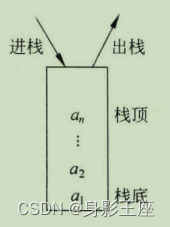
栈的主要特点是“后进先出"(Last In First Out,LIFO),即后进栈的元素先出栈。每次进栈的数据元素都放在原来栈顶元素之前成为新的栈顶元素,每次出栈的数据元素都是当前栈顶元素。栈也称为后进先出表。
3.1.2栈的顺序存储结构及其实现
采用顺序存储结构的栈就是顺序栈。一般的顺序存储结构采用的是数组。

#include<stdio.h> #include<stdlib.h> #define MaxSize 50 typedef int ElemType; typedef struct { ElemType data[MaxSize]; int top; //栈指针 } SqStack; int main() { system("pause"); return 0; }讯享网
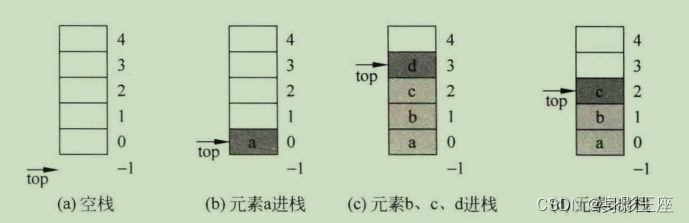
4个十分重要的要素:
- 栈空的条件: s-> top==-1。
- 栈满的条件: s-> top= = MaxSize- l(data数组的最大下标)。
- 元素e的进栈操作:先将栈顶指针top增1,然后将元素e放在栈顶指针处。
- 出栈操作:先将栈顶指针top处的元素取出放在e中,然后将栈顶指针减1。
栈的初始化:
讯享网void InitStack(SqStack *&s) //初始化顺序栈 { s=(SqStack *)malloc(sizeof(SqStack)); s->top=-1; }
销毁栈:
void DestroyStack(SqStack *&s) //销毁顺序栈 { free(s); }判断栈是否为空:
讯享网bool StackEmpty(SqStack *s) //判断栈空否 { return(s->top==-1); }
进栈:
bool Push(SqStack *&s,ElemType e) //进栈 { if (s->top==MaxSize-1) //栈满的情况,即栈上溢出 return false; s->top++; s->data[s->top]=e; return true; }出栈:
讯享网bool Pop(SqStack *&s,ElemType &e) //出栈 { if (s->top==-1) //栈为空的情况,即栈下溢出 return false; e=s->data[s->top]; s->top--; return true; }
取栈顶元素:
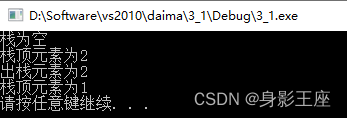
bool GetTop(SqStack *s,ElemType &e) //取栈顶元素 { if (s->top==-1) //栈为空的情况,即栈下溢出 return false; e=s->data[s->top]; return true; }讯享网int main() { SqStack *S1; ElemType e,e1,e2; InitStack(S1); if(StackEmpty(S1)) { printf("栈为空\n"); } Push(S1,1); Push(S1,2); GetTop(S1,e); printf("栈顶元素为%d\n",e); Pop(S1,e1); printf("出栈元素为%d\n",e1); GetTop(S1,e2); printf("栈顶元素为%d\n",e2); DestroyStack(S1); system("pause"); return 0; }
顺序栈采用一个数组存放栈中的元素。如果需要用到两个相同类型的栈,这时若为 它们各自开辟一个数组空间,极有可能出现这样的情况:第一个栈已满,再进栈就溢出了,而另一个栈还有很多空闲存储空间。解决这个问题的方法是将两个栈合起来,用一个数组来实现这两个栈,这称为共享栈(share stack)。
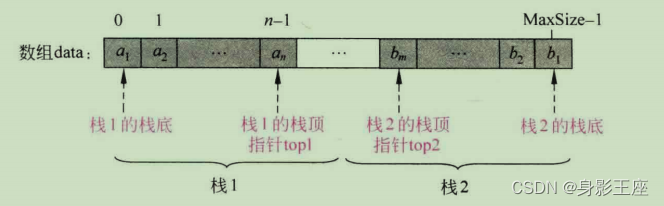
typedef struct { ElemType data[MaxSize]; int top1,top2; //栈指针 } DStack; 共享栈的4个要素如下:
- 栈空条件:栈1空为top1==-1,栈2空为top2==MaxSize。
- 栈满条件:top1 == top2-1。
- 元素进栈操作:进栈1操作为top1++; data[top1] =x;进栈2操作为top2--,data[top2] =x。
- 出栈x操什:出栈1操作为 x= data[ top1];top1--;出栈2操作为 x= data[top2];top2--。
3.13栈的链式存储结构及其实现
这里采用的是带头节点的链表来实现的。
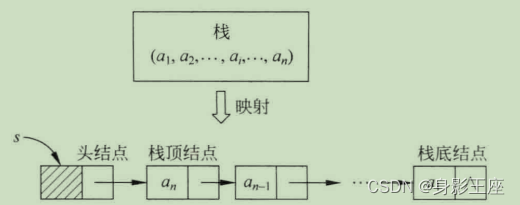
重要的4个要素:
- 栈空的条件:s->next == NULL。
- 栈满的条件:由于只有内存溢出时才出现栈满,通常不考虑这样的情况.所以在链栈中可以看成不存在栈满。
- 元素e的进栈操作:新建一个节点存放e(由p指向它),将节点p插到头节点之后(栈顶)。
- 出栈操作:取出首节点data值并将其删除。
讯享网#include<stdio.h> #include<stdlib.h> #define MaxSize 50 typedef int ElemType; typedef struct linknode { ElemType data; //数据域 struct linknode *next; //指针域 } LinkStNode; int main() { system("pause"); return 0; }
初始化栈:
void InitStack(LinkStNode *&s) //初始化链栈 { s=(LinkStNode *)malloc(sizeof(LinkStNode)); s->next=NULL; }销毁栈:
讯享网void DestroyStack(LinkStNode *&s) //销毁链栈 { LinkStNode *p=s->next; while (p!=NULL) { free(s); s=p; p=p->next; } free(s); //s指向尾节点,释放其空间 }
判断栈是否为空:
bool StackEmpty(LinkStNode *s) //判断栈空否 { return(s->next==NULL); }进栈:
讯享网void Push(LinkStNode *&s,ElemType e) //进栈 { LinkStNode *p; p=(LinkStNode *)malloc(sizeof(LinkStNode)); p->data=e; //新建元素e对应的节点p p->next=s->next; //插入p节点作为开始节点 s->next=p; }
出栈:
bool Pop(LinkStNode *&s,ElemType &e) //出栈 { LinkStNode *p; if (s->next==NULL) //栈空的情况 return false; p=s->next; //p指向开始节点 e=p->data; s->next=p->next; //删除p节点 free(p); //释放p节点 return true; }获取栈顶元素:
讯享网bool GetTop(LinkStNode *s,ElemType &e) //取栈顶元素 { if (s->next==NULL) //栈空的情况 return false; e=s->next->data; return true; }
int main() { LinkStNode *S1; ElemType e,e1,e2; InitStack(S1); if(StackEmpty(S1)) { printf("栈为空\n"); } Push(S1,1); Push(S1,2); GetTop(S1,e); printf("栈顶元素为%d\n",e); Pop(S1,e1); printf("出栈元素为%d\n",e1); GetTop(S1,e2); printf("栈顶元素为%d\n",e2); DestroyStack(S1); system("pause"); return 0; }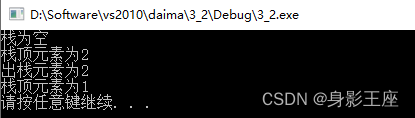

3.2队列
3.2.1队列的定义
队列(queue)简称队.它也是一种操作受限的线性表.其限制为仅允许在表的一端进行插入操作,而在表的另一端进行删除操作,把进行插入的一端称为队尾(rear),把进行删除的一端称为队头或队首(front)。 向队列中插入新元素称为进队或入队(enqueue),新元素进队后就成为新的队尾元素; 从队列中删除元素称为出队或离队(dequeue),元素出队后,其直接后继元素就成为队首元素。
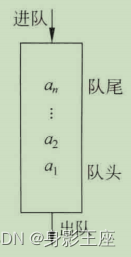
由于队列的插入和删除操作分别是在各自的一端进行的,每个元素必然按照进入的次序出队,所以又把队列称为先进先出表(First In First Out,FIFO)。
3.2.2队列的顺序存储结构以及实现
队列里面相关元素用数组来存放。


讯享网#include<stdio.h> #include<stdlib.h> #define MaxSize 50 typedef int ElemType; typedef struct { ElemType data[MaxSize]; int front,rear; //队首和队尾指针 } SqQueue; int main() { system("pause"); return 0; }
顺序队 :
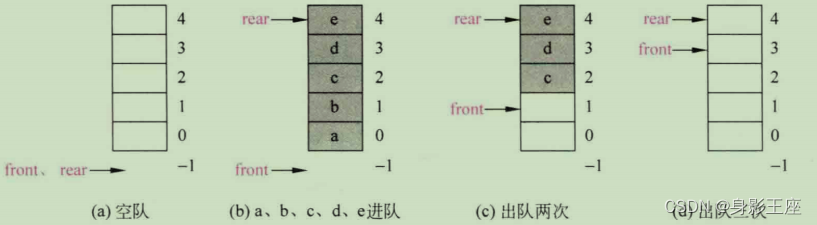 非常重要的4个因素:
- 队空的条件:q->front == q->rear。
- 队满的条件:q->rear == MaxSize - 1。
- 元素e的进队操作:先将rear+1,然后将元素e放到data数组的rear位置。
- 出队操作:先将front+1,然后取出data数组中front位置的元素。
初始化队列:
void InitQueue(SqQueue *&q) { q=(SqQueue *)malloc (sizeof(SqQueue)); q->front=q->rear=-1; }销毁队列:
讯享网void DestroyQueue(SqQueue *&q) //销毁队列q { free(q); }
判断队列是否为空:
bool QueueEmpty(SqQueue *q) //判断队q是否空 { return(q->front==q->rear); }进队列:
讯享网bool enQueue(SqQueue *&q,ElemType e) //进队 { if (q->rear==MaxSize-1) //队满上溢出 return false; //返回假 q->rear++; //队尾增1 q->data[q->rear]=e; //rear位置插入元素e return true; //返回真 }
出队列:
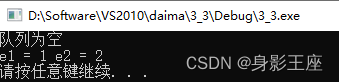
bool deQueue(SqQueue *&q,ElemType &e) //出队 { if (q->front==q->rear) //队空下溢出 return false; q->front++; e=q->data[q->front]; return true; } 讯享网int main() { SqQueue *S; ElemType e1,e2; InitQueue(S); if(QueueEmpty(S)) { printf("队列为空\n"); } else { printf("队列不为空\n"); } enQueue(S,1); enQueue(S,2); deQueue(S,e1); deQueue(S,e2); printf("e1 = %d e2 = %d\n",e1,e2); system("pause"); return 0; }
环形队:
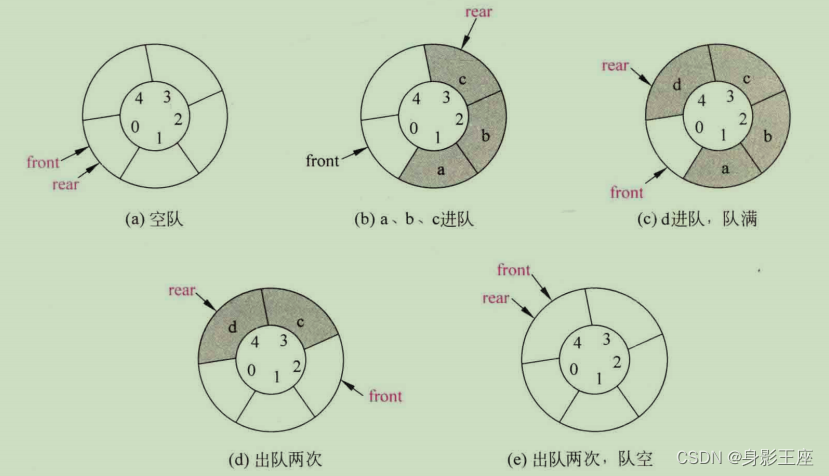
循环队与顺序队的结构体表示是一样的。为了区别队满和队空,循环队列最多只能存放MaxSize-1个元素。也就是空的一个位置仅仅作为标志位。并约定队空:front==rear==0。
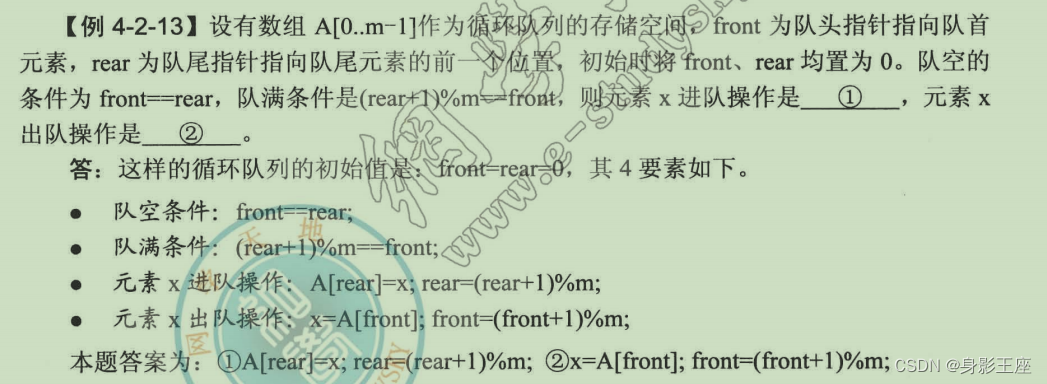
非常重要的4个因素:
- 队空条件:q->front == q->rear。
- 队满条件:(q->rear + 1) % MaxSize == q->front。
- 元素x进队(需要移动队尾指针):q->rear = (q->rear + 1) % MaxSize;q->data[q->rear] = x;
- 出队x(需移动队首指针):q->front= (q->front + 1) % MaxSize;q->data[q->front] = x;
初始化队列:
void InitQueue(SqQueue *&q) //初始化队列q { q=(SqQueue *)malloc (sizeof(SqQueue)); q->front=q->rear=0; }销毁队列:
讯享网void DestroyQueue(SqQueue *&q) //销毁队列q { free(q); }
判断队列是否为空:
bool QueueEmpty(SqQueue *q) //判断队q是否空 { return(q->front==q->rear); }进队:
讯享网bool enQueue(SqQueue *&q,ElemType e) //进队 { if ((q->rear+1)%MaxSize==q->front) //队满上溢出 return false; q->rear=(q->rear+1)%MaxSize; q->data[q->rear]=e; return true; }
出队:
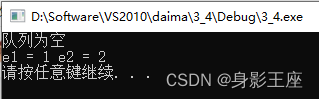
bool deQueue(SqQueue *&q,ElemType &e) //出队 { if (q->front==q->rear) //队空下溢出 return false; q->front=(q->front+1)%MaxSize; e=q->data[q->front]; return true; }讯享网int main() { ElemType e1,e2; SqQueue *S; InitQueue(S); if(QueueEmpty) { printf("队列为空\n"); } else { printf("队列不为空\n"); } enQueue(S,1); enQueue(S,2); deQueue(S,e1); deQueue(S,e2); printf("e1 = %d e2 = %d\n",e1,e2); system("pause"); return 0; }

3.2.3队列的链式存储结构以及实现
链式存储结构采用链表来实现,不过采用的是队列先进先出的特点来管理节点。
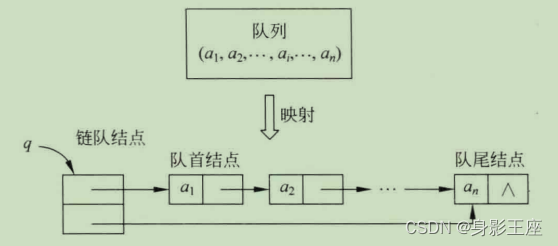
#include<stdio.h> #include<stdlib.h> #define MaxSize 50 typedef int ElemType; typedef struct DataNode { ElemType data; struct DataNode *next; } DataNode; //链队数据节点类型定义 typedef struct { DataNode *front; DataNode *rear; } LinkQuNode; //链队节点类型定义 int main() { system("pause"); return 0; }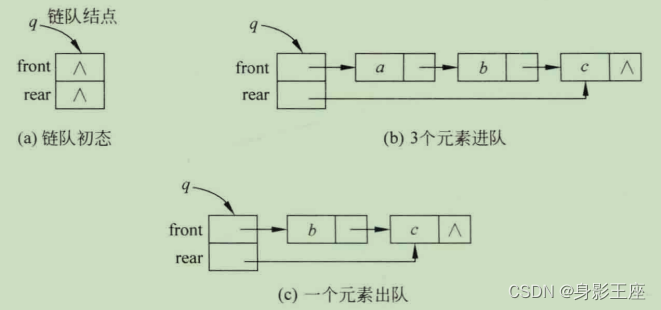
重要的4个要素:
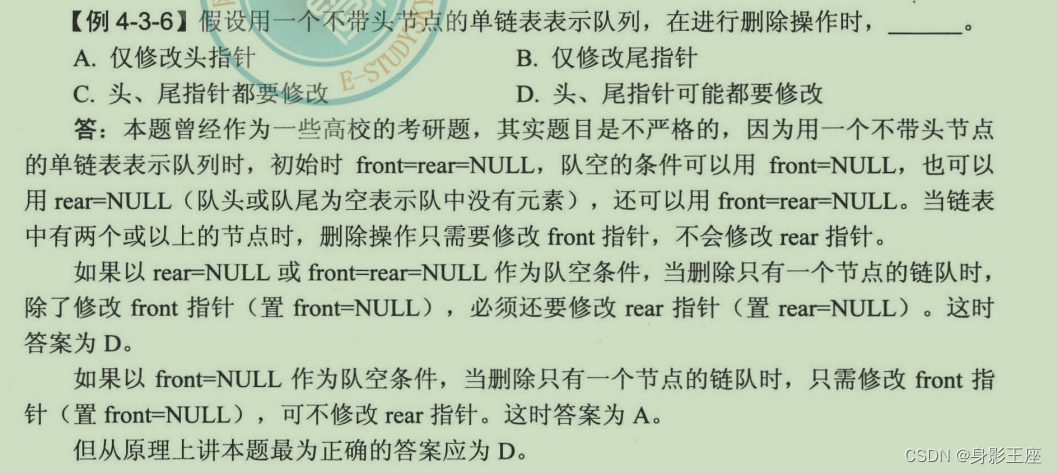
- 队空的条件:q->rear == NULL(或者q->front== NULL)。
- 队满的条件:不考虑。
- 元素e进队操作:新建一个节点存放e(由p指向它),将p节点插入作为尾节点。
- 出队操作:取出队首节点的data值并将其删除。
队列的初始化:
讯享网void InitQueue(LinkQuNode *&q) //初始化队列q { q=(LinkQuNode *)malloc(sizeof(LinkQuNode)); q->front=q->rear=NULL; }
销毁队列:
void DestroyQueue(LinkQuNode *&q) //销毁队列q { DataNode *p=q->front,*r;//p指向队头数据节点 if (p!=NULL) //释放数据节点占用空间 { r=p->next; while (r!=NULL) { free(p); p=r;r=p->next; } } free(p); free(q); //释放链队节点占用空间 }判断队列是否为空:
讯享网bool QueueEmpty(LinkQuNode *q) //判断队q是否空 { return(q->rear==NULL); }
进队列:
void enQueue(LinkQuNode *&q,ElemType e) //进队 { DataNode *p; p=(DataNode *)malloc(sizeof(DataNode)); p->data=e; p->next=NULL; if (q->rear==NULL) //若链队为空,则新节点是队首节点又是队尾节点 q->front=q->rear=p; else { q->rear->next=p; //将p节点链到队尾,并将rear指向它 q->rear=p; } }出队列:
讯享网bool deQueue(LinkQuNode *&q,ElemType &e) //出队 { DataNode *t; if (q->rear==NULL) //队列为空 return false; t=q->front; //t指向第一个数据节点 if (q->front==q->rear) //队列中只有一个节点时 q->front=q->rear=NULL; else //队列中有多个节点时 q->front=q->front->next; e=t->data; free(t); return true; }
int main() { ElemType e1,e2; LinkQuNode *S; InitQueue(S); if(QueueEmpty) { printf("队列为空\n"); } else { printf("队列不为空\n"); } enQueue(S,1); enQueue(S,2); deQueue(S,e1); deQueue(S,e2); printf("e1 = %d e2 = %d\n",e1,e2); system("pause"); return 0; }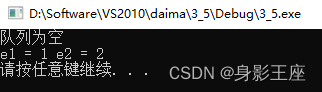
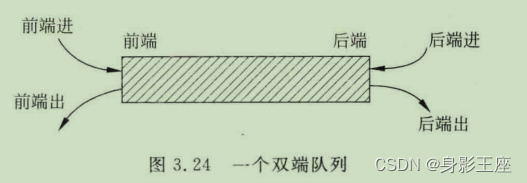
3.2.4 双端队列
有三种,主要考选择题:
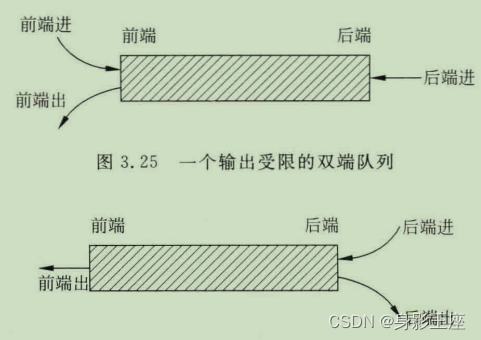
版权声明:本文内容由互联网用户自发贡献,该文观点仅代表作者本人。本站仅提供信息存储空间服务,不拥有所有权,不承担相关法律责任。如发现本站有涉嫌侵权/违法违规的内容,请联系我们,一经查实,本站将立刻删除。
如需转载请保留出处:https://51itzy.com/kjqy/17965.html