
一、什么是ORB特征
ORB 特征亦由关键点和描述子两部分组成。它的关键点称为“Oriented FAST”,是一种改进的 FAST 角点,什么是 FAST 角点我们将在下文介绍。它的描述子称为 BRIEF(Binary Robust Independent Elementary Features)。因此,提取 ORB 特征分为两个步骤:
1)FAST 角点提取:找出图像中的” 角点”。相较于原版的 FAST, ORB 中计算了特征点的主方向,为后续的 BRIEF 描述子增加了旋转不变特性。
2)BRIEF 描述子:对前一步提取出特征点的周围图像区域进行描述。
二、什么是暴力匹配
即对每一个特征点 xmt ,与所有的 xnt+1测量描述子的距离,然后排序,取最近的一个作为匹配点。描述子距离表示了两个特征之间的相似程度,不过在实际运用中还可以取不同的距离度量范数。对于浮点类型的描述子,使用欧氏距离进行度量即可。而对于二进制的描述子(比如 BRIEF 这样的),我们往往使用汉明距离(Hamming distance)做为度量——两个二进制串之间的汉明距离,指的是它们不同位数的个数。

三、实现代码
1.准备图片
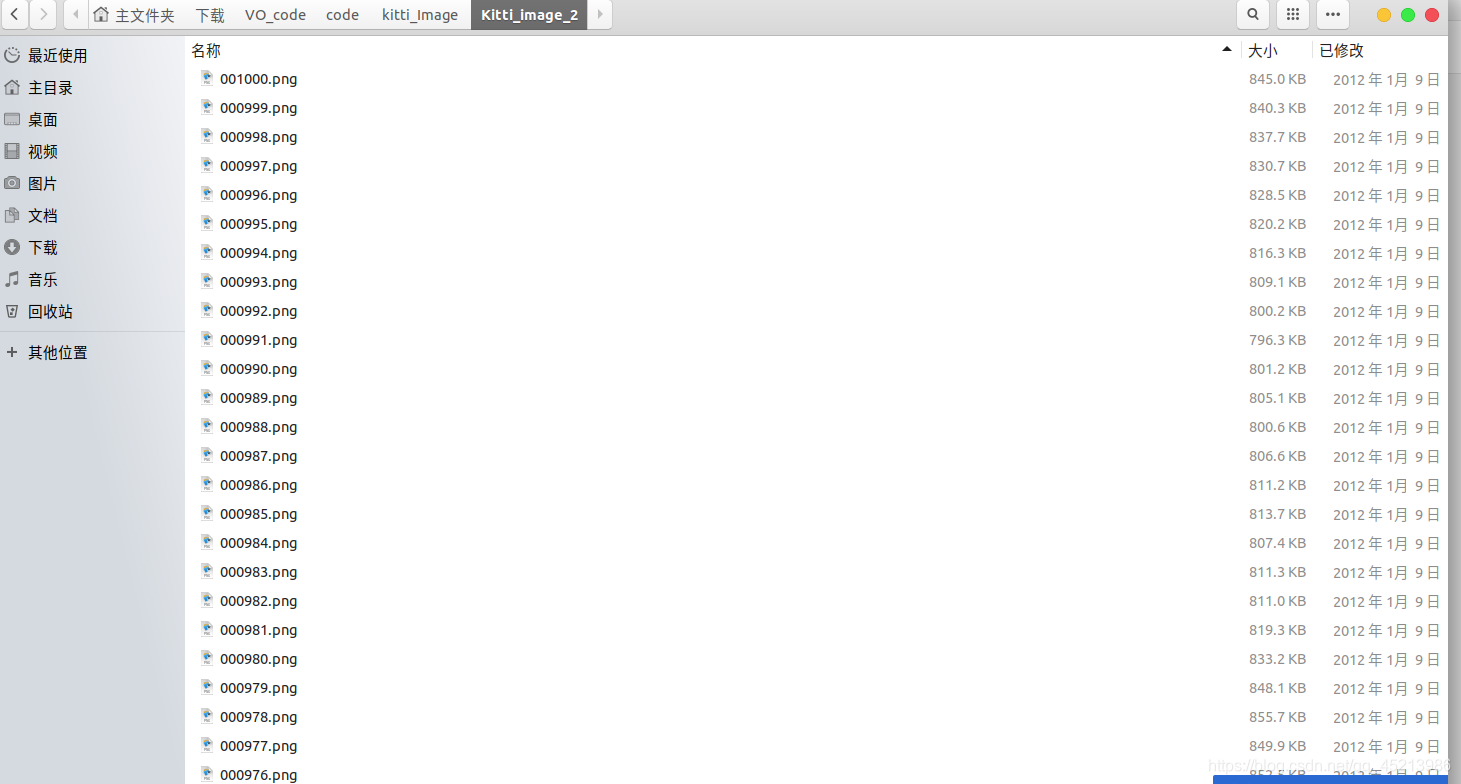
2.创建文件
gedit computeORB2.cpp 讯享网
3.完整代码
讯享网#include <opencv2/opencv.hpp> #include <iostream> #include <vector> #include <string> #include<sstream> #include <fstream> using namespace cv; using namespace std; // global variables const double pi = 3.; // pi // TODO implement this function / * compute the angle for ORB descriptor * @param [in] image input image * @param [in|out] detected keypoints */ void computeAngle(const cv::Mat &image, vector<cv::KeyPoint> &keypoints); // TODO implement this function / * compute ORB descriptor * @param [in] image the input image * @param [in] keypoints detected keypoints * @param [out] desc descriptor */ typedef vector<bool> DescType; // type of descriptor, 256 bools void computeORBDesc(const cv::Mat &image, vector<cv::KeyPoint> &keypoints, vector<DescType> &desc); // TODO implement this function / * brute-force match two sets of descriptors * @param desc1 the first descriptor * @param desc2 the second descriptor * @param matches matches of two images */ void bfMatch(const vector<DescType> &desc1, const vector<DescType> &desc2, vector<cv::DMatch> &matches); int main(int argc, char **argv) {
    std::string pattern_jpg ="./kitti_Image/Kitti_image_2/*.png"; std::vector<cv::String> image_files; cv::glob(pattern_jpg, image_files); for (unsigned int frame = 0; frame < image_files.size(); ++frame) {
   //image_file.size()代表文件中总共的图片个数 //imshow("1", image); //imshow("2", image1); //waitKey(30); // load image cv::Mat first_image = cv::imread(image_files[frame], 0); // load grayscale image cv::Mat second_image = cv::imread(image_files[frame+1], 0); // load grayscale image // plot the image //cv::imshow("first image", first_image); //cv::imshow("second image", second_image); //cv::waitKey(0); // detect FAST keypoints using threshold=40 vector<cv::KeyPoint> keypoints; cv::FAST(first_image, keypoints, 40); cout << "keypoints: " << keypoints.size() << endl; // compute angle for each keypoint computeAngle(first_image, keypoints); // compute ORB descriptors vector<DescType> descriptors; computeORBDesc(first_image, keypoints, descriptors); // plot the keypoints cv::Mat image_show; cv::drawKeypoints(first_image, keypoints, image_show, cv::Scalar::all(-1), cv::DrawMatchesFlags::DRAW_RICH_KEYPOINTS); string a="feature"; string b=".png"; stringstream ss; ss<<a<<frame<<b; // cv::imshow(ss.str(), image_show); cv::imwrite(ss.str(), image_show); cv::waitKey(0); // we can also match descriptors between images // same for the second vector<cv::KeyPoint> keypoints2; cv::FAST(second_image, keypoints2, 40); cout << "keypoints: " << keypoints2.size() << endl; // compute angle for each keypoint computeAngle(second_image, keypoints2); // compute ORB descriptors vector<DescType> descriptors2; computeORBDesc(second_image, keypoints2, descriptors2); // find matches vector<cv::DMatch> matches; bfMatch(descriptors, descriptors2, matches); if (matches.size()<4) {
    cout<<"匹配点过少!"<<endl; } cout << "matches: " << matches.size() << endl; // plot the matches cv::drawMatches(first_image, keypoints, second_image, keypoints2, matches, image_show); string c="matches"; string d=".png"; stringstream sb; sb<<c<<frame<<d; cv::imshow(sb.str(), image_show); cv::imwrite(sb.str(), image_show); cv::waitKey(0); cout << "done." << endl; cout<<endl; } return 0; } // -------------------------------------------------------------------------------------------------- // // compute the angle void computeAngle(const cv::Mat &image, vector<cv::KeyPoint> &keypoints) {
    int half_patch_size = 8; for (auto &kp : keypoints) {
    // START YOUR CODE HERE (~7 lines) // kp.angle = 0; // compute kp.angle double m10 = 0; double m01 = 0; int x =cvRound(kp.pt.x); int y =cvRound(kp.pt.y); if(x-half_patch_size<0||x+half_patch_size>image.cols|| y-half_patch_size<0||y+half_patch_size>image.rows) continue; for(int u = x - half_patch_size;u<x + half_patch_size;++u) {
    for(int v = y -half_patch_size;v< y + half_patch_size;++v) {
    m10 += (u-x)*image.at<uchar>(v,u); m01 += (v-y)*image.at<uchar>(v,u); } } double theta = std::atan(m01/m10); kp.angle = theta * 180/pi; cout<<"kp.angel:"<<kp.angle<<endl; // END YOUR CODE HERE } return; } // -------------------------------------------------------------------------------------------------- // // ORB pattern int ORB_pattern[256 * 4] = {
    8, -3, 9, 5/*mean (0), correlation (0)*/, 4, 2,
版权声明:本文内容由互联网用户自发贡献,该文观点仅代表作者本人。本站仅提供信息存储空间服务,不拥有所有权,不承担相关法律责任。如发现本站有涉嫌侵权/违法违规的内容,请联系我们,一经查实,本站将立刻删除。
如需转载请保留出处:https://51itzy.com/kjqy/114351.html