
构造函数的作用
在创建一个新的对象时,自动调用的函数,用来进行“初始化”工作:对这个对象内部的数据成员进行初始化。
构造函数的特点
- 自动调用(在创建新对象时,自动调用)
- 构造函数的函数名,和类名相同
- 构造函数没有返回类型
- 可以有多个构造函数(即函数重载形式)
构造函数的种类
1.默认构造函数
没有参数的构造函数,称为默认构造函数。
(1)合成的默认构造函数
#include <iostream> using namespace std; class Human { public: string getName(); int getAge(); int getSalary(); private: string name; int age = 18; //类内初始值 int salary; }; string Human::getName() { return name; } int Human::getAge() { return age; } int Human::getSalary() { return salary; } int main() { Human h1;// 创建时使用合成的默认初始化构造函数 cout << "年龄: " << h1.getAge() << endl; //使用了类内初始值 cout << "薪资:" << h1.getSalary() << endl; //没有类内初始值 return 0; }讯享网
代码执行结果:
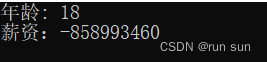
一般情况下,都应该定义自己的构造函数,不要使用“合成的默认构造函数”。
仅当数据成员全部使用了“类内初始值”,才宜使用“合成的默认构造函数”。
只要手动定义了任何一个构造函数,编译器就不会生成“合成的默认构造函数。
(2)手动定义的默认构造函数
常称为“默认构造函数”。
讯享网#include <iostream> using namespace std; class Human { public: Human();//手动定义的“默认构造函数” string getName(); int getAge(); int getSalary(); private: string name; int age; int salary; }; string Human::getName() { return name; } int Human::getAge() { return age; } int Human::getSalary() { return salary; } Human::Human() {//初始化 name = "佚名"; age = 18; salary = 20000; } int main() { Human h1;// 创建时使用自定义的默认初始化构造函数 cout << "姓名: " << h1.getName() << endl; cout << "年龄: " << h1.getAge() << endl; cout << "薪资:" << h1.getSalary() << endl; return 0; }
代码执行结果:
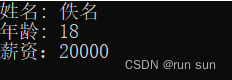
说明:如果某数据成员使用类内初始值,同时又在构造函数中进行了初始化,那么以构造函数中的初始化为准。相当于构造函数中的初始化,会覆盖对应的类内初始值。
2.自定义的构造函数
#include <iostream> using namespace std; class Human { public: Human(string name, int age, int salary);//自定义的构造函数(带参数) string getName(); int getAge(); int getSalary(); private: string name; int age; int salary; }; string Human::getName() { return name; } int Human::getAge() { return age; } int Human::getSalary() { return salary; } Human::Human(string name, int age, int salary) { cout << "调用自定义的构造函数" << endl; this->name = name;//this是一个特殊的指针,指向这个对象本身 this->age = age; this->salary = salary; } int main() { Human h1("Andy", 26, 30000); cout << "姓名: " << h1.getName() << endl; cout << "年龄: " << h1.getAge() << endl; cout << "薪资:" << h1.getSalary() << endl; return 0; }代码执行结果:
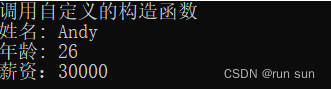
会覆盖类内初始值。
3.拷贝构造函数
(1)手动定义的拷贝构造函数
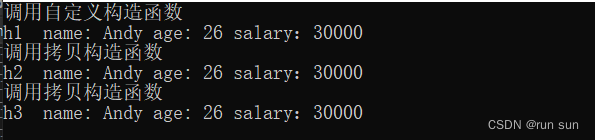
讯享网#include <iostream> using namespace std; class Human { public: Human(string name, int age, int salary); Human(const Human &other);//other可省略,引用类型 string getName(); int getAge(); int getSalary(); void description();//测试使用 private: string name; int age; int salary; }; string Human::getName() { return name; } int Human::getAge() { return age; } int Human::getSalary() { return salary; } void Human::description() { cout << "name: " << name << " age: " << age << " salary:" << salary << endl; } Human::Human(string name, int age, int salary) { cout << "调用自定义构造函数" << endl; this->name = name; this->age = age; this->salary = salary; } Human::Human(const Human& other) {//相当于const Human &other = h1; cout << "调用拷贝构造函数" << endl; name = other.name; age = other.age; salary = other.salary; } int main() { Human h1("Andy", 26, 30000); cout << "h1 "; h1.description(); Human h2 = h1;//调用拷贝构造函数 cout << "h2 "; h2.description(); Human h3(h1);//第二种写法 cout << "h3 "; h3.description(); return 0; }
代码执行结果:
(2)合成的拷贝构造函数
当然,不使用自定义拷贝函数,则会调用默认的拷贝函数。
在一般情况下也不会出现问题:
#include <iostream> using namespace std; class Human { public: Human(string name, int age, int salary); string getName(); int getAge(); int getSalary(); void description(); private: string name; int age; int salary; }; string Human::getName() { return name; } int Human::getAge() { return age; } int Human::getSalary() { return salary; } void Human::description() { cout << "name: " << name << " age: " << age << " salary:" << salary << endl; } Human::Human(string name, int age, int salary) { cout << "调用自定义构造函数" << endl; this->name = name; this->age = age; this->salary = salary; } int main() { Human h1("Andy", 26, 30000); cout << "h1 "; h1.description(); Human h2 = h1;//调用拷贝构造函数 cout << "h2 "; h2.description(); Human h3(h1);//第二种写法 cout << "h3 "; h3.description(); return 0; }代码执行结果:
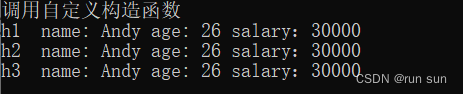
但在使用合成拷贝函数时存在缺点:使用“浅拷贝”,特别是在私有数据为指针的时候。
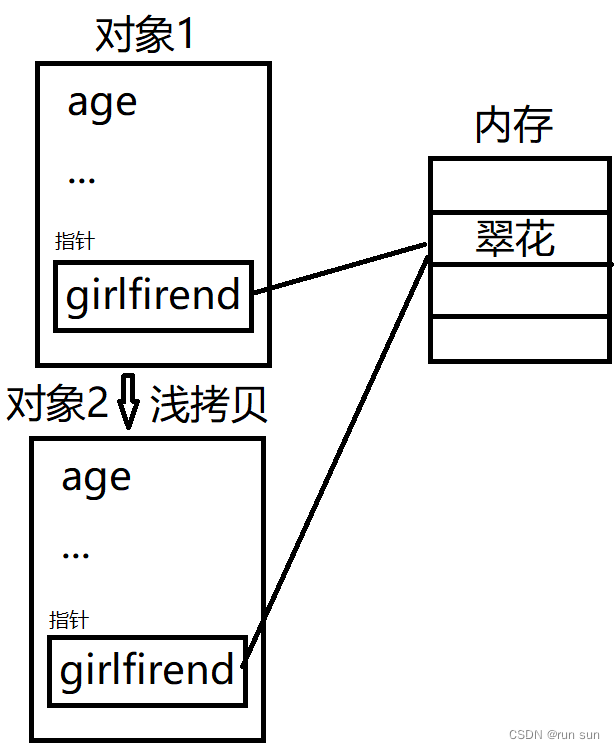
“浅拷贝”示例:
讯享网#include <iostream> using namespace std; class Human { public: Human(string name, int age, int salary); string getName(); int getAge(); int getSalary(); void description(); void setAddr(const char* addr); private: string name; int age; int salary; char *addr; }; string Human::getName() { return name; } int Human::getAge() { return age; } int Human::getSalary() { return salary; } void Human::description() { cout << "name: " << name << " age: " << age << " salary:" << salary << " address: " << addr << endl; } void Human::setAddr(const char* newAddr) { if (!addr) { return; } strcpy_s(this->addr, 16, newAddr); } Human::Human(string name, int age, int salary) { cout << " 调用自定义构造函数" << endl; this->name = name; this->age = age; this->salary = salary; addr = new char[16]; strcpy_s(addr, 16, "China"); } int main() { Human h1("Andy", 26, 30000); cout << " h1 "; h1.description(); Human h2 = h1; cout << " h2 "; h2.description(); Human h3(h1); cout << " h3 "; h3.description(); h1.setAddr("America"); cout << endl; cout << " ----------modified h1----------" << endl; cout << " h1 "; h1.description(); cout << " h2 "; h2.description(); cout << " h3 "; h3.description(); return 0; }
代码执行结果:
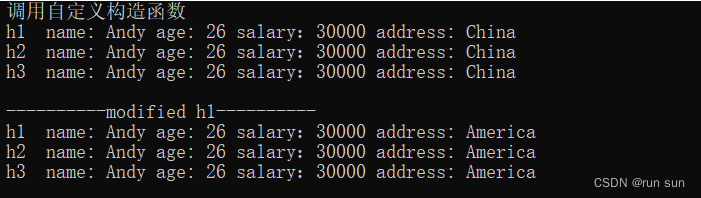
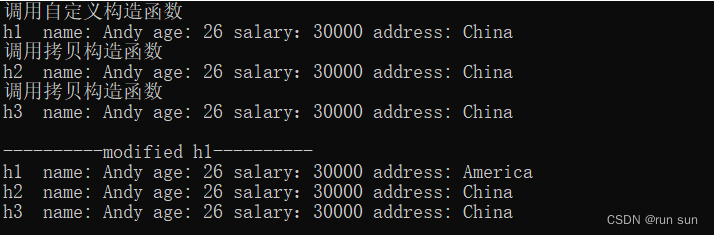
在函数中只修改了h1的地址,结果h2,h3的地址也随着改变了。这种现象是由于“浅拷贝”导致。
解决方案:在自定义的拷贝构造函数中,使用”深拷贝“。
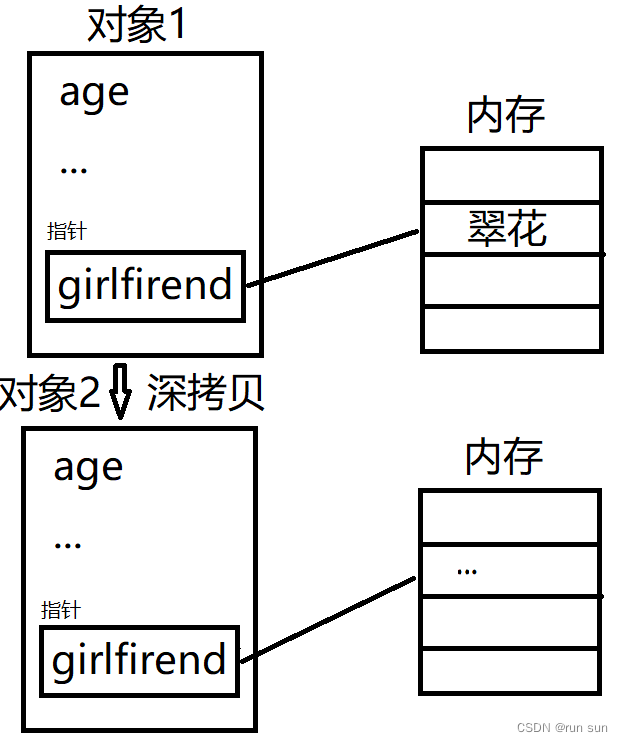
”深拷贝“示例:
#include <iostream> using namespace std; class Human { public: Human(string name, int age, int salary); Human(const Human &other); string getName(); int getAge(); int getSalary(); void description(); void setAddr(const char* addr); private: string name; int age; int salary; char *addr; }; string Human::getName() { return name; } int Human::getAge() { return age; } int Human::getSalary() { return salary; } void Human::description() { cout << "name: " << name << " age: " << age << " salary:" << salary << " address: " << addr << endl; } void Human::setAddr(const char* newAddr) { if (!addr) { return; } strcpy_s(this->addr, 16, newAddr); } Human::Human(string name, int age, int salary) { cout << " 调用自定义构造函数" << endl; this->name = name; this->age = age; this->salary = salary; addr = new char[16]; strcpy_s(addr, 16, "China"); } Human::Human(const Human& other) { cout << "调用拷贝构造函数" << endl; name = other.name; age = other.age; salary = other.salary; addr = new char[16];//"深拷贝" strcpy_s(addr, 16, other.addr); } int main() { Human h1("Andy", 26, 30000); cout << " h1 "; h1.description(); Human h2 = h1; cout << " h2 "; h2.description(); Human h3(h1); cout << " h3 "; h3.description(); h1.setAddr("America"); cout << endl; cout << " ----------modified h1----------" << endl; cout << " h1 "; h1.description(); cout << " h2 "; h2.description(); cout << " h3 "; h3.description(); return 0; }代码执行结果:

(3)调用拷贝构造函数的场合
1.调用函数时,实参是对象,形参不是引用类型。
讯享网#include <iostream> using namespace std; class Human { public: Human(string name, int age, int salary); Human(const Human &other); string getName(); int getAge(); int getSalary(); void description(); private: string name; int age; int salary; char *addr; }; string Human::getName() { return name; } int Human::getAge() { return age; } int Human::getSalary() { return salary; } void Human::description() { cout << "name: " << name << " age: " << age << " salary:" << salary << " address: " << addr << endl; } Human::Human(string name, int age, int salary) { cout << "调用自定义构造函数" << endl; this->name = name; this->age = age; this->salary = salary; addr = new char[16]; strcpy_s(addr, 16, "China"); } Human::Human(const Human& other) { cout << "调用拷贝构造函数" << endl; name = other.name; age = other.age; salary = other.salary; addr = new char[16]; strcpy_s(addr, 16, other.addr); } void showMsg(Human man) {//值传递Human man = h1; cout << man.getName() << "的基本信息:"; man.description(); } int main() { Human h1("Andy", 26, 30000); showMsg(h1); return 0; }
代码执行结果:

如果函数的形参是引用类型,就不会调用拷贝构造函数。
如果将
void showMsg(Human man) {//值传递Human man = h1; cout << man.getName() << "的基本信息:"; man.description(); }改为:
讯享网void showMsg(Human &man) {//h1的别名; cout << man.getName() << "的基本信息:"; man.description(); }
就不会调用拷贝函数,代码执行结果如下:

如果当心引用不安全,可以使用const:
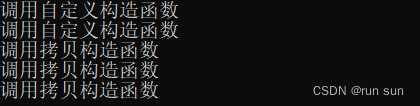
#include <iostream> using namespace std; class Human { public: Human(string name, int age, int salary); Human(const Human &other); string getName() const;//const表示不能修改内部成员 int getAge(); int getSalary(); void description() const; private: string name; int age; int salary; char *addr; }; string Human::getName() const { return name; } int Human::getAge() { return age; } int Human::getSalary() { return salary; } void Human::description() const { cout << "name: " << name << " age: " << age << " salary:" << salary << " address: " << addr << endl; } Human::Human(string name, int age, int salary) { cout << "调用自定义构造函数" << endl; this->name = name; this->age = age; this->salary = salary; addr = new char[16]; strcpy_s(addr, 16, "China"); } Human::Human(const Human& other) { cout << "调用拷贝构造函数" << endl; name = other.name; age = other.age; salary = other.salary; addr = new char[16]; strcpy_s(addr, 16, other.addr); } void showMsg(const Human &man) { cout << man.getName() << "的基本信息:"; man.description(); } int main() { Human h1("Andy", 26, 30000); showMsg(h1); return 0; }2.函数的返回类型是类,而且不是引用类型。
讯享网#include <iostream> using namespace std; class Human { public: Human(string name, int age, int salary); Human(const Human &other); string getName(); int getAge(); int getSalary(); void description(); private: string name; int age; int salary; char *addr; }; string Human::getName() { return name; } int Human::getAge() { return age; } int Human::getSalary() { return salary; } void Human::description() { cout << "name: " << name << " age: " << age << " salary:" << salary << " address: " << addr << endl; } Human::Human(string name, int age, int salary) { cout << "调用自定义构造函数" << endl; this->name = name; this->age = age; this->salary = salary; addr = new char[16]; strcpy_s(addr, 16, "China"); } Human::Human(const Human& other) { cout << "调用拷贝构造函数" << endl; name = other.name; age = other.age; salary = other.salary; addr = new char[16]; strcpy_s(addr, 16, other.addr); } Human getBetterMan(Human man1, Human man2) { if (man1.getSalary() > man2.getSalary()) { return man1; } else { return man2; } } int main() { Human h1("Andy", 26, 30000); Human h2("Van", 22, 15000); getBetterMan(h1, h2);//返回临时对象 return 0; }
代码执行结果:
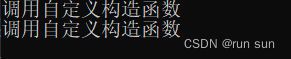
同样加上引用就不会调用拷贝函数:
Human &getBetterMan(Human &man1, Human &man2) { if (man1.getSalary() > man2.getSalary()) { return man1; } else { return man2; } }代码执行结果:
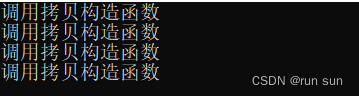
3.对象数组的初始化列表中,使用对象。
讯享网#include <iostream> using namespace std; class Human { public: Human(); Human(const Human &other); string getName(); int getAge(); int getSalary(); void description(); private: string name; int age; int salary; char *addr; }; string Human::getName() { return name; } int Human::getAge() { return age; } int Human::getSalary() { return salary; } Human::Human() { name = name; age = age; salary = salary; addr = new char[16]; strcpy_s(addr, 16, "China"); } Human::Human(const Human& other) { cout << "调用拷贝构造函数" << endl; name = other.name; age = other.age; salary = other.salary; addr = new char[16]; strcpy_s(addr, 16, other.addr); } int main() { Human f1, f2, f3, f4; Human F4[4] = { f1, f2, f3, f4 }; return 0; }
代码执行结果:
4.赋值构造函数
如果没有定义赋值构造函数,编译器会自动定义“合成的赋值构造函数”,与其他合成的构造函数,是“浅拷贝”(又称为“位拷贝”)。
“浅拷贝”:
#include <iostream> using namespace std; class Human { public: Human(); string getName(); int getAge(); int getSalary(); void description(); void setAddr(const char* addr); private: string name; int age; int salary; char *addr; }; string Human::getName() { return name; } int Human::getAge() { return age; } int Human::getSalary() { return salary; } void Human::description() { cout << "name: " << name << " age: " << age << " salary:" << salary << " address: " << addr << endl; } void Human::setAddr(const char* newAddr) { if (!addr) { return; } strcpy_s(this->addr, 16, newAddr); } Human::Human() { name = "cc"; age = 18; salary = 1000; addr = new char[16]; strcpy_s(addr, 16, "China"); } int main() { Human f1, f2; f2 = f1;//自动调用默认赋值构造函数 f1.description(); f2.description(); cout << "-------modified h1-------" << endl; f1.setAddr("新加坡"); f1.description(); f2.description(); return 0; }代码执行结果:

讯享网#include <iostream> using namespace std; class Human { public: Human(); Human& operator=(const Human& other);//=运算符重载 string getName(); int getAge(); int getSalary(); void description(); void setAddr(const char* addr); private: string name; int age; int salary; char *addr; }; string Human::getName() { return name; } int Human::getAge() { return age; } int Human::getSalary() { return salary; } void Human::description() { cout << "name: " << name << " age: " << age << " salary:" << salary << " address: " << addr << endl; } void Human::setAddr(const char* newAddr) { if (!addr) { return; } strcpy_s(this->addr, 16, newAddr); } Human::Human() { name = "cc"; age = 18; salary = 1000; addr = new char[16]; strcpy_s(addr, 16, "China"); } Human& Human::operator=(const Human& other) { if (this == &other) {//f1=f1的情况 return *this; } cout << "调用赋值构造函数" << endl; //f1 = f2;就会自动调用f1.operator=(f2); name = other.name; age = other.age; salary = other.salary; //如果有必要,需要先释放自己的内存 //delete addr; addr = new char[16]; strcpy_s(addr, 16, other.addr); // 返回该对象本身的引用, 以便做链式连续处理,比如 a = b = c; return *this; } int main() { Human f1, f2; f2 = f1;//自动调用赋值构造函数 f1.description(); f2.description(); cout << "-------modified h1-------" << endl; f1.setAddr("新加坡"); f1.description(); f2.description(); return 0; }
代码执行结果:

5.析构函数
作用:对象销毁前,做清理工作。具体的清理工作,一般和构造函数对应。比如:如果在构造函数中,使用new分配了内存,就需在析构函数中用delete释放。
如果构造函数中没有申请资源(主要是内存资源),那么很少使用析构函数。
没有返回值,没有参数,最多只能有一个析构函数。
使用方法:不能主动调用。对象销毁时,自动调用。如果不定义,编译器会自动生成一个析构函数(什么也不做)
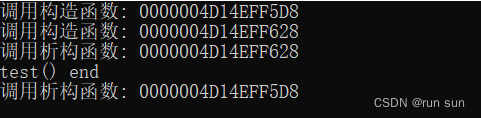
#include <iostream> using namespace std; class Human { public: Human(); string getName(); int getAge(); int getSalary(); //析构函数 ~Human(); private: string name; int age; int salary; char *addr; }; string Human::getName() { return name; } int Human::getAge() { return age; } int Human::getSalary() { return salary; } Human::Human() { cout << "调用构造函数: " << this << endl; name = "cc"; age = 18; salary = 1000; addr = new char[16]; strcpy_s(addr, 16, "China"); } Human::~Human() { cout << "调用析构函数: "<< this << endl; delete addr; } void test() { Human h1; { Human h2; } cout << "test() end" << endl; } int main() { test(); return 0; }代码执行结果:
版权声明:本文内容由互联网用户自发贡献,该文观点仅代表作者本人。本站仅提供信息存储空间服务,不拥有所有权,不承担相关法律责任。如发现本站有涉嫌侵权/违法违规的内容,请联系我们,一经查实,本站将立刻删除。
如需转载请保留出处:https://51itzy.com/kjqy/88855.html