
最近在研究图片加载框架Glide,里面的代码真是非常复杂,它包括了网络请求,图片缓存、异步回调,线程池还有对图片的处理等等的内容,其中图片缓存机制用到了LRUCache和弱引用结合的方式来构建。
LRU算法大家都知道吧,它会丢弃最近,最少使用的项目,从而保留使用频率高的项目,达到一定的使用优化效果。那么LRUCache,因为其特性,特别适合在安卓中来决策图片的缓存策略,避免缓存太多不需要使用的图片,从而导致的OOM。
在此之前我对LRUCache只有大概的了解,知道其特性,但其内部原理我却没有深入了解过,所以今天就让我们好好看看LRUCache内部是怎么处理的。
自Android 3.1开始,LruCache就被引入作为android support包下的一部分,所以我们直接在Andriod Studio下全局搜索LruCache就可以找到这个类,阅读它的源码。
先看看它是怎么被初始化的:
public LruCache(int maxSize) {
    if (maxSize <= 0) {
    throw new IllegalArgumentException("maxSize <= 0"); } this.maxSize = maxSize; this.map = new LinkedHashMap<K, V>(0, 0.75f, true); }
讯享网
传入的参数很简单,只需要传入一个maxSize,这个maxSize,默认情况下代表这个cache的能够存储的最大条目数,如果你重写了这个类的sizeOf()方法,那么这个maxSize就代表cache能够存储的最大容量。关于这点,源码分析的后面也能从代码中看出。
接着就是初始化一个LinkedHashMap,设置初始容量为0,容差因子为0.75,并以访问顺序(访问过该元素过后,元素就会被添加到链表的后面)存储项目,这个hashmap就是用来存储缓存数据的。关于LinkedHashMap的用法和内部知识就不在这里展开了,本文主要以介绍LRUCache为主。
因为LruCache是个数据存储类,接下来看看它的数据来源。
V put(K key, V value)
讯享网public final V put(K key, V value) {
    if (key == null || value == null) {
    throw new NullPointerException("key == null || value == null"); } V previous; synchronized (this) {
    putCount++; size += safeSizeOf(key, value); previous = map.put(key, value); if (previous != null) {
    size -= safeSizeOf(key, previous); } } if (previous != null) {
    entryRemoved(false, key, previous, value); } trimToSize(maxSize); return previous; }
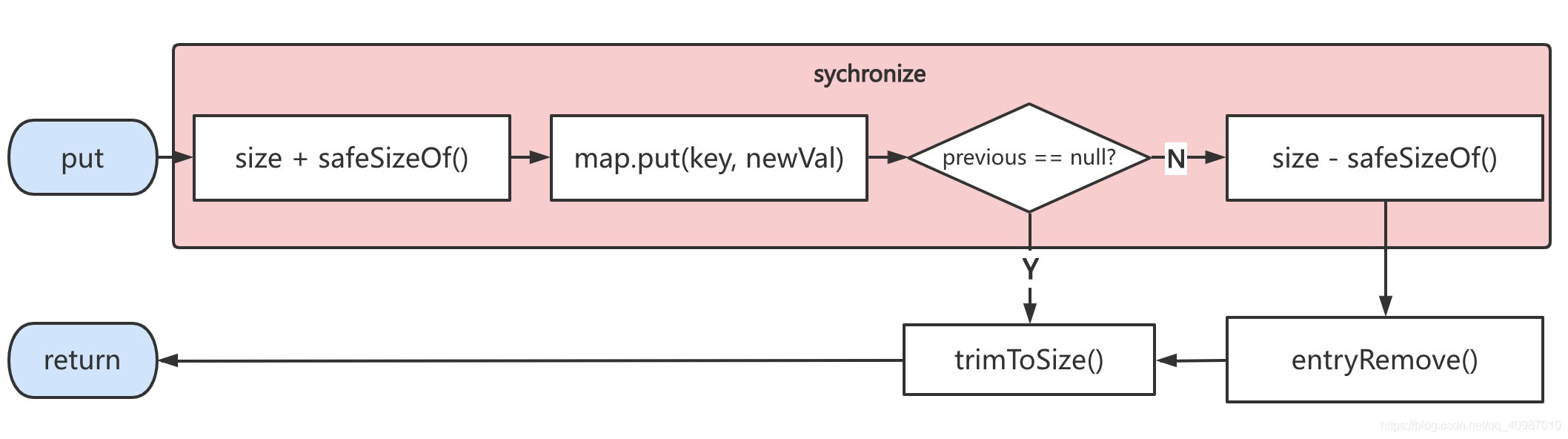
数据进来后,先计算新数据的大小,并计入size,然后再把数据插入到linkedHashMap里面,调用map.put(key, val)把数据插入,如果该key在map中已有旧值,就把旧值传给previous。
判断previous是否为空,如果不为空,则需要从size中减去旧值的所占的容量。
这里的容量怎么计算呢?看看safeSizeOf()方法
int safeSizeOf(K key, V value)
private int safeSizeOf(K key, V value) {
    int result = sizeOf(key, value); if (result < 0) {
    throw new IllegalStateException("Negative size: " + key + "=" + value); } return result; }
其内部也很简单,只是调用了sizeOf()就返回了,这个sizeOf()就是我们开头提到的,其返回值会改变maxSize的意义。看看它在LruCache中的默认实现
int sizeOf(K key, V value)
讯享网protected int sizeOf(K key, V value) {
    return 1; }
可以看到,它默认直接返回了1,也就是说,当我们计算数据的容量时,默认都是返回1个容量,如果你刚开始设置的maxSize是10的话,那么每次新增一个数据,size就会加一,如果size大于了maxSize,就会把linkedHashMap头部,也就是最老的数据“踢”出去,“踢出”的操作后面可以看到。这里我们先接着往下看。
如果该key在map中已有旧值,调用entryRemoved(),这是一个回调方法,在map中元素被踢出或被替换时就会被调用,LruCache中默认是空实现的,我们可以通过重写该方法做一些特殊处理。
void entryRemoved(boolean evicted, K key, V oldValue, V newValue)
protected void entryRemoved(boolean evicted, K key, V oldValue, V newValue) {
   }
在对LruCache进行put、get、remove、trimToSize操作时都会调用这个方法,方法对应的参数意义:
- evicted: 元素是否是被踢出的,例如新元素进来,但已达最大容量maxSize,这时候需要把最老的元素踢出去。
- key: map的索引key
- oldValue:key对应的旧值
- newValue: key对应的新值(如果有的话,例如remove()是没有新值的)
entryRemoved()过后,检查一遍put新值后,size是否超出maxSize,调用trimToSize(),来看看它的内部实现
void trimToSize(int maxSize)
讯享网public void trimToSize(int maxSize) {
    while (true) {
    K key; V value; synchronized (this) {
    if (size < 0 || (map.isEmpty() && size != 0)) {
    throw new IllegalStateException(getClass().getName() + ".sizeOf() is reporting inconsistent results!"); } if (size <= maxSize) {
    break; } Map.Entry<K, V> toEvict = map.eldest(); if (toEvict == null) {
    break; } key = toEvict.getKey(); value = toEvict.getValue(); map.remove(key); size -= safeSizeOf(key, value); evictionCount++; } entryRemoved(true, key, value, null); } }
首先是个无限遍历,每次调用map.eldest(),返回map中的最老的节点进行remove,Map.eldest()方法是安卓中为LruCache新加的,可以看看它的源码注释
// Android-added: eldest(), for internal use in LRU caches / * Returns the eldest entry in the map, or {@code null} if the map is empty. * @hide */ public Map.Entry<K, V> eldest() {
    return head; }
将最老的元素remove后,还需要重新计算当前的size,safeSizeOf()方法上面我们已经看过了,内部只调用了一个sizeOf(),返回一个item所需要占用的容量。
最后调用entryRemoved()回调。

至此put()流程走完,简单画个流程图,走着:
LruCache经过put操作后,cache中已有数据,接下来看看它的get操作。
V get(K key)
讯享网public final V get(K key) {
    if (key == null) {
    throw new NullPointerException("key == null"); } V mapValue; synchronized (this) {
    mapValue = map.get(key); if (mapValue != null) {
    hitCount++; return mapValue; } missCount++; } V createdValue = create(key); if (createdValue == null) {
    return null; } synchronized (this) {
    createCount++; mapValue = map.put(key, createdValue); if (mapValue != null) {
    // There was a conflict so undo that last put map.put(key, mapValue); } else {
    size += safeSizeOf(key, createdValue); } } if (mapValue != null) {
    entryRemoved(false, key, createdValue, mapValue); return mapValue; } else {
    trimToSize(maxSize); return createdValue; } }
虽然里面有两个synchronized,但逻辑也不复杂,我们一点一点看。
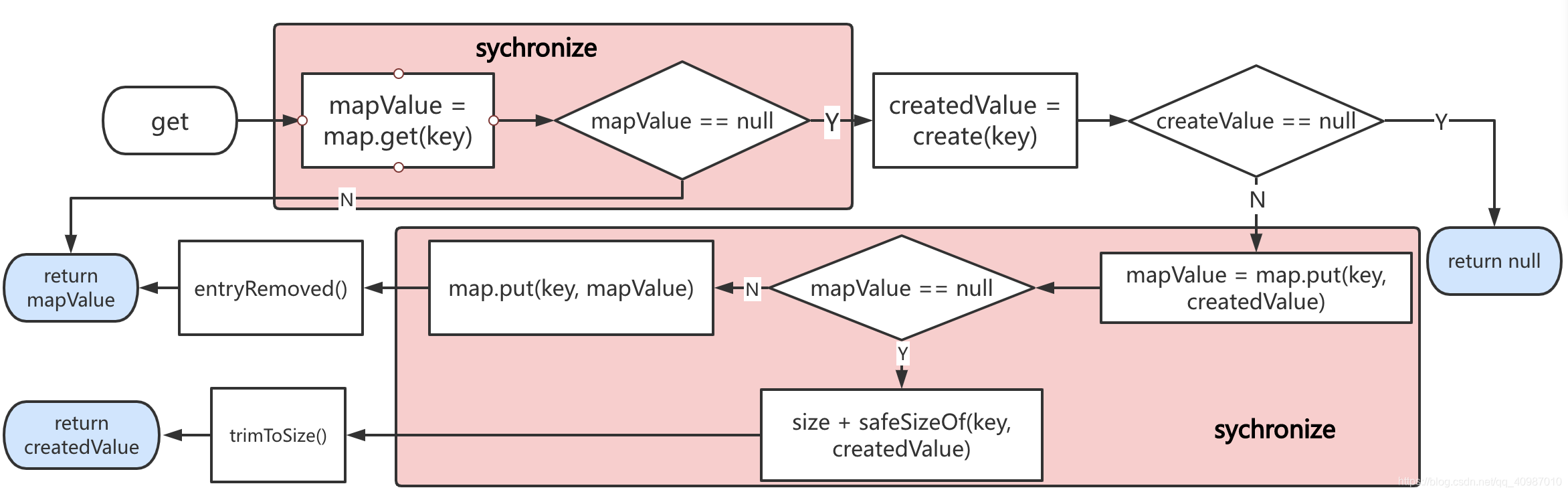
首先调用map.get(key),尝试获取map中的旧值。如果map中存储了该key的值,直接返回旧值。
如果没有,调用create(key),尝试为这个key,创建一个值,这个create()方法默认也是空实现的,有需要我们可以重写该方法。
如果createdValue成功创建,不为空,则重新调用map.put(key, createdValue)。
因为synchronized的原因,在进入第二个sync之前,如果有其他线程B获取了对象锁,调用完put()方法后释放,然后当前线程A再获取锁,这时候map中对应的key就可能有值了,如果有值的话就会返回给mapValue。此时LruCache认为这时候对map的操作有冲突,是脏数据,以put的值为准,进行回滚操作,把mapValue的值插入进去。
否则createdValue被put成功,计算size。
最后在根据mapValue,来判断是进行entryRemoved()还是trimToSize()。
同样,我们简单画个图总结下。
cache数据的来源和获取我们都看了,接下来看看cache的remove方法。
V remove(K key)
public final V remove(K key) {
    if (key == null) {
    throw new NullPointerException("key == null"); } V previous; synchronized (this) {
    previous = map.remove(key); if (previous != null) {
    size -= safeSizeOf(key, previous); } } if (previous != null) {
    entryRemoved(false, key, previous, null); } return previous; }
remove的实现还是比较简单的,我们简单过一遍就好了。
显示从map中去掉该key对应的value,同时从size中减掉该value所占的容量,最后调用entryRemoved()回调。
因为这里并没有新值插入,也并不是因为控件不足而进行的“踢出”操作,所以entryRemoved的第一个参数evict传入false,最后的newValue为null。
接下来我们看看LruCache中其他比较好玩的方法,evictAll()和resize()
void evictAll()
讯享网/ * Clear the cache, calling {@link #entryRemoved} on each removed entry. */ public final void evictAll() {
    trimToSize(-1); // -1 will evict 0-sized elements }
void resize()
public void resize(int maxSize) {
    if (maxSize <= 0) {
    throw new IllegalArgumentException("maxSize <= 0"); } synchronized (this) {
    this.maxSize = maxSize; } trimToSize(maxSize); }
这两个方法内部都是通过trimToSize()来实现的,只是传入的参数值有所不同,
我们回顾一下trimToSize()的内部实现,摘取下面一段代码:
讯享网public void trimToSize(int maxSize) {
    while (true) {
    ... synchronized (this) {
    ... if (size <= maxSize) {
    break; } ... size -= safeSizeOf(key, value); } } }
在文章的开头我们提到,如果我们重写了sizeOf()方法,会给maxSize赋予不同的意义。
默认情况下代表这个cache的能够存储的最大条目数,如果你重写了这个类的sizeOf()方法,那么这个maxSize就代表cache能够存储的最大容量。
现在想想是不是这样?如果默认实现sizeOf返回1,那么我们每经历一个while循环,就会让size减1,就相当于是减掉了一个数量的item,那么此时maxSize代表的可不就是当前cache的item数量了嘛?
而如果我们重写了sizeOf(),返回一个特定的数值(假如是15),而我们在初始化时设置的maxSize等于100,那么此时maxSize就代表了这个cache整体的容量了,最多也只能缓存6个item。
好了,文章读到现在大家对LRUCache内部实现应该有个直观的认识了,我要接着去看Glide的源码了。。
兄dei,如果觉得我写的还不错,麻烦帮个忙呗 😃
- 给俺点个赞被,激励激励我,同时也能让这篇文章让更多人看见,(#.#)
- 不用点收藏,诶别点啊,你怎么点了?这多不好意思!
拜托拜托,谢谢各位同学!
版权声明:本文内容由互联网用户自发贡献,该文观点仅代表作者本人。本站仅提供信息存储空间服务,不拥有所有权,不承担相关法律责任。如发现本站有涉嫌侵权/违法违规的内容,请联系我们,一经查实,本站将立刻删除。
如需转载请保留出处:https://51itzy.com/kjqy/88637.html