
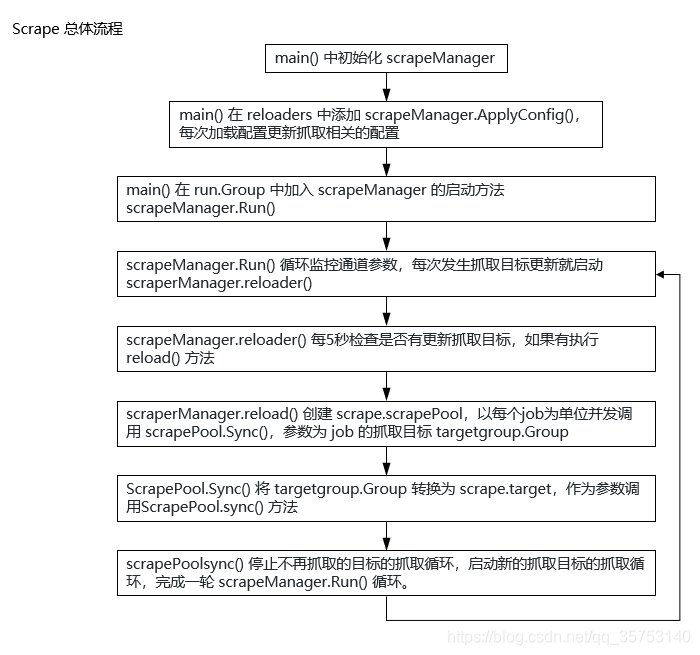
1. main 函数中初始化 scrapeManager 实例
// 初始化 scrapeManager,fanout Storage 是一个读写多个底层存储的代理 scrapeManager = scrape.NewManager(log.With(logger, "component", "scrape manager"), fanoutStorage) 讯享网
fanoutStorage 是读写多个底层存储的代理,实现了 storage.Appendable 接口。
scrape.Manager 结构体
讯享网// Manager maintains a set of scrape pools and manages start/stop cycles // when receiving new target groups form the discovery manager. // Manager 维护了一组抓取池,当从 discover manager 获取到抓取目标的时候管理这些 // 抓取池的启停。 type Manager struct {
    logger log.Logger // 存储追加接口 append storage.Appendable graceShut chan struct{
   } jitterSeed uint64 // Global jitterSeed seed is used to spread scrape workload across HA setup. mtxScrape sync.Mutex // Guards the fields below. scrapeConfigs map[string]*config.ScrapeConfig scrapePools map[string]*scrapePool // 抓取的目标 targetSets map[string][]*targetgroup.Group triggerReload chan struct{
   } }
2. main 函数中初始化 scraper,其包裹 1 中初始化的 scrape.Manager
具体 scraper 做什么用还没看到
// 设置 scraper 的 scrapeManager 字段值 scraper.Set(scrapeManager) scraper 是 readyScrapeManager 实例的指针
讯享网scraper = &readyScrapeManager{
   }
scraper 包裹 *scrape.Manager
// ReadyScrapeManager allows a scrape manager to be retrieved. Even if it's set at a later point in time. // 获取 scrape manager,即使这个 manager 是在稍后时间点配置好的。 type readyScrapeManager struct {
    mtx sync.RWMutex m *scrape.Manager } // Set the scrape manager. func (rm *readyScrapeManager) Set(m *scrape.Manager) {
    rm.mtx.Lock() defer rm.mtx.Unlock() rm.m = m
3. 在 reloaders 中添加 scrapeManager.ApplyConfig 函数
讯享网reloaders := []reloader{
    {
    // The Scrape and notifier managers need to reload before the Discovery manager as // they need to read the most updated config when receiving the new targets list. // scrape 和 notifier manager 要在 discovery manager 之前重新加载,因为它们要在 // 获取新的目标之前重新配置。 name: "scrape", reloader: scrapeManager.ApplyConfig, } }
如果有一个 job 的配置加载失败就返回错误。
// ApplyConfig resets the manager's target providers and job configurations as defined by the new cfg. // ApplyConfig 根据配置文件的设置重置 manager 的抓取对象配置。 func (m *Manager) ApplyConfig(cfg *config.Config) error {
    m.mtxScrape.Lock() defer m.mtxScrape.Unlock() // c 是以 job 为键,服务发现配置为值的 map。 c := make(map[string]*config.ScrapeConfig) for _, scfg := range cfg.ScrapeConfigs {
    c[scfg.JobName] = scfg } m.scrapeConfigs = c if err := m.setJitterSeed(cfg.GlobalConfig.ExternalLabels); err != nil {
    return err } // Cleanup and reload pool if the configuration has changed. var failed bool for name, sp := range m.scrapePools {
    if cfg, ok := m.scrapeConfigs[name]; !ok {
    // 停止并删除新的配置里面没有的抓取任务池 sp.stop() delete(m.scrapePools, name) } else if !reflect.DeepEqual(sp.config, cfg) {
    // 如果存在同名抓取 job 但是对象配置不同就重新加载一遍配置 err := sp.reload(cfg) if err != nil {
    level.Error(m.logger).Log("msg", "error reloading scrape pool", "err", err, "scrape_pool", name) failed = true } } } if failed {
    return errors.New("failed to apply the new configuration") } return nil }
每次 reload 配置文件的时候都会重新加载 scrape 的配置,config/config.go 中的 ScrapeConfig 结构体
讯享网// ScrapeConfig configures a scraping unit for Prometheus. type ScrapeConfig struct {
    // The job name to which the job label is set by default. JobName string `yaml:"job_name"` // Indicator whether the scraped metrics should remain unmodified. HonorLabels bool `yaml:"honor_labels,omitempty"` // Indicator whether the scraped timestamps should be respected. HonorTimestamps bool `yaml:"honor_timestamps"` // A set of query parameters with which the target is scraped. Params url.Values `yaml:"params,omitempty"` // How frequently to scrape the targets of this scrape config. ScrapeInterval model.Duration `yaml:"scrape_interval,omitempty"` // The timeout for scraping targets of this config. ScrapeTimeout model.Duration `yaml:"scrape_timeout,omitempty"` // The HTTP resource path on which to fetch metrics from targets. MetricsPath string `yaml:"metrics_path,omitempty"` // The URL scheme with which to fetch metrics from targets. Scheme string `yaml:"scheme,omitempty"` // More than this many samples post metric-relabeling will cause the scrape to fail. SampleLimit uint `yaml:"sample_limit,omitempty"` // More than this many targets after the target relabeling will cause the // scrapes to fail. TargetLimit uint `yaml:"target_limit,omitempty"` // We cannot do proper Go type embedding below as the parser will then parse // values arbitrarily into the overflow maps of further-down types. ServiceDiscoveryConfigs discovery.Configs `yaml:"-"` HTTPClientConfig config.HTTPClientConfig `yaml:",inline"` // List of target relabel configurations. RelabelConfigs []*relabel.Config `yaml:"relabel_configs,omitempty"` // List of metric relabel configurations. MetricRelabelConfigs []*relabel.Config `yaml:"metric_relabel_configs,omitempty"` }
4. 在 run.Group 中加入 scrapeManager 的启动方法
{
    // Scrape manager. g.Add( func() error {
    // When the scrape manager receives a new targets list // it needs to read a valid config for each job. // It depends on the config being in sync with the discovery manager so // we wait until the config is fully loaded. // scrape manager 获取到新的抓取目标列表时,它需要读取每个 job 的合法的配置。 // 这依赖于正在被 discovery manager 同步的配置文件,所以要等到配置加载完成。 <-reloadReady.C err := scrapeManager.Run(discoveryManagerScrape.SyncCh()) level.Info(logger).Log("msg", "Scrape manager stopped") return err }, func(err error) {
    // Scrape manager needs to be stopped before closing the local TSDB // so that it doesn't try to write samples to a closed storage. level.Info(logger).Log("msg", "Stopping scrape manager...") scrapeManager.Stop() }, ) }
此处关注一下 reloadReady
讯享网 // sync.Once is used to make sure we can close the channel at different execution stages(SIGTERM or when the config is loaded). // sync.Once 用于确保在不同的执行阶段(SIGTERM 或加载完配置)关闭 channel。 type closeOnce struct {
    C chan struct{
   } once sync.Once Close func() } // Wait until the server is ready to handle reloading. // 等待直到 server 准备好处理配置重加载。 reloadReady := &closeOnce{
    C: make(chan struct{
   }), } reloadReady.Close = func() {
    reloadReady.once.Do(func() {
    close(reloadReady.C) }) }
在收到 sigterm 时关闭 reloadReady 的通道,保证阻塞等待它的协程可以继续执行
 g.Add( // 接收信号退出 func() error {
    // Don't forget to release the reloadReady channel so that waiting blocks can exit normally. select {
    case <-term: level.Warn(logger).Log("msg", "Received SIGTERM, exiting gracefully...") reloadReady.Close() case <-webHandler.Quit(): level.Warn(logger).Log("msg", "Received termination request via web service, exiting gracefully...") case <-cancel: reloadReady.Close() } return nil }, func(err error) {
    close(cancel) }, ) }
重加载配置之前,要等待 reloadReady.C

讯享网 g.Add( func() error {
    <-reloadReady.C for {
    select {
    case <-hup: if err := reloadConfig(cfg.configFile, logger, noStepSubqueryInterval, reloaders...); err != nil {
    level.Error(logger).Log("msg", "Error reloading config", "err", err) } case rc := <-webHandler.Reload(): if err := reloadConfig(cfg.configFile, logger, noStepSubqueryInterval, reloaders...); err != nil {
    level.Error(logger).Log("msg", "Error reloading config", "err", err) rc <- err } else {
    rc <- nil } case <-cancel: return nil } } },
初始化加载配置完成之后关闭 reloadReady
 {
    // Initial configuration loading. cancel := make(chan struct{
   }) g.Add( func() error {
    select {
    case <-dbOpen: // In case a shutdown is initiated before the dbOpen is released case <-cancel: reloadReady.Close() return nil } if err := reloadConfig(cfg.configFile, logger, noStepSubqueryInterval, reloaders...); err != nil {
    return errors.Wrapf(err, "error loading config from %q", cfg.configFile) } reloadReady.Close() webHandler.Ready() level.Info(logger).Log("msg", "Server is ready to receive web requests.") <-cancel return nil }, func(err error) {
    close(cancel) }, ) }
Rule manager 启动之前要等待 reloadReady
讯享网 {
    // Rule manager. g.Add( func() error {
    <-reloadReady.C ruleManager.Run() return nil }, func(err error) {
    ruleManager.Stop() }, ) }
Notifier manager启动之前要等待 reloadReady
 {
    // Notifier. // Calling notifier.Stop() before ruleManager.Stop() will cause a panic if the ruleManager isn't running, // so keep this interrupt after the ruleManager.Stop(). // 如果 ruleManager不在运行,在调用 ruleManager.Stop() 之前调用 notifier.Stop() 会引发 pannic, // 所以确保在 ruleManager.Stop() 中断 notifier。 g.Add( func() error {
    // When the notifier manager receives a new targets list // it needs to read a valid config for each job. // It depends on the config being in sync with the discovery manager // so we wait until the config is fully loaded. <-reloadReady.C notifierManager.Run(discoveryManagerNotify.SyncCh()) level.Info(logger).Log("msg", "Notifier manager stopped") return nil }, func(err error) {
    notifierManager.Stop() }, ) } if err := g.Run(); err != nil {
    level.Error(logger).Log("err", err) os.Exit(1) } level.Info(logger).Log("msg", "See you next time!")
5. scrape.Manager.Run()
参数是 map[string][]*targetgroup.Group 的 channel,键是 jobname,先在新的 goroutine 中启动 Manager.realoder() 方法,然后死循环,如果收到 channel 中更新的抓取目标就执行 Manager。updateTest() 方法将更新的目标赋值赋值给Manager.targetSets,然后尝试向 Manager.triggerReload 发送信号。
讯享网// Run receives and saves target set updates and triggers the scraping loops reloading. // Reloading happens in the background so that it doesn't block receiving targets updates. // Run 接收并保存对抓取目标的更新,然后触发抓取循环的重加载。 // 重加载后台执行,不会阻塞获取目标更新。 func (m *Manager) Run(tsets <-chan map[string][]*targetgroup.Group) error {
    go m.reloader() for {
    select {
    case ts := <-tsets: m.updateTsets(ts) select {
    case m.triggerReload <- struct{
   }{
   }: default: } case <-m.graceShut: return nil } } } func (m *Manager) updateTsets(tsets map[string][]*targetgroup.Group) {
    m.mtxScrape.Lock() m.targetSets = tsets m.mtxScrape.Unlock() }
Manager.reloader() 方法每5秒钟轮询一次 Manager.triggerReload,如果有信号,就执行 Manager.reload() 方法。
func (m *Manager) reloader() {
    ticker := time.NewTicker(5 * time.Second) defer ticker.Stop() for {
    select {
    case <-m.graceShut: return case <-ticker.C: select {
    case <-m.triggerReload: m.reload() case <-m.graceShut: return } } } }
Manager.reload() 方法
讯享网func (m *Manager) reload() {
    m.mtxScrape.Lock() var wg sync.WaitGroup // 遍历最新的抓取目标配置中的每个job 的 targetGroup for setName, groups := range m.targetSets {
    // 如果没有这个 job 的 scrapePool if _, ok := m.scrapePools[setName]; !ok {
    // 抓取配置 m.scrapeConfigs 有没有这个 job 的配置, // 解析配置的时候有可能出错,就会跳过出错的 job,这里再检查一下 scrapeConfig, ok := m.scrapeConfigs[setName] // 没有就跳过这个 job if !ok {
    level.Error(m.logger).Log("msg", "error reloading target set", "err", "invalid config id:"+setName) continue } // 创建这个 job 的scrapePool sp, err := newScrapePool(scrapeConfig, m.append, m.jitterSeed, log.With(m.logger, "scrape_pool", setName)) if err != nil {
    level.Error(m.logger).Log("msg", "error creating new scrape pool", "err", err, "scrape_pool", setName) continue } m.scrapePools[setName] = sp } wg.Add(1) // Run the sync in parallel as these take a while and at high load can't catch up. // 并发执行 scrapePool.Sync() 方法并等待全部执行完毕。 go func(sp *scrapePool, groups []*targetgroup.Group) {
    sp.Sync(groups) wg.Done() }(m.scrapePools[setName], groups) // 如果已经有这个 job 就启动,所以此处不用 sp 而用m.scrapePools[setName] } m.mtxScrape.Unlock() wg.Wait() }
6. scrapePool 相关定义
scrapePool 结构体主要包含存储(storage.Appendable)、抓取配置、http client 和 targets。scarpe/scrape.go
// scrapePool manages scrapes for sets of targets. // scrapePool 管理对抓取目标的抓取 type scrapePool struct {
    appendable storage.Appendable logger log.Logger cancel context.CancelFunc // mtx must not be taken after targetMtx. mtx sync.Mutex config *config.ScrapeConfig client *http.Client loops map[uint64]loop targetLimitHit bool // Internal state to speed up the target_limit checks. targetMtx sync.Mutex // activeTargets and loops must always be synchronized to have the same // set of hashes. activeTargets map[uint64]*Target droppedTargets []*Target // Constructor for new scrape loops. This is settable for testing convenience. newLoop func(scrapeLoopOptions) loop }
工厂函数
讯享网func newScrapePool(cfg *config.ScrapeConfig, app storage.Appendable, jitterSeed uint64, logger log.Logger) (*scrapePool, error) {
    // target_scrape_pools 数量统计,每个 job 一个池。 targetScrapePools.Inc() if logger == nil {
    logger = log.NewNopLogger() } // 根据配置创建 http client client, err := config_util.NewClientFromConfig(cfg.HTTPClientConfig, cfg.JobName, false, false) if err != nil {
    targetScrapePoolsFailed.Inc() return nil, errors.Wrap(err, "error creating HTTP client") } // pool.New 返回一个分桶的 sync.Pool buffers := pool.New(1e3, 100e6, 3, func(sz int) interface{
   } {
    return make([]byte, 0, sz) }) ctx, cancel := context.WithCancel(context.Background()) sp := &scrapePool{
    cancel: cancel, appendable: app, config: cfg, client: client, activeTargets: map[uint64]*Target{
   }, loops: map[uint64]loop{
   }, logger: logger, } sp.newLoop = func(opts scrapeLoopOptions) loop {
    // Update the targets retrieval function for metadata to a new scrape cache. cache := opts.cache if cache == nil {
    cache = newScrapeCache() } opts.target.SetMetadataStore(cache) return newScrapeLoop( ctx, opts.scraper, log.With(logger, "target", opts.target), buffers, func(l labels.Labels) labels.Labels {
    return mutateSampleLabels(l, opts.target, opts.honorLabels, opts.mrc) }, func(l labels.Labels) labels.Labels {
    return mutateReportSampleLabels(l, opts.target) }, func(ctx context.Context) storage.Appender {
    return appender(app.Appender(ctx), opts.limit) }, cache, jitterSeed, opts.honorTimestamps, ) } return sp, nil }
其中 scrapeCache 是跟踪暴露的指标字符串到标签集和存储直接按的映射的, 此外它还跟踪相邻两次抓取之间的腐化情况。
// scrapeCache tracks mappings of exposed metric strings to label sets and // storage references. Additionally, it tracks staleness of series between // scrapes. type scrapeCache struct {
    iter uint64 // Current scrape iteration. 当前抓取的迭代序号。 // How many series and metadata entries there were at the last success. // 最后一次成功抓取的时序和元数据项 successfulCount int // Parsed string to an entry with information about the actual label set // and its storage reference. // 将字符串解析为标签信息 series map[string]*cacheEntry // Cache of dropped metric strings and their iteration. The iteration must // be a pointer so we can update it without setting a new entry with an unsafe // string in addDropped(). // 丢弃的指标字符串和他们的迭代序号。 droppedSeries map[string]*uint64 // seriesCur and seriesPrev store the labels of series that were seen // in the current and previous scrape. // We hold two maps and swap them out to save allocations. // 当前抓取和上次抓取中见到的标签集,两个映射轮换可以节省分配。 seriesCur map[uint64]labels.Labels seriesPrev map[uint64]labels.Labels metaMtx sync.Mutex metadata map[string]*metaEntry }
7. 在 Manager.reload() 里针对每个 job 执行 sp.Sync(groups)
将 target group 转换为实际的抓取目标,同步当前运行的 scraper 和结果集,返回全部抓取和丢弃的目标。
讯享网// Sync converts target groups into actual scrape targets and synchronizes // the currently running scraper with the resulting set and returns all scraped and dropped targets. func (sp *scrapePool) Sync(tgs []*targetgroup.Group) {
    sp.mtx.Lock() defer sp.mtx.Unlock() start := time.Now() sp.targetMtx.Lock() var all []*Target sp.droppedTargets = []*Target{
   } for _, tg := range tgs {
    // 合并传入的抓取目标和配置中的抓取目标,转换为 target 类型 targets, err := targetsFromGroup(tg, sp.config) if err != nil {
    level.Error(sp.logger).Log("msg", "creating targets failed", "err", err) continue } for _, t := range targets {
    if t.Labels().Len() > 0 {
    all = append(all, t) } else if t.DiscoveredLabels().Len() > 0 {
    // 之前有标签,现在没有了,即为丢弃的目标 sp.droppedTargets = append(sp.droppedTargets, t) } } } sp.targetMtx.Unlock() sp.sync(all) targetSyncIntervalLength.WithLabelValues(sp.config.JobName).Observe( time.Since(start).Seconds(), ) targetScrapePoolSyncsCounter.WithLabelValues(sp.config.JobName).Inc() }
8. scrapePool.sync(targets []*Target)方法
参数是所有抓取目标。方法对目标去重,对于要抓取的目标,启动抓取循环,对于要丢弃的目标,停止其抓取循环。在全部要停止的循环终止以后返回。
// sync takes a list of potentially duplicated targets, deduplicates them, starts // scrape loops for new targets, and stops scrape loops for disappeared targets. // It returns after all stopped scrape loops terminated. func (sp *scrapePool) sync(targets []*Target) {
    var ( uniqueLoops = make(map[uint64]loop) interval = time.Duration(sp.config.ScrapeInterval) timeout = time.Duration(sp.config.ScrapeTimeout) limit = int(sp.config.SampleLimit) honorLabels = sp.config.HonorLabels honorTimestamps = sp.config.HonorTimestamps mrc = sp.config.MetricRelabelConfigs ) sp.targetMtx.Lock() for _, t := range targets {
    hash := t.hash() // 不在活跃目标列表中就创建一个 scraper 加入活跃目标列表 if _, ok := sp.activeTargets[hash]; !ok {
    s := &targetScraper{
   Target: t, client: sp.client, timeout: timeout} l := sp.newLoop(scrapeLoopOptions{
    target: t, scraper: s, limit: limit, honorLabels: honorLabels, honorTimestamps: honorTimestamps, mrc: mrc, }) sp.activeTargets[hash] = t sp.loops[hash] = l uniqueLoops[hash] = l } else {
    // This might be a duplicated target. // 是重复的目标 if _, ok := uniqueLoops[hash]; !ok {
    uniqueLoops[hash] = nil } // Need to keep the most updated labels information // for displaying it in the Service Discovery web page. // 新抓取目标的原始标签标签,用于在 web 上显示 sp.activeTargets[hash].SetDiscoveredLabels(t.DiscoveredLabels()) } } var wg sync.WaitGroup // Stop and remove old targets and scraper loops. // 停止旧目标的抓取循环 for hash := range sp.activeTargets {
    if _, ok := uniqueLoops[hash]; !ok {
    wg.Add(1) go func(l loop) {
    l.stop() wg.Done() }(sp.loops[hash]) delete(sp.loops, hash) delete(sp.activeTargets, hash) } } sp.targetMtx.Unlock() // 并发启动新目标的抓取循环 targetScrapePoolTargetsAdded.WithLabelValues(sp.config.JobName).Set(float64(len(uniqueLoops))) forcedErr := sp.refreshTargetLimitErr() for _, l := range sp.loops {
    l.setForcedError(forcedErr) } for _, l := range uniqueLoops {
    if l != nil {
    go l.run(interval, timeout, nil) } } // Wait for all potentially stopped scrapers to terminate. // This covers the case of flapping targets. If the server is under high load, a new scraper // may be active and tries to insert. The old scraper that didn't terminate yet could still // be inserting a previous sample set. // 等待停止中的 scraper 终止。 // 如果服务器负载较高,旧的 scraper 还没有终止,抓取相同目标的新 scraper 可能已经启动, // 这时旧的 scraper 仍然会插入之前的样本集。 wg.Wait() }
习得
- Manager 的 reloader() 作为重加载器每5秒执行一次 reload()。
- 在 reload() 中,每个 targetgroup(job) 组创建一个 ScrapePool,启动一个 goroutine 异步执行 Sync() 并等待完成。
- 在 scrape.Sync() 中将 targetgroup 转换为具体的 target 作为参数调用 sync().
- scrape.sync() 并发停止旧的抓取,启动新的抓取,等待停止和启动动作完成。
- 此时完成一轮 Manager.Run() 循环,每次更新抓取目标就执行一轮循环。
- 每一轮 Manager.Run() 都是一个闭环,严格管理每个 goroutine 的生命周期,会对不再抓取的目标停止抓取,对新的目标开启抓取。
版权声明:本文内容由互联网用户自发贡献,该文观点仅代表作者本人。本站仅提供信息存储空间服务,不拥有所有权,不承担相关法律责任。如发现本站有涉嫌侵权/违法违规的内容,请联系我们,一经查实,本站将立刻删除。
如需转载请保留出处:https://51itzy.com/kjqy/88379.html