
目标:统计人类基因组外显子区域长度
题目数据来源为:ftp://ftp.ncbi.nlm.nih.gov/pub/CCDS/current_human/CCDS.current.txt
perl
open F,"CCDS.current.txt"; while(<F>){#一行一行读取数据 next if /^#/;#pass掉带#符号开头的行,即首行 chomp;#去掉末尾的换行符 @arr=split /\t/;#以制表符切割读取的每一行数据 next unless /\[(.*?)\]/;#无外显子坐标的行pass @start_end=split /,\s+/,$1;#切割文件的第10列 foreach(@start_end){ @loci=split /-/;#以“-”切割每个外显子 foreach(@loci[0]..@loci[1]){$hash{"$arr[0]:$_"}=1;}#以染色体:坐标符号 格式存入perl哈希中,目的去重 } } close F; $length=keys %hash;#得到哈希键值长度 print "外显子总长度:$length\n";讯享网
输出结果
外显子总长度:
用时 0m39.897s
python3
讯享网import re chr_pos = set()#定义set数据,目的去重 with open("CCDS.current.txt", 'r') as file: for line in file: if re.match('^#',line): continue #跳过首行 line = line.split("\t") if line[9] != "-":#pass掉第10列为"-"的数据行 chr = line[0] #获得该行数据的染色体编号 exons = line[9].lstrip("[").rstrip("]").split(", ") #去掉字符串[],以", "切割字符串,得到exons列表 for exon in exons:#对切割得到的exons列表进行循环 exon=exon.split("-") for i in range(int(exon[0]),int(exon[1])+1): chr_pos.add(line[0]+":"+str(i))#依据染色体号:外显子坐标,利用set数据去重 print(len(chr_pos))
输出结果:
用时 0m43.192s

R语言
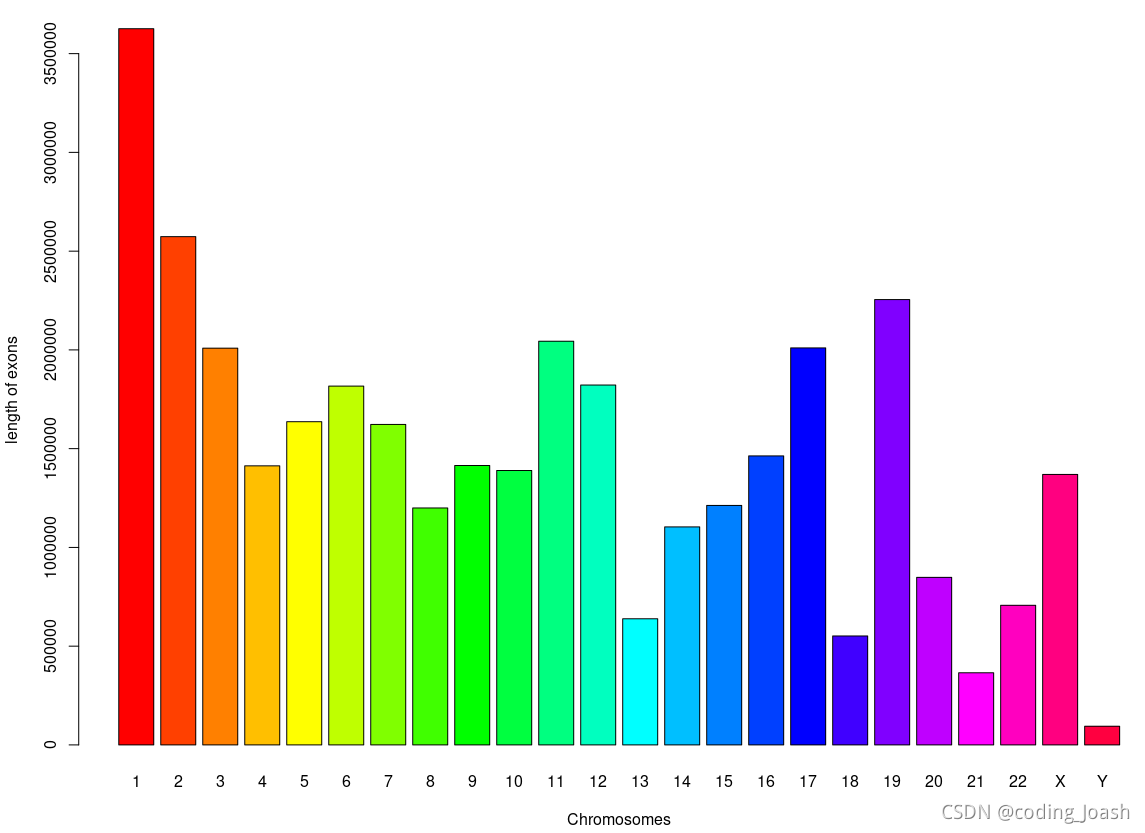
if(T){ t1 <- Sys.time()#把程序运行之前的时间赋值给t1 data <- read.table("CCDS.current.txt", sep='\t')[c(1,10)] get_gene <-function(data_item){ # 目的就是去掉第10列的外面的中括号"[]" # 用到的数据data_item[2]为:[-, -],输出的数据为"-, -" #data_item=substr(data_item[2], 2, nchar(data_item[2])-1) data_item=sub("\\[(.*?)\\]", "\\1",data_item[2]) data_item #返回值 } get_length <- function(exon){ # 输入的数据为'111-113' # 输出结果为c(111:113),即c(111,112,113) loc <- strsplit(exon,"-")[[1]] # 注:strsplit的输出结果为列表 a <- c(loc[1]:loc[2]) a } exon_length = NULL chrs <- unique(data[,1])#得到染色体编号:1-23,X,Y for (i in chrs){ # paste 函数把i号染色体的所有外显子的坐标合并为一个character对象 # gene的格式为'111-112, 115-135, 125-138, 254-258,...' gene <- paste(apply(data[which(data[1]==i & data[2] != '-'),], 1, get_gene),collapse=', ')#apply函数,1表示按行依次用get_gene函数处理 # exon的格式为c('111-112','115-135', '125-138', '254-258', ...) exon <- unique(strsplit(gene,", ")[[1]]) # 输入的数据为c('111-112, 115-135, 125-138, 254-258,...');输出的数据为c('111-112','115-135', '125-138', '254-258', ...) exon_length <- c(exon_length,length(unique(unlist(lapply(exon, get_length))))) # 输入的数据为lapply(c('111-112','115-135', '125-138', '254-258', ...),fun) #lapply的输出结果为列表,unlist则把列表变为向量,unique的目的是去重复计算的坐标,length计算该染色体的所有外显子坐标长度,一个坐标对应长度1,所以length得到的就是该染色体的外显子总长度 #c(exon_length,....),累计所有已经计算过的染色体外显子长度 } barplot(exon_length,names.arg=chrs,xlab='Chromosomes',ylab='length of exons',col = rainbow( length( chrs )) ) #绘制条形图 print(paste('The length of all exons is',sum(exon_length))) difftime(Sys.time(), t1, units = 'secs')# 计算执行完成后时间与t1的间隔 }讯享网"The length of all exons is " Time difference of 6.63437 secs
参考
https://mp.weixin..com/s/xS-h0TQnCwjvgcRA7Ru3NQ
版权声明:本文内容由互联网用户自发贡献,该文观点仅代表作者本人。本站仅提供信息存储空间服务,不拥有所有权,不承担相关法律责任。如发现本站有涉嫌侵权/违法违规的内容,请联系我们,一经查实,本站将立刻删除。
如需转载请保留出处:https://51itzy.com/kjqy/78419.html