
为什么要求一元六次方程在某区间的所有根?
原因是:
后面在用ray tracing画回旋体(rotational sweeping/ revolution)时,若侧面曲线是三次b样条曲线,求光线和回旋体的交点时会出现一元六次方程,而且我们要求的是离光线起点最近的交点,所有,我们需要先求出所有交点,然后选出最近的交点。
接下来,我们会分两步来做这个事情:
第一步:判断方程在区间内不相等的实根的总个数N;
第二步:求出所有N个不相等的实根
59.1判断一元六次方程在区间内不相等的实根的总数
59.1.1 理论分析
对于多项式方程在区间内不等实根总数的判断,我们可以参照Sturm's theorem。
维基百科:https://en.wikipedia.org/wiki/Sturm%27s_theorem
判断过程分两步:
(为什么要这么做?参考如上链接,研究一下“Sturm’s theorem”,我们这一章节的内容相当于“Sturm’s theorem”的一个实例)
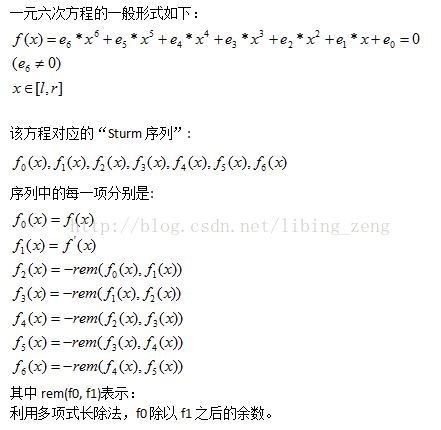
首先,构造一个叫做“sturm序列”的东东。
讯享网
关于“多项式长除法”,看这里:
https://en.wikipedia.org/wiki/Polynomial_long_division
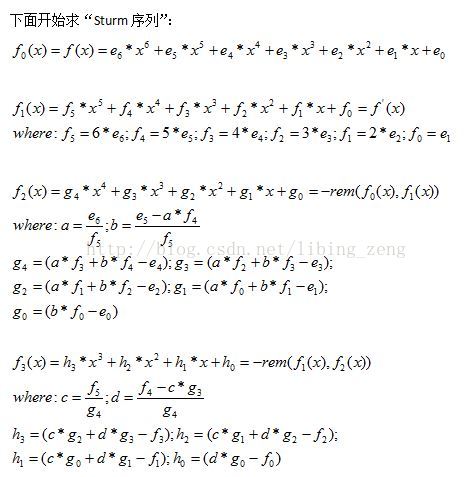
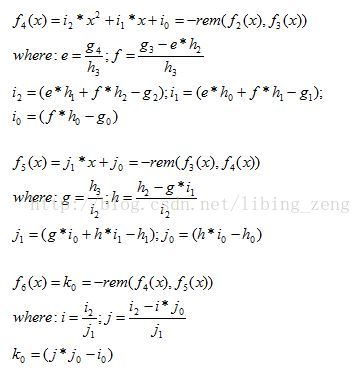
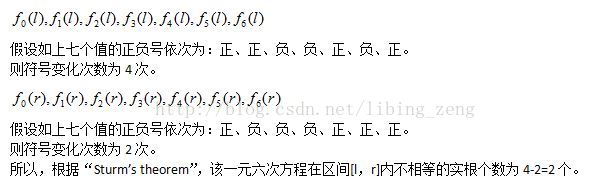
然后,将区间两端点值l,r代入各个序列项,计算符号的变化次数。
59.1.2 看C++代码实现
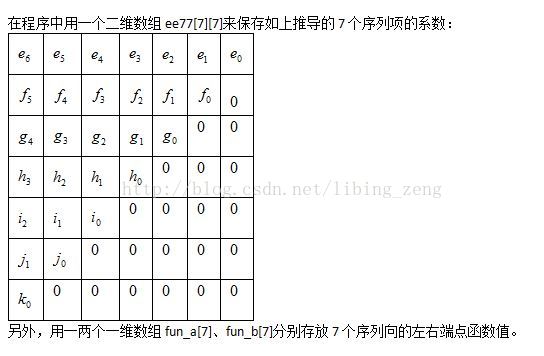

----------------------------------------------vec3.h ------------------------------------------
vec3.h
bool roots_num_equation_6th(float ee6[7], double a, double b, int &num);讯享网
----------------------------------------------vec3.cpp ------------------------------------------
vec3.cpp
讯享网bool roots_num_equation_6th(float ee6[7], double a, double b, int &num) { double temp1, temp2; double ee77[7][7] = {0.0}; double fun_a[7] = {0.0}; double fun_b[7] = {0.0}; int change_num_a = 0; int change_num_b = 0; for (int i=0; i<6; i++) { //determine f0, f1 ee77[0][i] = ee6[i]; ee77[1][i] = (6-i)*ee6[i]; } ee77[0][6] = ee6[6]; for (int i=2; i<6; i++) { //determine f2, f3, f4, f5 temp1 = ee77[i-2][0] / ee77[i-1][0]; temp2 = (ee77[i-2][1] - temp1*ee77[i-1][1]) / ee77[i-1][0]; for (int j=0; j<(6-i); j++) { ee77[i][j] = temp1*ee77[i-1][j+2] + temp2*ee77[i-1][j+1] - ee77[i-2][j+2]; if (fabs(ee77[i][j])<1e-5) { ee77[i][j] = 0.0; } } ee77[i][6-i] = temp2*ee77[i-1][6-i+1] - ee77[i-2][6-i+2]; if (fabs(ee77[i][6-i])<1e-5) { ee77[i][6-i] = 0.0; } if ((ee77[i][0] == 0.0) && (ee77[i][1] == 0.0) && (ee77[i][2] == 0.0) && (ee77[i][3] == 0.0) && (ee77[i][4] == 0.0) && (ee77[i][5] == 0.0) && (ee77[i][6] == 0.0)) { break; } } if (fabs(ee77[5][0])>1e-5) { //determine f6 temp1 = ee77[4][0] / ee77[5][0]; temp2 = (ee77[4][1] - temp1*ee77[5][1]) / ee77[5][0]; ee77[6][0] = temp2*ee77[5][1] - ee77[4][2]; if (fabs(ee77[6][0])<1e-5) { ee77[6][0] = 0.0; } } else { ee77[6][0] = 0.0; } for (int j=0; j<7; j++) { fun_a[0] = fun_a[0] + ee77[0][j]*pow(a, (6-j)); fun_b[0] = fun_b[0] + ee77[0][j]*pow(b, (6-j)); } for (int i=1; i<7; i++) { for (int j=0; j<(7-i); j++) { fun_a[i] = fun_a[i] + ee77[i][j]*pow(a, ((6-i)-j)); fun_b[i] = fun_b[i] + ee77[i][j]*pow(b, ((6-i)-j)); } if ((fun_a[i]*fun_a[i-1]) < 0) { change_num_a ++; } if ((fun_b[i]*fun_b[i-1]) < 0) { change_num_b ++; } } num = abs(change_num_a - change_num_b); return true; }
----------------------------------------------main.cpp ------------------------------------------
main.cpp
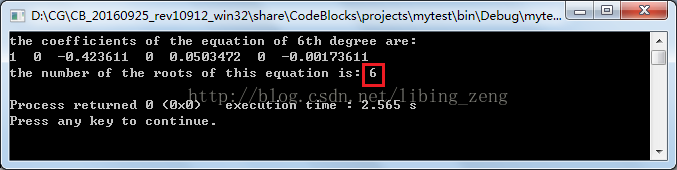
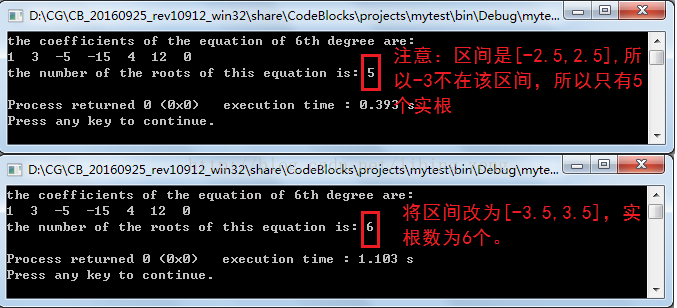
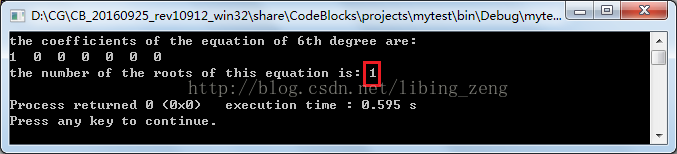
int main(){ // float ee6[7] = {1.0, 0.0, 0.0, 0.0, 0.0, 0.0, 0.0};//x^6------------1 // float ee6[7] = {1.0, -1.0, 0.0, 0.0, 0.0, 0.0, 0.0};//x^5*(x-1)------------2 // float ee6[7] = {1.0, 0.0, -1.0, 0.0, 0.0, 0.0, 0.0};//x^4*(x-1)*(x+1)------------3 // float ee6[7] = {1.0, 0.0, -5.0, 0.0, 4.0, 0.0, 0.0};//x^2*(x-1)*(x+1)*(x-2)*(x+2)------------5 // float ee6[7] = {1.0, 3.0, -5.0, -15.0, 4.0, 12.0, 0.0};//x*(x-1)*(x+1)*(x-2)*(x+2)*(x+3)------------6 float ee6[7] = {1.0, 0.0, -0., 0.0, 0.0, 0.0, -0.00};//(x-1/2)*(x+1/2)*(x-1/3)*(x+1/3)*(x-1/4)*(x+1/4)------------6 float a = -2.5; float b = 2.5; int num; float tol = 1e-6; float roots[7]; roots_num_equation_6th(ee6, a, b, num); std::cout << "the coefficients of the equation of 6th degree are:" << endl; for (int i=0; i<7; i++) { std::cout << ee6[i] << " "; } std::cout << endl; std::cout << "the number of the roots of this equation is: " << num << endl; } 输出结果如下:
float ee6[7] ={1.0, 0.0, -0., 0.0, 0.0, 0.0, -0.00};
//(x-1/2)*(x+1/2)*(x-1/3)*(x+1/3)*(x-1/4)*(x+1/4)------------6
float ee6[7] ={1.0, 3.0, -5.0, -15.0, 4.0, 12.0, 0.0};
//x*(x-1)*(x+1)*(x-2)*(x+2)*(x+3)------------6
float ee6[7] ={1.0, 0.0, -5.0, 0.0, 4.0, 0.0, 0.0};
//x^2*(x-1)*(x+1)*(x-2)*(x+2)------------5

float ee6[7] ={1.0, 0.0, 0.0, 0.0, 0.0, 0.0, 0.0};//x^6------------1
下一章节就干这事~~~~
版权声明:本文内容由互联网用户自发贡献,该文观点仅代表作者本人。本站仅提供信息存储空间服务,不拥有所有权,不承担相关法律责任。如发现本站有涉嫌侵权/违法违规的内容,请联系我们,一经查实,本站将立刻删除。
如需转载请保留出处:https://51itzy.com/kjqy/75018.html