
一、协程简介
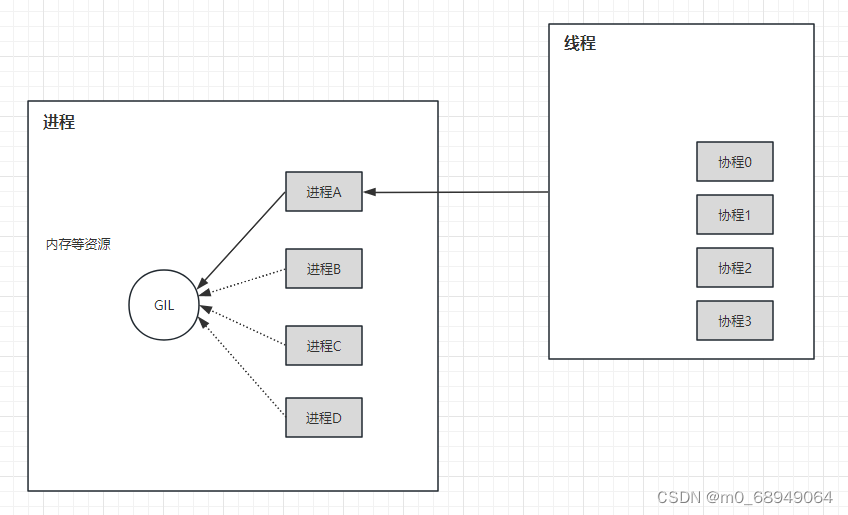
1.1 定义
协程不是系统级线程,很多时候协程被称为“轻量级线程”、“微线程”、“纤程(fiber)”等。简单来说可以认为协程是线程里不同的函数,这些函数之间可以相互快速切换。
协程和用户态线程非常接近,用户态线程之间的切换不需要陷入内核,但部分操作系统中用户态线程的切换需要内核态线程的辅助。
协程是编程语言(或者 lib)提供的特性(协程之间的切换方式与过程可以由编程人员确定),是用户态操作。协程适用于 IO 密集型的任务。常见提供原生协程支持的语言有:c++20、golang、python 等,其他语言以库的形式提供协程功能,比如 C++20 之前腾讯的 fiber 和 libco 等等。
1.2 分类
协程有两种,一种无栈协程,python中以 asyncio 为代表, 一种有栈协程,python 中 以 gevent 为代表,本文主要讲解 asyncio 线程。
| 有栈线程 |
无栈线程 |
备注 |
|
|---|---|---|---|
| 例子: |
lua thread python gevent |
C# yield return C# async\await python asyncio |
无 |
| 是否拥有单独的上下文: |
是 | 否 | 上下文包括寄存器、栈帧 |
| 局部变量保存位置: |
栈 | 堆 | 无栈协程的局部变量保存在堆上,比如generator的数据成员。 |
| 优点: |
1. 每个协程有单独的上下文,可以在任意的嵌套函数中任何地方挂起此协程。 2. 不需要编译器做语法支持,通过汇编指令即可实现 |
1. 不需要为每个协程保存单独的上下文,内存占用低。 2. 切换成本低,性能更高。 |
无 |
| 缺点: |
1. 需要提前分配一定大小的堆内存保存每个协程上下文,所以会出现内存浪费或者栈溢出。 2. 上下文拷贝和切换成本高,性能低于无栈协程。 |
1. 需要编译器提供语义支持,比如C# yield return语法糖。 2. 只能在这个生成器内挂起此协程,无法在嵌套函数中挂起此协程。 3. 关键字有一定传染性,异步代码必须都有对应的关键字。作为对比,有栈协程只需要做对应的函数调用。 |
无栈协程无法在嵌套函数中挂起此协程,有栈协程由于是通过保存和切换上下文包括寄存器和执行栈实现,可以在协程函数的嵌套函数内部yield这个协程并唤醒。 |
二、python的asyncio协程详解
2.1 介绍
asyncio 是用来编写并发代码的库,使用 async/await 语法。
asyncio 被用作多个提供高性能 Python 异步框架的基础,包括网络和网站服务,数据库连接库,分布式任务队列等等。
asyncio 往往是构建 IO 密集型和高层级 结构化 网络代码的**选择。
asyncio 提供一组高层级 API 用于:
- 并发地运行 Python 协程 并对其执行过程实现完全控制;
- 执行网络 IO 和 IPC;
- 控制子进程;
- 通过队列实现分布式任务;
- 同步并发代码;
- 创建和管理事件循环,以提供异步 API 用于 网络化, 运行 子进程,处理 OS 信号 等等;
- 使用 transports 实现高效率协议;
- 通过 async/await 语法桥接基于回调的库和代码。
2.2 asyncio 协程的使用(用的python3.8的语法)
asyncio 函数的源代码地址:https://github.com/python/cpython/tree/3.8/Lib/asyncio
1)协程通过 async/await 语法进行声明,是编写 asyncio 应用的推荐方式。
asyncio.run() 函数用来运行最高层级的入口点 "main()" 函数。
asyncio.sleep(delay, result=None, *, loop=None) 函数用来阻塞指定的秒数。

# coding=utf8 import sys import asyncio async def main(): print('hello') await asyncio.sleep(1) print('world') asyncio.run(main())讯享网
2)事件循环函数(包括循环的创建、运行和停止)
asyncio.get_running_loop() 函数返回当前 OS 线程中正在运行的事件循环。
asyncio.get_event_loop() 函数获取当前事件循环。
asyncio.set_event_loop(loop) 函数将 loop 设置为当前 OS 线程的当前事件循环。
asyncio.new_event_loop() 函数创建一个新的事件循环。
loop.run_until_complete(future) 函数运行直到 future (Future 的实例) 被完成。
loop.run_forever() 函数运行事件循环直到 stop() 被调用。
loop.stop() 函数停止事件循环。
loop.is_running() 函数返回 True 如果事件循环当前正在运行。
loop.is_closed() 函数如果事件循环已经被关闭,返回 True 。
loop.close() 函数关闭事件循环。
loop.create_future() 函数创建一个附加到事件循环中的 asyncio.Future 对象。
loop.create_task(coro, *, name=None) 函数安排一个 协程 的执行。返回一个 Task 对象。
loop.set_task_factory(factory) 函数设置一个 task 工厂 , 被用于 loop.create_task() 。
loop.get_task_factory() 函数返回一个任务工厂,或者如果是使用默认值则返回 None。
示例1:
讯享网# coding=utf8 import sys import asyncio async def fun1(): await asyncio.sleep(1) print('协程1') async def fun2(): await asyncio.sleep(1) print('协程2') loop = asyncio.get_event_loop() loop.run_until_complete(asyncio.wait([fun1(), fun2()])) loop.close()
示例2:
# coding=utf8 import sys import asyncio import time # 一个对future进行赋值的函数 async def slow_operation(future, num): await asyncio.sleep(1) # 给future赋值 future.set_result('Future'+ str(num) +' is done!') def main(): loop = asyncio.get_event_loop() # 创建一个future future1 = loop.create_future() # 使用ensure_future 创建Task asyncio.ensure_future(slow_operation(future1, 1)) future2 = loop.create_future() asyncio.ensure_future(slow_operation(future2, 2)) # gather Tasks,并通过run_uniti_complete来启动、终止loop loop.run_until_complete(asyncio.gather(future1, future2)) print(future1.result()) print(future2.result()) loop.close() if __name__ == "__main__": main() 3)调度回调和延迟回调
loop.call_soon(callback, *args, context=None) 函数安排 callback 在事件循环的下一次迭代时附带 args 参数被调用。回调按其注册顺序被调用。每个回调仅被调用一次。方法不是线程安全的。
loop.call_soon_threadsafe(callback, *args, context=None) 函数是 call_soon() 的线程安全变体。必须被用于安排 来自其他线程 的回调。
loop.call_later(delay, callback, *args, context=None) 函数安排 callback 在给定的 delay 秒(可以是 int 或者 float)后被调用。
loop.call_at(when, callback, *args, context=None) 函数安排 callback 在给定的绝对时间戳的时间(一个 int 或者 float)被调用,使用与 loop.time() 同样的时间参考。
loop.time() 函数根据时间循环内部的单调时钟,返回当前时间, float 值。
讯享网# coding=utf8 import sys import asyncio from threading import Thread import time def callback(arg, loop): print('回调函数arg={} 回调的时间time={}'.format(arg, loop.time())) async def task(loop): now = loop.time() print('时钟时间:{}'.format(time.time())) print('时事件循环时间:{}'.format(loop.time())) print('注册回调函数') loop.call_at(now + 1, callback, 'call_at1', loop) # 等待1秒执行 call_at 函数 loop.call_at(now + 2, callback, 'call_at2', loop) loop.call_later(3, callback, 'call_later1', loop) # 等待3秒执行 call_later 函数 loop.call_later(4, callback, 'call_later2', loop) loop.call_soon(callback, 'call_soon', loop) # 立即执行执行 call_soon 函数 await asyncio.sleep(4) def main(): event_loop = asyncio.get_event_loop() try: print('进入事件循环监听') event_loop.run_until_complete(task(event_loop)) # 将事件循环对象传入task函数中 finally: print('关闭事件循环监听') event_loop.close() if __name__ == "__main__": main()
4)socket连接和Streams函数
- loop.create_connection(protocol_factory, host=None, port=None, *, ssl=None, family=0, proto=0, flags=0, sock=None, local_addr=None, server_hostname=None, ssl_handshake_timeout=None, happy_eyeballs_delay=None, interleave=None) 函数打开一个流式传输连接,连接到由 host 和 port 指定的地址。
- loop.create_server(protocol_factory, host=None, port=None, *, family=socket.AF_UNSPEC, flags=socket.AI_PASSIVE, sock=None, backlog=100, ssl=None, reuse_address=None, reuse_port=None, ssl_handshake_timeout=None, start_serving=True) 函数创建TCP服务 (socket 类型 SOCK_STREAM ) 监听 host 地址的 port 端口。
- loop.create_unix_server(protocol_factory, path=None, *, sock=None, backlog=100, ssl=None, ssl_handshake_timeout=None, start_serving=True) 函数与 loop.create_server() 类似但是专用于 AF_UNIX 套接字族。path 是必要的 Unix 域套接字名称,除非提供了 sock 参数。 抽象的 Unix 套接字, str, bytes 和 Path 路径都是受支持的。
- loop.connect_accepted_socket(protocol_factory, sock, *, ssl=None, ssl_handshake_timeout=None) 函数将已被接受的连接包装成一个传输/协议对。
- loop.sock_recv(sock, nbytes) 函数从 sock 接收至多 nbytes。 socket.recv() 的异步版本。
- loop.sock_recv_into(sock, buf) 函数从 sock 接收数据放入 buf 缓冲区。 模仿了阻塞型的 socket.recv_into() 方法。
- loop.sock_sendall(sock, data) 函数将 data 发送到 sock 套接字。 socket.sendall() 的异步版本。
- loop.sock_accept(sock) 函数接受一个连接。 模仿了阻塞型的 socket.accept() 方法。
- loop.sock_sendfile(sock, file, offset=0, count=None, *, fallback=True) 函数在可能的情况下使用高性能的 os.sendfile 发送文件。 返回所发送的字节总数。
- asyncio.open_connection(host=None, port=None, *, loop=None, limit=None, ssl=None, family=0, proto=0, flags=0, sock=None, local_addr=None, server_hostname=None, ssl_handshake_timeout=None) 函数建立网络连接并返回一对 (reader, writer) 对象。
- asyncio.start_server(client_connected_cb, host=None, port=None, *, loop=None, limit=None, family=socket.AF_UNSPEC, flags=socket.AI_PASSIVE, sock=None, backlog=100, ssl=None, reuse_address=None, reuse_port=None, ssl_handshake_timeout=None, start_serving=True) 函数启动套接字服务。
- asyncio.open_unix_connection(path=None, *, loop=None, limit=None, ssl=None, sock=None, server_hostname=None, ssl_handshake_timeout=None) 函数建立一个 Unix 套接字连接并返回 (reader, writer) 这对返回值。与 open_connection() 相似,但是操作在 Unix 套接字上。
- asyncio.start_unix_server(client_connected_cb, path=None, *, loop=None, limit=None, sock=None, backlog=100, ssl=None, ssl_handshake_timeout=None, start_serving=True) 函数启动一个Unix socket服务。与 start_server() 相似,但是是在 Unix 套接字上的操作。
- asyncio.StreamReader 这个类表示一个提供api来从IO流中读取数据的读取器对象。
reader.read(n=-1) 函数读取 n 个byte. 如果没有设置 n , 则自动置为 -1 ,读至 EOF 并返回所有读取的byte。
reader.readline() 函数读取一行,其中“行”指的是以 \n 结尾的字节序列。如果读到EOF而没有找到 \n ,该方法返回部分读取的数据。如果读到EOF,且内部缓冲区为空,则返回一个空的 bytes 对象。
reader.readexactly(n) 函数精准读取 n 个 bytes,不能超过也不能少于。
reader.readuntil(separator=b'\n') 函数从流中读取数据直至遇到 分隔符成功后,数据和指定的separator将从内部缓冲区中删除(或者说被消费掉)。返回的数据将包括在末尾的指定separator。如果读取的数据量超过了配置的流限制,将引发 LimitOverrunError 异常,数据将留在内部缓冲区中并可以再次读取。如果在找到完整的separator之前到达EOF,则会引发 IncompleteReadError 异常,并重置内部缓冲区。 IncompleteReadError.partial 属性可能包含指定separator的一部分。
reader.at_eof() 函数如果缓冲区为空并且 feed_eof() 被调用,则返回 True 。 - asyncio.StreamWriter 这个类表示一个写入器对象,该对象提供api以便于写数据至IO流中。
writer.write(data) 函数会尝试立即将 data 写入到下层的套接字。 如果写入失败,数据会被排入内部写缓冲队列直到可以被发送。
writer.writelines(data) 函数会立即尝试将一个字节串列表(或任何可迭代对象)写入到下层的套接字。 如果写入失败,数据会被排入内部写缓冲队列直到可以被发送。
writer.close() 函数会关闭流以及下层的套接字。
writer.can_write_eof() 函数如果下层的传输支持 write_eof() 方法则返回``True``,否则返回 False。
writer.write_eof() 函数在已缓冲的写入数据被刷新后关闭流的写入端。
writer.transport() 函数返回下层的 asyncio 传输。
writer.drain() 函数等待直到可以适当地恢复写入到流。
writer.is_closing() 函数如果流已被关闭或正在被关闭则返回 True。
writer.wait_closed() 函数等待直到流被关闭。
server 代码:
# coding=utf8 import asyncio from asyncio import StreamReader, StreamWriter async def echo(reader: StreamReader, writer: StreamWriter): data = await reader.read(1024) message = data.decode() addr = writer.get_extra_info('peername') print(f"Received {message} from {addr}") print(f"Send: {message}") writer.write(data) await writer.drain() writer.close() async def main(host, port): server = await asyncio.start_server(echo, host, port) addr = server.sockets[0].getsockname() print(f'Serving on {addr}') async with server: await server.serve_forever() asyncio.run(main("127.0.0.1", 9999)) client 代码:
讯享网# coding=utf8 import asyncio async def tcp_echo_client(message): reader, writer = await asyncio.open_connection('127.0.0.1', 9999) print(f'Send to server: {message}') writer.write(message.encode()) await writer.drain() data = await reader.read(1024) print(f'Received from server: {data.decode()}') writer.close() await writer.wait_closed() if __name__ == '__main__': while True: send_msg = input("send: ") asyncio.run(tcp_echo_client(send_msg))
5)在线程或者进程池中执行代码
loop.run_in_executor(executor, func, *args) 函数安排在指定的执行器中调用 func 。
# coding=utf8 import asyncio import concurrent.futures def blocking_io(): # File operations (such as logging) can block the # event loop: run them in a thread pool. with open('/dev/urandom', 'rb') as f: return f.read(100) def cpu_bound(): # CPU-bound operations will block the event loop: # in general it is preferable to run them in a # process pool. return sum(i * i for i in range(5)) async def main(): loop = asyncio.get_running_loop() Options: # 1. Run in the default loop's executor: result = await loop.run_in_executor( None, blocking_io) print('default thread pool', result) print("\n") # 2. Run in a custom thread pool: with concurrent.futures.ThreadPoolExecutor() as pool: result = await loop.run_in_executor( pool, blocking_io) print('custom thread pool', result) print("\n") # 3. Run in a custom process pool: with concurrent.futures.ProcessPoolExecutor() as pool: result = await loop.run_in_executor( pool, cpu_bound) print('custom process pool', result) asyncio.run(main()) 6) asyncio.create_task(coro, *, name=None) 函数用来将一个协程打包为一个 Task 排入日程准备执行,并返回 Task 对象。
讯享网# coding=utf8 import sys import asyncio import time async def say_after(delay, what): await asyncio.sleep(delay) print(what) async def main(): task1 = asyncio.create_task( say_after(1, 'hello')) task2 = asyncio.create_task( say_after(2, 'world')) print(f"started at {time.strftime('%X')}") # Wait until both tasks are completed (should take around 2 seconds.) await task1 await task2 print(f"finished at {time.strftime('%X')}") asyncio.run(main())
7)错误处理API
loop.set_exception_handler(handler) 函数将 handler 设置为新的事件循环异常处理器。
loop.get_exception_handler() 函数返回当前的异常处理器,如果没有设置异常处理器,则返回 None 。
loop.default_exception_handler(context) 函数默认的异常处理器。
loop.call_exception_handler(context) 函数调用当前事件循环的异常处理器。
loop.get_debug() 函数获取事件循环调试模式设置(bool)。
loop.set_debug(enabled: bool) 函数设置事件循环的调试模式。
# coding=utf8 import sys import asyncio def handle_exception(loop, context): print('Error:', context['message']) async def my_task(): await asyncio.sleep(1) print('task1') loop = asyncio.get_event_loop() loop.set_exception_handler(handle_exception) loop.run_until_complete(my_task()) loop.close() 8)Future
asyncio.Future(*, loop=None) 函数是一个 Future 代表一个异步运算的最终结果。线程不安全。
asyncio.isfuture(obj) 函数用来判断如果 obj 为一个 asyncio.Future类的示例、 asyncio.Task 类的实例或者一个具有 _asyncio_future_blocking 属性的对象,返回 True。
asyncio.ensure_future(obj, *, loop=None) 函数创建新任务。
asyncio.wrap_future(future, *, loop=None) 函数将一个 concurrent.futures.Future 对象封装到 asyncio.Future 对象中。
Future 对象相关函数:
fut.result() 函数返回 Future 的结果。
fut.set_result(result) 函数将 Future 标记为 完成 并设置结果。
fut.set_exception(exception) 函数将 Future 标记为 完成 并设置一个异常。
fut.done() 函数如果 Future 为已 完成 则返回 True 。
fut.cancelled() 函数是如果 Future 已取消则返回 True
fut.add_done_callback(callback, *, context=None) 函数添加一个在 Future 完成 时运行的回调函数。
fut.remove_done_callback(callback) 函数从回调列表中移除 callback 。
fut.cancel() 函数取消 Future 并调度回调函数。
fut.exception() 函数返回 Future 已设置的异常。
fut.get_loop() 函数返回 Future 对象已绑定的事件循环。
讯享网# coding=utf8 import sys import asyncio import time # 定义一个协程 async def slow_operation(fut): await asyncio.sleep(1) fut.set_result(22) def def_callback(fut): number = fut.result() print(number + 1) def main(): # 获得全局循环事件 loop = asyncio.get_event_loop() # 实例化期物对象 fut = asyncio.Future() asyncio.ensure_future(slow_operation(fut)) # 执行回调函数 fut.add_done_callback(def_callback) # loop 的 run_until_complete 会将 _run_until_complete_cb 添加到 future 的完成回调列表中。而 _run_until_complete_cb 中会执行 loop.stop() 方法 loop.run_until_complete(fut) # 关闭事件循环对象 loop.close() if __name__ == "__main__": main()
9)asyncio.gather(*aws, loop=None, return_exceptions=False) 函数用来并发运行 aws 序列中的可等待对象。如果 aws 中的某个可等待对象为协程,它将自动作为一个任务加入日程。
# coding=utf8 import sys import asyncio async def factorial(name, number): f = 1 for i in range(2, number + 1): print(f"Task {name}: Compute factorial({i})...") await asyncio.sleep(1) f *= i print(f"Task {name}: factorial({number}) = {f}") async def main(): # Schedule three calls *concurrently*: await asyncio.gather( factorial("A", 2), factorial("B", 3), factorial("C", 4), ) asyncio.run(main())10)asyncio.shield(aw, *, loop=None) 函数用来保护一个可等待对象防止其被取消。
讯享网# coding=utf8 import sys import asyncio async def task_func(number): await asyncio.sleep(1) print('函数执行成功:'+str(number)) async def cancel_task(task): await asyncio.sleep(0.2) was_cancelled = task.cancel() print(f'cancelled: {was_cancelled}') async def main(): coro = task_func(1) task = asyncio.create_task(coro) shielded = asyncio.shield(task) asyncio.create_task(cancel_task(shielded)) try: result = await shielded print(f'>got: {result}') except asyncio.CancelledError: print('shielded was cancelled') await asyncio.sleep(1) print(f'shielded: {shielded}') print(f'task: {task}') asyncio.run(main())
11)asyncio.wait(aws, *, loop=None, timeout=None, return_when=ALL_COMPLETED) 函数并发地运行 aws 可迭代对象中的可等待对象并进入阻塞状态直到满足 return_when 所指定的条件。
return_when 指定此函数应在何时返回。它必须为以下常数之一:
| 常数 |
描述 |
|---|---|
|
|
函数将在任意可等待对象结束或取消时返回。 |
|
|
函数将在任意可等待对象因引发异常而结束时返回。当没有引发任何异常时它就相当于 |
|
|
函数将在所有可等待对象结束或取消时返回。 |
# coding=utf8 import sys import asyncio async def coroutine_example(name): print('正在执行name:', name) await asyncio.sleep(1) print('执行完毕name:', name) loop = asyncio.get_event_loop() tasks = [coroutine_example('Zarten_' + str(i)) for i in range(3)] wait_coro = asyncio.wait(tasks) loop.run_until_complete(wait_coro) loop.close()12)asyncio.wait_for(aw, timeout, *, loop=None) 函数等待 aw 可等待对象完成,指定 timeout 秒数后超时。
讯享网# coding=utf8 import sys import asyncio async def eternity(): # Sleep for one hour await asyncio.sleep(3600) print('yay!') async def main(): # Wait for at most 1 second try: await asyncio.wait_for(eternity(), timeout=1) except asyncio.TimeoutError: print('timeout!') asyncio.run(main())
13) asyncio.run_coroutine_threadsafe(coro, loop) 函数向指定事件循环提交一个协程。线程安全。
# coding=utf8 import sys import asyncio import threading async def main(i): while True: await asyncio.sleep(1) print(i) async def production_task(): for i in range(1, 4): # 将不同参数main这个协程循环注册到运行在线程中的循环, # thread_loop会获得一循环任务 asyncio.run_coroutine_threadsafe(main(i),thread_loop) # 注意:run_coroutine_threadsafe 这个方法只能用在运行在线程中的循环事件使用 def start_loop(thread_loop): # 运行事件循环, loop以参数的形式传递进来运行 asyncio.set_event_loop(thread_loop) thread_loop.run_forever() if __name__ == '__main__': # 获取一个事件循环 thread_loop = asyncio.new_event_loop() # 将次事件循环运行在一个线程中,防止阻塞当前主线程,运行线程,同时协程事件循环也会运行 threading.Thread(target=start_loop, args=(thread_loop,)).start() # 将生产任务的协程注册到这个循环中 loop = asyncio.get_event_loop() # 运行次循环 loop.run_until_complete(production_task())14) asyncio.current_task(loop=None) 函数返回当前运行的 Task 实例,如果没有正在运行的任务则返回 None。如果 loop 为 None 则会使用 get_running_loop() 获取当前事件循环。
asyncio.all_tasks(loop=None) 函数返回事件循环所运行的未完成的 Task 对象的集合。如果 loop 为 None,则会使用 get_running_loop() 获取当前事件循环。
讯享网# coding=utf8 import sys import asyncio import time async def my_coroutine(): task = asyncio.current_task() print(task) async def main(): task1 = asyncio.create_task(my_coroutine()) task2 = asyncio.create_task(my_coroutine()) tasks = [task1, task2] await asyncio.gather(*tasks) asyncio.run(main())
15)asyncio.Task(coro, *, loop=None, name=None) 函数一个与 Future 类似 的对象,可运行 Python 协程。非线程安全。
Task 对象相关函数:
task.cancelled() 函数如果 Task 对象 被取消 则返回 True。
task.done() 函数如果 Task 对象 已完成 则返回 True。
task.result() 函数返回 Task 的结果。
task.exception() 函数返回 Task 对象的异常。
task.remove_done_callback(callback) 函数从回调列表中移除 callback 。
task.get_stack(*, limit=None) 函数返回此 Task 对象的栈框架列表。
task.print_stack(*, limit=None, file=None) 函数打印此 Task 对象的栈或回溯。
task.get_coro() 函数返回由 Task 包装的协程对象。
task.get_name() 函数返回 Task 的名称。
task.set_name(value) 函数设置 Task 的名称。
# coding=utf8 import sys import asyncio import time async def cancel_me(): print('cancel_me(): before sleep') try: # Wait for 1 hour await asyncio.sleep(3600) except asyncio.CancelledError: print('cancel_me(): cancel sleep') raise finally: print('cancel_me(): after sleep') async def main(): # Create a "cancel_me" Task task = asyncio.create_task(cancel_me()) # Wait for 1 second await asyncio.sleep(1) task.cancel() try: await task except asyncio.CancelledError: print("main(): cancel_me is cancelled now") asyncio.run(main()) 16)基于生成器的协程(Python 3.10之后已经弃用)
基于生成器的协程是 async/await 语法的前身。它们是使用 yield from 语句创建的 Python 生成器,可以等待 Future 和其他协程。
@asyncio.coroutine 用来标记基于生成器的协程的装饰器。
asyncio.iscoroutine(obj) 函数如果 obj 是一个协程对象则返回 True。
asyncio.iscoroutinefunction(func) 函数如果 func 是一个协程函数则返回 True。
讯享网# coding=utf8 import sys import asyncio import time @asyncio.coroutine # 标志协程的装饰器 def taskIO_1(): print('开始运行IO任务1...') yield from asyncio.sleep(2) # 假设该任务耗时2s print('IO任务1已完成,耗时2s') return taskIO_1.__name__ @asyncio.coroutine # 标志协程的装饰器 def taskIO_2(): print('开始运行IO任务2...') yield from asyncio.sleep(3) # 假设该任务耗时3s print('IO任务2已完成,耗时3s') return taskIO_2.__name__ asyncio.run(taskIO_1()) asyncio.run(taskIO_2())
版权声明:本文内容由互联网用户自发贡献,该文观点仅代表作者本人。本站仅提供信息存储空间服务,不拥有所有权,不承担相关法律责任。如发现本站有涉嫌侵权/违法违规的内容,请联系我们,一经查实,本站将立刻删除。
如需转载请保留出处:https://51itzy.com/kjqy/74425.html