
加载权重部分代码
std::map<std::string, nvinfer1::Weights> loadWeights(const std::string file){
    std::cout << "Loading weights: " << file << std::endl; std::map<std::string, nvinfer1::Weights> WeightMap; //file文件,第一行是总层个数,第二行到最后是相应的层名称和权重。每一行先是名称,然后该行数量,最后是数值 std::ifstream input(file); assert(input.is_open() && "Unable to load weight file. please check if the .wts file path is right!!!!!!"); //定义一个 int32_t类型数值 int32_t count; //从input中读取一个int32_t的数值给count,是层的个数,即权重的个数 input>>count ; assert(count > 0 && "Invalid weight map file."); while(count--){
    //定义wt,包括里边包含的内容,从下面可知是精度类型、权重值和权重个数 nvinfer1::Weights wt{
   nvinfer1::DataType::kFLOAT, nullptr, 0}; uint32_t size; std::string name; //十进制 input >> name >> std::dec >> size; wt.type = nvinfer1::DataType::kFLOAT; //reinterpret_cast<uint32_t*> 这是一个类型转换。它将malloc返回的void*类型的指针转换为uint32_t*类型的指针。 //因为C++不允许直接将一个类型的指针赋值给另一个类型,除非进行显式类型转换。 //uint32_t* val; -先定义一个指向uint32_t类型的指针变量val。 uint32_t* val = reinterpret_cast<uint32_t*>(malloc(sizeof(val) * size)); for(uint32_t x = 0, y = size; x < y; x++){
    //输出格式为16进制 input >> std::hex >> val[x]; } //赋值和保存 wt.values = val; wt.count = size; WeightMap[name] = wt; } return WeightMap; }
讯享网
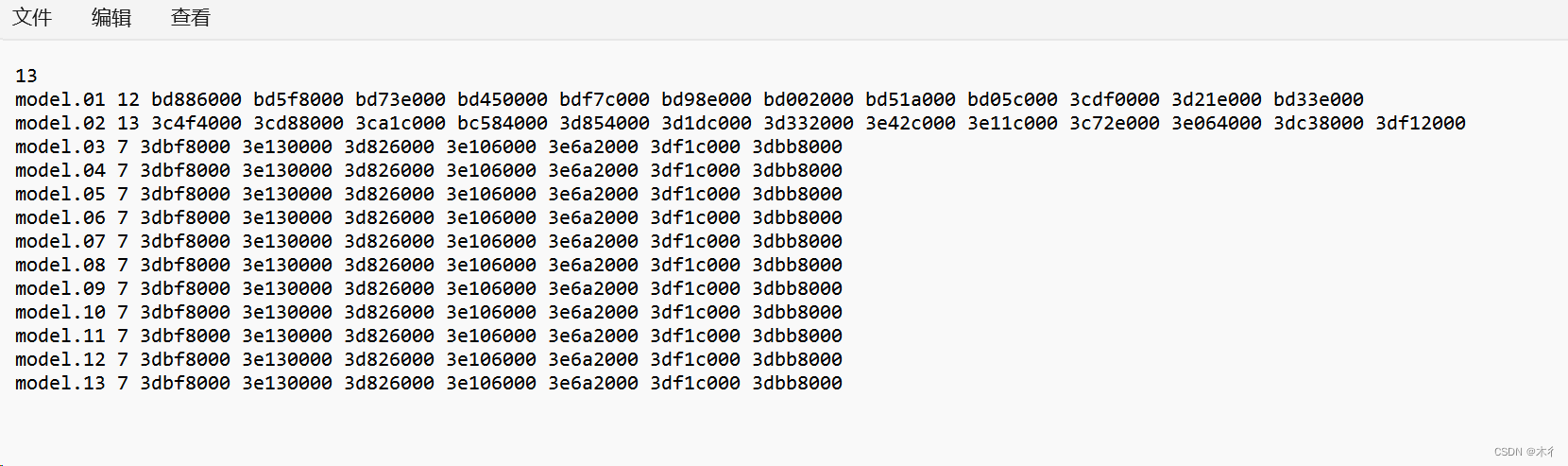
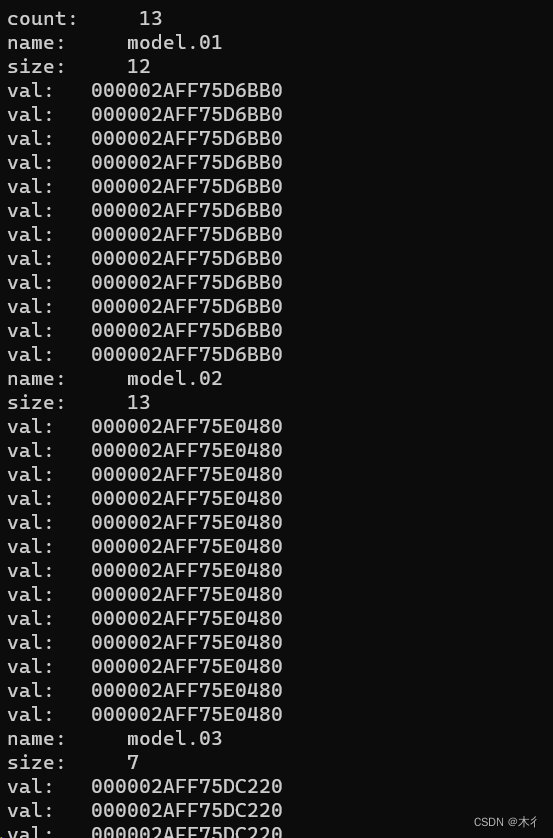
为方便理解其中的内容,进行摘选,运用示例进行详解。

讯享网#include <fstream> #include <iostream> #include <string> int main() {
    std::ifstream input("example.txt"); // 替换为你的文件路径 if (!input.is_open()) {
    std::cerr << "Unable to open file!" << std::endl; return 1; // 返回非零错误代码 } //定义一个 int32_t类型数值 int32_t count; //从input中读取一个int32_t的数值给count,是层的个数,即权重的个数 input >> count; std::cout << "count: " << count<< std::endl; while (count--) {
    uint32_t size; std::string name; //十进制 input >> name >> std::dec >> size; std::cout << "name: " << name << std::endl; std::cout << "size: " << size << std::endl; //reinterpret_cast<uint32_t*> 这是一个类型转换。它将malloc返回的void*类型的指针转换为uint32_t*类型的指针。 //因为C++不允许直接将一个类型的指针赋值给另一个类型,除非进行显式类型转换。 //uint32_t* val; -先定义一个指向uint32_t类型的指针变量val。 uint32_t* val = reinterpret_cast<uint32_t*>(malloc(sizeof(val) * size)); for (uint32_t x = 0, y = size; x < y; x++) {
    //输出格式为16进制 input >> std::hex >> val[x]; std::cout <<"val: " << val << std::endl; } //std::cout<<"name: " <<name<<" " << "val: " << val << std::endl; } input.close(); return 0; // 正常退出 }
“example.txt”文件中的内容。
运行程序,部分输出结果。
版权声明:本文内容由互联网用户自发贡献,该文观点仅代表作者本人。本站仅提供信息存储空间服务,不拥有所有权,不承担相关法律责任。如发现本站有涉嫌侵权/违法违规的内容,请联系我们,一经查实,本站将立刻删除。
如需转载请保留出处:https://51itzy.com/kjqy/61662.html