
Java并行程序基础
一、线程的生命周期
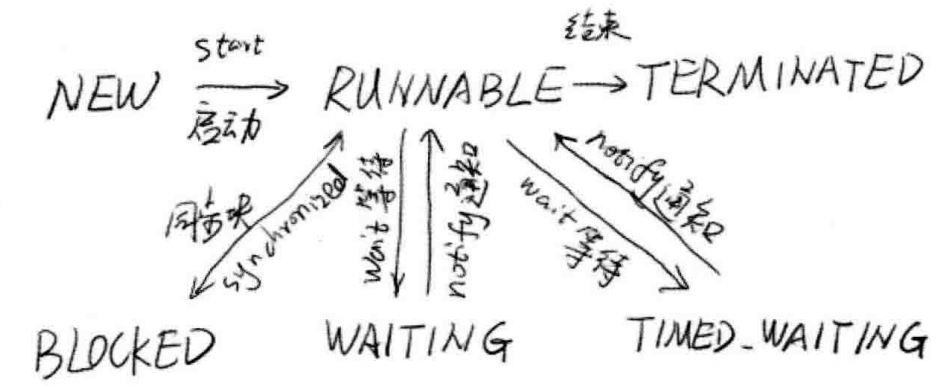
其中blocked和waiting的区别:
链接:https://www.zhihu.com/question//answer/
来源:知乎
著作权归作者所有。商业转载请联系作者获得授权,非商业转载请注明出处。
请注意,blocked是过去分词,意味着他是被卡住的(无辜啊,全是泪)。因为这段代码只让一条线程运行。同时,jvm是知道怎么结束blocked的,只要别的线程退出这段代码,他就会自动让你进去。也就是说别的线程无需唤醒你,由jvm自动来干。
而waiiting是说我调用wait()等函数,主动卡住自己(我在等一个白富美),请jvm在满足某种条件后(白富美发消息让我们晚上见),比如另条线程调用了notify()后,把我唤醒。这个唤醒的责任在于别的线程(白富美)明确的调用一些唤醒函数。
做这样的区分,是jvm出于管理的需要,做了这种区分,比如两个原因的线程放两个队列里管理,如果别的线程运行出了synchronized这段代码,我只需要去blocked队列,放个出来。而某人调用了notify(),我只需要去waitting队列里取个出来。
P.S. 从linux内核来看,这些线程都是等待状态,没区别,区别只在于java的管理需要。通常我们在系统级别说线程的blocked,是说线程操作io,被暂停了,这种线程由linux内核来唤醒(io设备报告数据来了,内核把block的线程放进可运行的进程队列,依次得到处理器时间),而wait是说,等待一个内核mutex对象,另个线程signal这个mutex后,这个线程才可以运行。 区别在于由谁唤醒,是操作系统,还是另一个线程,这里倒和java很相似。二、线程的基本操作
一)新建线程
1.方法一:
讯享网Thread t=new Thread(); t.start(); //新建一个线程,并在该线程中调用t的run()方法。
2.方法二:
public Class MyThread implements Runnable{ public static void mian(String[] args){ Thread t2=new Thread(new MyThread()); java并发基础知乎 t2.start(); } @Override public void run(){ System.out.println("I am runnable man!"); } }
二)终止线程
1.Thread中的stop()方法会直接终止线程,容易引发线程安全问题已经被弃用。
2.所以我们采用不立即中断线程,而是给目标线程发送通知:“希望你能中断线程的时候中断啦!”。而什么时候中断取决于线程自身。
讯享网public void Thread.inerrupt(); //通知线程中断,设置中断标志位。 public boolean Thread.isInterrupted() // 判断线程是否有中断标志位。 public static boolean Thead.interrupted() //判断线程是否有中断标志位,如果有则清除标志位。
public static native void sleep(long millis) throws InterruptedException //如果当前线程被设置了中断标志位,调用sleep方法时,
//就会抛出InterruptedException异常,该异常必须被捕获。
三)wait和notify
两个方法都是Object类中的方法,方法签名为:
public final void wait() throws InterruptException;//线程停止执行转为等待状态,直到其他线程调用了同一实例对象的notify()或notifyAll()方法。 public final native void notify();//随机选择一个线程,将其唤醒。
需要强调的是,这两个方法都不能随便调用,它们必须包含在synchronized语句中。
例如:

public class SimpleWN { final static Object obj=new Object(); public static class T1 extends Thread{ @Override public void run(){ synchronized (obj){ System.out.println(System.currentTimeMillis()+" :T1 start!"); try { System.out.println(System.currentTimeMillis()+" :wait for object!"); obj.wait(); }catch (Exception e){ e.printStackTrace(); } System.out.println(System.currentTimeMillis()+" :T1 END!"); } } } public static class T2 extends Thread{ @Override public void run(){ synchronized (obj){ System.out.println(System.currentTimeMillis()+" :T2 start! notify one!"); System.out.println(System.currentTimeMillis()+" :wait for object!"); obj.notify(); System.out.println(System.currentTimeMillis()+" :T2 END!"); try { Thread.sleep(3000); } catch (InterruptedException e) { e.printStackTrace(); } } } } public static void main(String[] args){ Thread t1=new T1(); Thread t2=new T2(); t1.start(); t2.start(); } }
四)suspend和resume
– suspend()不会释放锁
– 如果加锁发生在resume()之前 ,则死锁发生
五)等待线程结束(join)和谦让(yield)
public final void join() throws InterrupteException //一直阻塞当前线程直到目标线(调用此方法的线程)程执行完毕 public final synchronized void join(long millis) throws InterruptException //超出最大时间会继续执行。
join线程的本质是让调用线程wait()在当前线程对象实例上。因此不要在Thread对象实例上使用wait或者notify等类似的方法,因为这很可能影响系统API的工作。
public static native void yield() //使当前线程让出CPU,与其他线程参与到CPU资源竞争中。
三、守护线程(Deamon)
在后台默默地完成一些系统性的服务,比如垃圾回收线程、 JIT线程就可以理解为守护线程
当一个Java应用内,只有守护线程时,Java虚拟机就会自然退出。
设置为守护线程:
Thread t=new DaemonT(); t.setDaemon(true); t.start();
四、实现线程同步的基本方法
关键字synchronized的作用是实现线程间的同步,它的工作是对同步的代码加锁,使得每一次只能有一个线程进入同步块。用法:
1)对某个实例对象加锁。
2)对对象的实例方法加锁,相当于对当前实例加锁。
3)对某个类的静态方法加锁,相当于对当前类加锁。
public class MyRunnable implements Runnable{ static MyRunnable instance=new MyRunnable(); static Object object=new Object(); static int i=0; @Override public void run() { for(int j=0;j<1000;j++){ synchronized (object) { i++; } } } public static void main(String[] args) throws InterruptedException{ Thread t1=new Thread(instance); Thread t2=new Thread(instance); t1.start(); t2.start(); t1.join(); System.out.println(i); //1562 t2.join(); System.out.println(i); //2000 } }
没问题:
public class MyRunnable implements Runnable{ static MyRunnable instance=new MyRunnable(); static Object object=new Object(); static int i=0; public static synchronized void increase(){ i++; } @Override public void run() { for(int j=0;j<1000;j++){ increase(); } } public static void main(String[] args) throws InterruptedException{ Thread t1=new Thread(new MyRunnable()); Thread t2=new Thread(new MyRunnable()); t1.start(); t2.start(); t1.join(); System.out.println(i); //1000 t2.join(); System.out.println(i); //2000 } }
错误的同步方式(自行思考原因):
public class MyRunnable implements Runnable{ static MyRunnable instance=new MyRunnable(); static Object object=new Object(); static int i=0; public synchronized void increase(){ i++; } @Override public void run() { for(int j=0;j<1000;j++){ increase(); } } public static void main(String[] args) throws InterruptedException{ Thread t1=new Thread(new MyRunnable()); Thread t2=new Thread(new MyRunnable()); t1.start(); t2.start(); t1.join(); System.out.println(i); //1747 t2.join(); System.out.println(i); //1747 } }
五、隐蔽的错误
一)并发下的ArrayList
public class ArrayListTest { static ArrayList<Integer> list=new ArrayList<>(); public static class AddThread implements Runnable{ @Override public void run() { for(int i=0;i<10000;i++){ list.add(i); } } } public static void main(String[] args) throws InterruptedException{ Thread t1=new Thread(new AddThread()); Thread t2=new Thread(new AddThread()); t1.start(); t2.start(); t1.join(); t2.join(); System.out.println(list.size()); } /*结果:Exception in thread "Thread-1" java.lang.ArrayIndexOutOfBoundsException: 10 at java.util.ArrayList.add(Unknown Source) at com.tang.test.ArrayListTest$AddThread.run(ArrayListTest.java:12) at java.lang.Thread.run(Unknown Source) 10005*/ }
解决办法:Vector代替ArrayList
二)更诡异的HashMap
解决办法:ConcurrentHashMap代替HashMap。
版权声明:本文内容由互联网用户自发贡献,该文观点仅代表作者本人。本站仅提供信息存储空间服务,不拥有所有权,不承担相关法律责任。如发现本站有涉嫌侵权/违法违规的内容,请联系我们,一经查实,本站将立刻删除。
如需转载请保留出处:https://51itzy.com/kjqy/10302.html